Breaking news
Ukrainian Drone Strikes Damage 40% of Russia's Primorsk Storage
In March, Ukrainian drone strikes severely impacted oil storage at Russia's Primorsk port, damaging at least 40% of tanks. This assessment is based on satellite imagery from the U.S.
Share this article
Share to social platforms, or copy the article link and share text manually.
Developing story
This page is updated as verified details move. The lead and top sections are tightened first when the clearest confirmed angle changes.
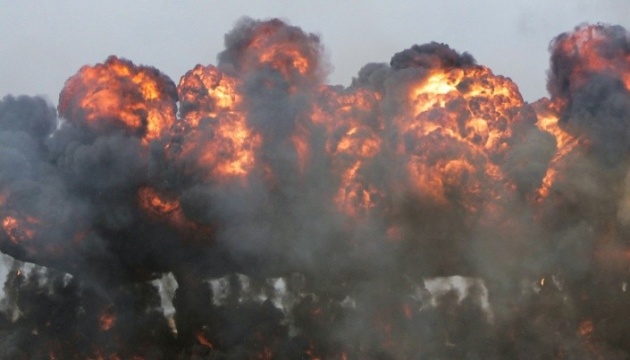
Photo: Ukrinform EN
At a glance
- 40% of Primorsk's oil storage tanks damaged by Ukrainian drone strikes.
- Satellite imagery by Vantor confirmed the extent of the damage.
- Two of the damaged tanks were used for diesel storage.
- Oil shipments halted at Ust-Luga due to similar attacks.
- These strikes mark some of the heaviest on Russian energy infrastructure.
Why it matters
The damage to oil storage at Primorsk impacts Russia's export capabilities significantly. Ukraine's focused strikes on such infrastructure indicate a strategic shift aimed at weakening Russia's military logistics and economic stability.
https://www.ukrinform.net/rubric-economy/4108586-drone-strikes-disable-40-of-russias-primorsk-port-storage-reuters.html
What Happened
In a significant escalation of hostilities, Ukrainian drone strikes targeted the Primorsk port in Russia's Baltic Sea region in March. As a result, at least 40% of the oil storage tanks were damaged, substantially reducing the port's export capacities.
This development was reported by Reuters, citing satellite images analyzed by the spatial intelligence company Vantor. These strikes represent a marked increase in Ukrainian attacks focusing on Russian energy infrastructure over the past month.
The drone assaults on Baltic Sea ports have become some of the heaviest since the onset of the ongoing conflict. Satellite imagery from late March corroborates that eight reservoirs, each with a capacity of 50,000 cubic meters, were severely compromised.
Key Details
According to industry traders, the damage may require substantial adjustments in the turnover activities at Primorsk. The affected reservoirs are crucial for logistical operations at the port, and their operational status can significantly influence oil export volumes.
Interestingly, reports indicate that two of the eight damaged tanks were designated for diesel, further complicating the supply chain for Russian energy exports. In tandem with the Primorsk incident, oil shipments have also been temporarily halted at another port, Ust-Luga, where eight oil product reservoirs of 30,000 cubic meters each were damaged by fire, representing about 25% of storage capacity at that facility.
Why It Matters
The damage to storage facilities at Primorsk and Ust-Luga could have immediate effects on Russia's ability to export oil. With the significant reduction in available storage, logistics and supply chain dynamics in the region may see prolonged disruptions. This development signals Ukraine's ongoing strategy to target Russian energy infrastructure as part of its military operations.
Background
The conflict between Ukraine and Russia has escalated in various military dimensions since February 2022. Ukrainian forces have increasingly aimed at crippling Russian military supply lines, particularly focusing on energy exports critical to Russia's economy.
Primorsk, one of Russia's key oil export terminals, has been on the radar for these strategic military interventions, reflecting a shifting battlefield mindset. As hostilities continue, both nations are likely to adapt their strategies based on the impacts of such strikes on their respective economies and military capabilities.
Source: Ukrinform EN
This report is maintained as a live newsroom article. Headlines and top paragraphs may be tightened when fresh reporting changes the clearest angle.
Newsletter
Get the next breaking Ukraine update
Receive the fastest lead, key facts, and follow-up links in one concise newsroom note.
Breaking format
The lead carries the core fact first.
Key figures and locations stay near the top.
Related coverage tracks the same reporting line.