News update
Ukrainian Drones Hit 16 Russian Oil Refineries in 2023
Ukrainian drone strikes have targeted at least 16 Russian oil refineries since January 2023, according to Reuters. This has led to a dramatic reduction in refining capacity and oil exports from Russia.
Share this article
Share to social platforms, or copy the article link and share text manually.
Developing story
This page is updated as verified details move. The lead and top sections are tightened first when the clearest confirmed angle changes.
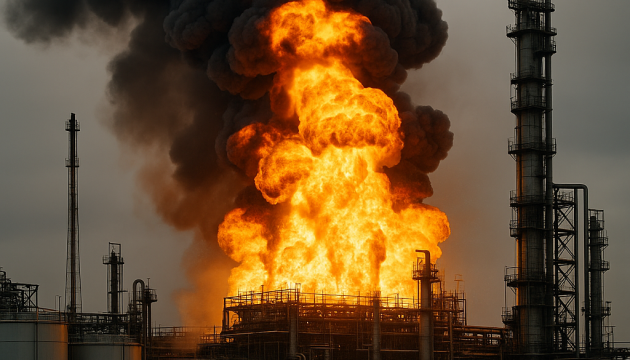
Photo: Ukrinform EN
At a glance
- Ukrainian drones struck 16 Russian oil refineries since January 2023.
- Refining capacity taken offline totals around 700,000 barrels per day.
- April saw Russia's oil product exports fall to 2.2 million barrels daily, a record low.
- Drone attacks have impacted pipelines and storage facilities too.
- 35 primary distillation units have been damaged or disrupted this year.
Why it matters
The impact on Russia's oil refining capacity poses significant economic risks, reducing revenues vital for the federal budget. This situation also affects Ukraine’s military efforts and international energy dynamics by altering Russia's oil competitiveness.
https://www.ukrinform.net/rubric-economy/4123881-ukrainian-drone-attacks-paralyze-oil-refining-in-russia-reuters.html
What Happened
Since the start of this year, Ukrainian drones have carried out numerous attacks on Russian oil refineries. These strikes have resulted in a significant decline in Russia's refining capabilities. Reports indicate that at least 16 refineries have been impacted, leading to lower petroleum product exports and increased pressure on Moscow's oil revenue streams.
Key Details
According to Reuters, the cumulative effect of the drone strikes has taken offline refining capacity amounting to about 700,000 barrels per day. The number of drone attacks on Russian refineries has more than doubled compared to the same period in 2025, when only eight refineries were reported hit.
The International Energy Agency noted a sharp drop in Russia's oil product exports, reaching a record low of 2.2 million barrels per day. In March, affected primary refining units reported a capacity near 1 million barrels per day, an indication of the intense operational impacts from sustained attacks.
The cumulative effect of these disruptions—since January, at least 35 primary distillation units have been damaged—has led to a reevaluation of Russia’s oil output strategies. Many of these units have not only been impacted by direct drone hits but also related operational disruptions stemming from security concerns.
Why It Matters
The reductions in refining capabilities threaten a key sector of the Russian economy, where oil and gas taxes constitute about 25% of the federal budget. The decrease in oil production and exports directly impacts Russia’s ability to finance ongoing military operations and maintain economic stability during the conflict.
The current situation suggests that Ukraine's drone strategy is reshaping Russia’s energy landscape, possibly limiting its global oil competitiveness and straining its fiscal health.
Background
As a result of continuous military engagements and an ongoing conflict situation, Ukraine has increasingly utilized drone technology to target strategic assets in Russia. The importance of these oil refineries extends beyond economic implications, as they are intertwined with national security and military funding.
In April, Russia's crude oil production notably fell by 460,000 barrels per day compared to the same period last year, demonstrating the vulnerability of their oil sector amidst the ongoing conflict.
Source: Ukrinform EN
This report is maintained as a live newsroom article. Headlines and top paragraphs may be tightened when fresh reporting changes the clearest angle.
Newsletter
Get the next Ukraine update
Track the latest policy, diplomacy, aid, and security changes without losing the thread.
Update format
This template prioritizes developments over recap.
Context stays short and tied to the current turn in the story.
The page is designed for repeat readers checking what changed.