Breaking news
Ukraine Downs 99 of 119 Russian Drones in Overnight Attack
Ukraine's air defense forces successfully neutralized 99 out of 119 drones launched by Russia on April 8. The attack commenced in the evening and involved various types of unmanned aerial vehicles.
Share this article
Share to social platforms, or copy the article link and share text manually.
Developing story
This page is updated as verified details move. The lead and top sections are tightened first when the clearest confirmed angle changes.
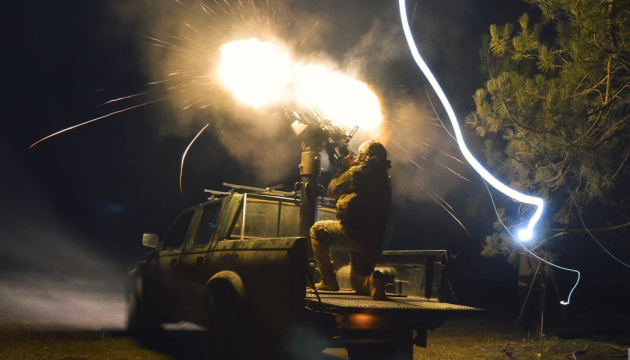
Photo: Ukrinform EN
At a glance
- Ukrainian forces intercepted 99 out of 119 Russian drones on April 8.
- Attack launched with various drone types, mainly Shahed models.
- Countermeasures included aviation and electronic warfare units.
- Impact recorded at 11 sites, with further debris located.
- Odesa region also targeted, damaging key infrastructure.
Why it matters
The successful interception of the majority of drones indicates a robust air defense strategy by Ukraine. Ongoing drone attacks threaten civilian infrastructure and escalate conflict dynamics.
https://www.ukrinform.net/rubric-ato/4110648-adf-neutralizes-99-out-of-119-drones-launched-by-russia-overnight.html
What Happened
On the night of April 8, Ukraine's air defense forces engaged Russian unmanned aerial vehicles (UAVs) in a significant counteraction. Starting from 18:00 local time, Russian troops launched 119 drones targeting several regions of Ukraine. Ukrainian officials reported that 99 of these drones were successfully intercepted.
Key Details
The majority of the drones used in this assault were identified as Shahed-type UAVs, numbering around 70. Other drones included those from various manufacturers, such as 'Gerbera' and 'Italmas'.
The launch points for these attacks included Bryansk, Kursk, Oryol, Millerovo, and Primorsko-Akhtarsk in Russia, as well as Hvardiiske in occupied Crimea and Donetsk. The Air Force of the Armed Forces of Ukraine confirmed the successful interception and the ongoing threat as some drones remained unaccounted for in Ukrainian airspace.
The defensive measures included contributions from aviation, anti-aircraft missile forces, electronic warfare units, unmanned systems units, and mobile fire groups. The synchronized efforts were crucial in minimizing potential damage from the attack.
According to preliminary reports issued at 08:00 on April 9, impacts from 16 drones were noted at 11 different sites. Additionally, debris from downed drones was found in four locations.
As the night unfolded, Russian forces reportedly also targeted the Odesa region, causing damage to a critical infrastructure facility. Ukrainian officials noted that while the air defense system mitigated a large portion of the attack, the threat level from ongoing assaults remains significant due to possible further drone incursions.
Why It Matters
This incident illustrates the ongoing threat of drone warfare in the conflict between Ukraine and Russia. The successful interception of such a high number of drones demonstrates the effectiveness of Ukraine's air defense capabilities under pressure. Continued drone assaults are likely to disrupt critical infrastructure and civilian life, further complicating the dynamics of the conflict.
Background
The use of drones has become a common tactic in modern warfare, particularly in the context of the ongoing conflict in Ukraine. As both sides adapt to utilizing UAVs for reconnaissance and strikes, the technological advancement of drone systems plays a critical role in operational strategies.
Russia's increasing reliance on drone technology reflects an escalation in the conflict as both nations seek to dominate the airspace. The incidents leading up to this interception have caused mounting concerns regarding air defense measures and their efficacy in protecting Ukrainian territories from strategic attacks.
The conflict has drawn international attention to the need for ongoing support in bolstering Ukraine's defense capabilities against aerial threats.
Source: Ukrinform EN
This report is maintained as a live newsroom article. Headlines and top paragraphs may be tightened when fresh reporting changes the clearest angle.
Newsletter
Get the next breaking Ukraine update
Receive the fastest lead, key facts, and follow-up links in one concise newsroom note.
Breaking format
The lead carries the core fact first.
Key figures and locations stay near the top.
Related coverage tracks the same reporting line.