Breaking news
Ukraine Downes 249 of 272 Drones in Overnight Russian Attack
Ukraine's air defense forces intercepted 249 out of 272 Russian drones launched in an attack on June 5. The operation involved various military units, according to the Air Force.
Share this article
Share to social platforms, or copy the article link and share text manually.
Developing story
This page is updated as verified details move. The lead and top sections are tightened first when the clearest confirmed angle changes.
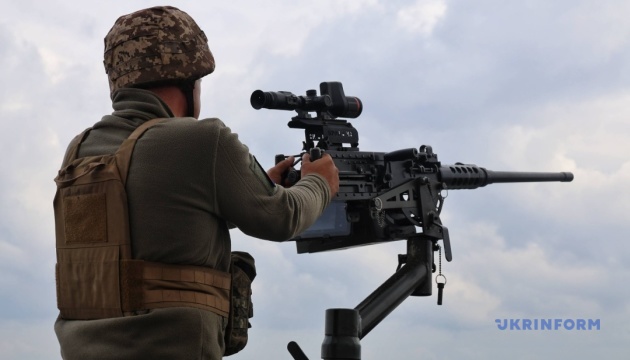
Photo: Ukrinform EN
At a glance
- Ukraine intercepted 249 out of 272 Russian drones in a single night.
- Drones were launched from multiple Russian locations and occupied Crimea.
- Hit drones included various models, impacting different areas of Ukraine.
- The attack involved 19 confirmed strikes impacting 11 locations.
- Operations showcased Ukraine's advanced aerial defense capabilities.
Why it matters
The successful interception of the majority of Russian drones is vital for Ukraine's national security. It reflects the effectiveness of Ukraine's air defense systems amid ongoing threats, crucial for protecting civilian areas.
https://www.ukrinform.net/rubric-ato/4131065-ukraines-air-defenses-downs-249-out-of-272-russian-drones-overnight.html
What Happened
On the evening of June 5, Ukrainian air defense forces engaged in a significant operation to counter a drone attack launched by Russian forces. According to the Air Force of the Armed Forces of Ukraine, they successfully downed or suppressed 249 out of the 272 drones that were deployed during this assault.
Key Details
The drones were launched from multiple locations across Russia, including Oryol, Kursk, Bryansk, Primorsko-Akhtarsk, Millerovo, and from Hvardiiske in occupied Crimea. The reported drones included various types, such as Shahed-type units, Gerbera, Italmas, Banderol loitering munitions, and Parodya decoys.
Operations to intercept the hostile drones were executed by a combination of Ukrainian aviation, anti-aircraft missile units, electronic warfare teams, unmanned systems units, and mobile fire groups. As of 08:00 on June 6, Ukrainian forces reported interception across northern, southern, and eastern Ukraine, affirming the effectiveness of their air defense strategy.
Notably, the operation involved not only shooting down the drones but also suppressing their operations to minimize the risk of further attacks. Reports indicated 19 confirmed strikes by the attack drones at 11 locations, with falling debris reported in 13 additional areas, causing potential risks to civilian infrastructure.
Why It Matters
This incident showcases the ongoing conflict dynamics between Ukraine and Russia, particularly in the realm of drone warfare. The successful interception of the majority of the drones reflects Ukraine's enhanced capabilities and preparedness in aerial defense amid ongoing hostilities, which could have significant implications for civilian safety and military outcomes.
Background
Ukraine has seen a surge in drone attacks since the escalation of hostilities with Russia. The use of drones in this conflict adds a complex layer to warfare strategies, requiring continual adaptation by Ukrainian defense forces.
Past incidents have highlighted the challenges faced by Ukraine in safeguarding its airspace, making these successful defense operations crucial for minimizing damage to both military and civilian targets. As the situation develops, Ukraine's air defenses will likely be central to its strategic response to ongoing threats from Russian forces.
An increased focus on maintaining drone interception capabilities will be critical for national security and civilian safety as the conflict persists.
Source: Ukrinform EN
This report is maintained as a live newsroom article. Headlines and top paragraphs may be tightened when fresh reporting changes the clearest angle.
Newsletter
Get the next breaking Ukraine update
Receive the fastest lead, key facts, and follow-up links in one concise newsroom note.
Breaking format
The lead carries the core fact first.
Key figures and locations stay near the top.
Related coverage tracks the same reporting line.