Breaking news
Ukraine Charges Two Russian Commanders for 2022 Missile Strike
The Security Service of Ukraine (SBU) has charged two Russian commanders involved in a missile strike on the Mykolaiv Regional Council on March 29, 2022. The attack resulted in 36 fatalities and 38 injuries.
Share this article
Share to social platforms, or copy the article link and share text manually.
Developing story
This page is updated as verified details move. The lead and top sections are tightened first when the clearest confirmed angle changes.
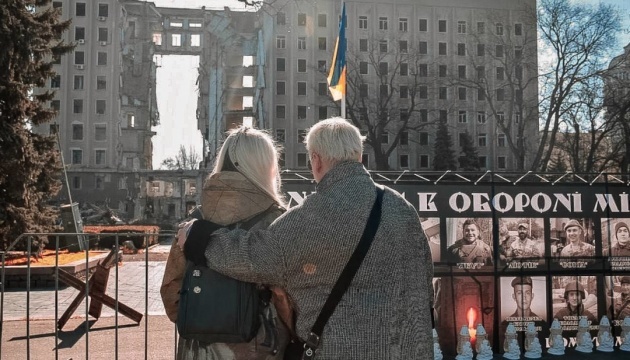
Photo: Ukrinform UA
At a glance
- SBU charges two Russian commanders for 2022 Mykolaiv attack.
- Missile strike resulted in 36 deaths and 38 injuries.
- Attack caused significant damage to nearby buildings and vehicles.
- General Mikhail Zusko and Colonel Mykola Horaychuk identified as planners.
- Charges filed under Ukrainian Criminal Code for war crimes.
Why it matters
The charges against the Russian commanders signify Ukraine's ongoing efforts to pursue justice for victims of military aggression. Accountability for war crimes remains a key aspect of Ukraine's legal and diplomatic strategy.
https://www.ukrinform.ua/rubric-regions/4132393-raketnij-udar-po-mikolaivskij-oblradi-v-ukraini-ogolosili-pidozri-dvom-rosijskim-komandiram.html
What Happened
On March 29, 2022, the Mykolaiv Regional Council was struck by a missile, leading to significant loss of life and injuries. The Security Service of Ukraine (SBU) has recently completed an investigation and announced charges against two Russian military commanders for their roles in the attack.
Key Details
According to findings from the SBU, the missile strike killed 36 individuals and injured 38 others of varying severity. The attack not only inflicted casualties but also caused damage to nearby residential buildings, a children's creativity center, commercial properties, and civilian vehicles.
The investigation identified General Mikhail Zusko, commander of the 58th Combined Arms Army of the Southern Military District of Russia, and Colonel Mykola Horaychuk, then acting commander of the 12th Missile Brigade, as the planners of the strike. The Russian forces utilized an Iskander operational-tactical missile system, launched from temporarily occupied Crimea.
The SBU has formally charged Zusko and Horaychuk under Article 438 of the Ukrainian Criminal Code, which pertains to the violation of the laws and customs of war resulting in loss of life. The charges were made in absentia, reflecting the ongoing efforts to prosecute war criminals.
This episode highlights the continued investigations by Ukrainian authorities into war crimes committed during the conflict. Since the attack, comprehensive measures have been taken to ensure accountability for military actions that violate international law.
The law enforcement agencies are working alongside the National Police and the Mykolaiv regional prosecutor's office on this case.
Why It Matters
These charges represent Ukraine's commitment to holding accountable those responsible for war crimes. The ongoing investigations reflect the broader context of accountability for actions taken during the conflict, aiming to provide justice for victims of such strikes.
Background
The missile strike on the Mykolaiv Regional Council was part of broader military operations by Russian forces in Ukraine following the invasion that began in February 2022. The systematic targeting of civilian infrastructure has been a significant concern in the ongoing conflict, prompting international condemnation and calls for accountability.
In February 2023, the SBU also charged General Alexander Dvornikov, the former commander of the Southern Military District, for his involvement in coordinating attacks against Ukraine's civilian facilities, including the Mykolaiv Regional Council building.
Source: Ukrinform UA
This report is maintained as a live newsroom article. Headlines and top paragraphs may be tightened when fresh reporting changes the clearest angle.
Newsletter
Get the next breaking Ukraine update
Receive the fastest lead, key facts, and follow-up links in one concise newsroom note.
Breaking format
The lead carries the core fact first.
Key figures and locations stay near the top.
Related coverage tracks the same reporting line.