Breaking news
Belarusian Attack on Ukraine Unlikely Despite Militarization
Pavel Latushko, an opposition figure from Belarus, stated that while Belarus is militarizing, an independent attack on Ukraine is unlikely. He made these remarks during a recent PACE session in Strasbourg.
Share this article
Share to social platforms, or copy the article link and share text manually.
Developing story
This page is updated as verified details move. The lead and top sections are tightened first when the clearest confirmed angle changes.
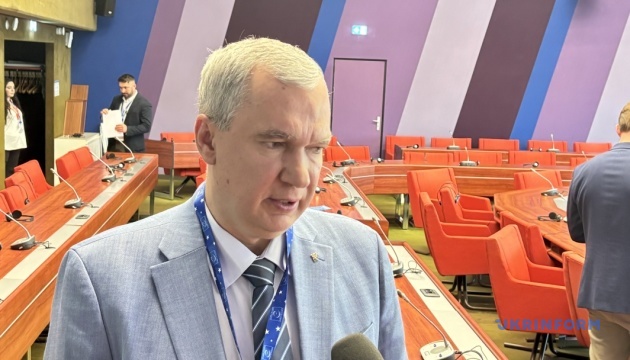
Photo: Ukrinform EN
At a glance
- Belarus's military decisions are now made by the All-Belarusian People’s Assembly.
- The mobilization threshold has been lowered, enabling broader drafts.
- Belarus's regular army is set to expand from 65,000 to 85,000 troops.
- Recent defense spending increased by 32% within a year.
- Training exercises are ongoing, with new weaponry being acquired.
Why it matters
The insights from Latushko illuminate Belarus's military posture and its implications for regional security. Understanding Belarus's military readiness and decision-making structure is essential for evaluating its potential actions in Eastern Europe.
https://www.ukrinform.net/rubric-polytics/4116332-opposition-figure-independent-belarusian-attack-on-ukraine-unlikely-despite-militarization.html
What Happened
Pavel Latushko, deputy head of the United Transitional Cabinet of Belarus, expressed doubts about the likelihood of an independent Belarusian military attack on Ukraine. His comments came during the Parliamentary Assembly of the Council of Europe (PACE) meeting in Strasbourg.
While Belarus is reforming its mobilization system and increasing its military preparedness, Latushko emphasized that the decision-making structure has changed significantly.
Key Details
Latushko pointed out that the authority to send Belarusian armed forces to war is now vested in the All-Belarusian People’s Assembly. This assembly is composed of 1,200 delegates appointed by President Alexander Lukashenko.
Currently, Belarus maintains a regular army of about 65,000 troops, with plans to increase this number to 85,000. Including 150,000 Territorial Defense members, the total military personnel could reach nearly half a million.
Latushko highlighted that military training continues without pause, with exercises scheduled back-to-back. In 2024 alone, Belarus received 4,600 new weapons systems, and the establishment of a Southern Operational Command has raised concerns over military intentions.
In the past year, Belarus has also seen a 32% increase in defense spending. Latushko mentioned that Lukashenko frequently talks about preparing for war, aiming to psychologically prepare the Belarusian population.
Despite the extensive militarization, Latushko claims the army lacks the motivation to initiate aggression on its own.
Why It Matters
The information from Latushko reveals the tension in the region and the ongoing militarization of Belarus, potentially impacting security dynamics in Eastern Europe. While significant resources are being allocated to military enhancements, the reluctance for an independent attack suggests a complex relationship between Belarus and its allies.
Background
Despite increasing military capabilities, Latushko argues that both the Belarusian military and society lack the desire to engage in warfare. He noted the existence of special operations forces within the country that could act under different circumstances but maintains that they would not be at the front lines.
His insights reflect the complicated strategies that the Belarusian government employs in alignment with Russian interests while fearing internal repercussions of aggressive actions against Ukraine. Ukrainian President Volodymyr Zelensky also remains cautious about Belarus’s potential role while expressing hope that Minsk will not be drawn into conflict scenarios involving Russia.
Source: Ukrinform EN
This report is maintained as a live newsroom article. Headlines and top paragraphs may be tightened when fresh reporting changes the clearest angle.
Newsletter
Get the next breaking Ukraine update
Receive the fastest lead, key facts, and follow-up links in one concise newsroom note.
Breaking format
The lead carries the core fact first.
Key figures and locations stay near the top.
Related coverage tracks the same reporting line.