News update
Belgian PM: Quick EU Membership for Ukraine is Unlikely
Belgian Prime Minister Bart De Wever stated that Ukraine's rapid accession to the EU currently appears unrealistic. He made these comments during an informal EU meeting in Cyprus.
Share this article
Share to social platforms, or copy the article link and share text manually.
Developing story
This page is updated as verified details move. The lead and top sections are tightened first when the clearest confirmed angle changes.
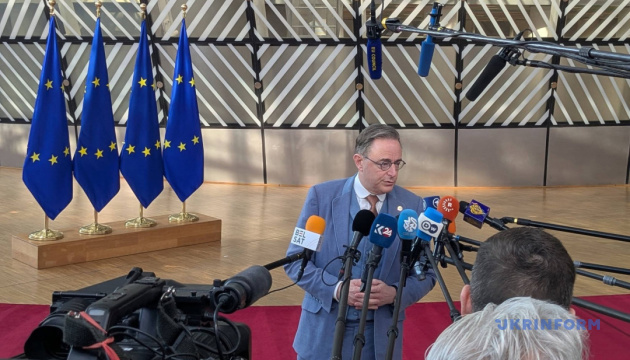
Photo: Ukrinform UA
At a glance
- Belgian PM believes rapid EU membership for Ukraine is unrealistic.
- Emphasizes a merit-based approach to accession processes.
- Phased process requires ongoing reforms and assessments.
- Acknowledges Ukraine's critical role in European security against Russia.
- Belief in the necessity of more EU involvement in peace negotiations.
Why it matters
Belgium's position reflects the EU's cautious approach toward enlargement amid ongoing conflicts. Support for Ukraine's European ambitions will require significant reforms and may lead to a multi-tiered integration model.
https://www.ukrinform.ua/rubric-polytics/4115911-vstup-ukraini-do-es-ne-bude-svidkim-premer-belgii.html
What Happened
During an informal gathering of EU leaders in Cyprus, Belgian Prime Minister Bart De Wever expressed skepticism about the speed of Ukraine's membership in the European Union. He said that a swift accession process for Ukraine is unrealistic at this moment.
Key Details
De Wever emphasized the need for a 'merit-based approach' to EU membership. He mentioned that there can be no expedited procedures in this matter. Instead, he suggested a phased process that includes the opening of negotiation chapters and ongoing reforms, alongside an assessment of the country's progress.
De Wever pointed out that some nations take decades to complete this journey toward EU membership. Despite the challenges, he indicated a need for Europe to explore additional mechanisms in light of the ongoing war in Ukraine and its significant role in countering Russia.
He acknowledged the substantial readiness within Europe to support Ukraine as it endures a devastating conflict, describing the country's efforts as crucial for European security.
Why It Matters
The reluctance for a quick accession reflects broader considerations of EU expansion and the complexities involved in membership processes. De Wever’s statements highlight the EU's acknowledgment of Ukraine's struggle, while also indicating the necessity for structural reforms and ongoing evaluation.
Background
Ukraine has been seeking EU membership as part of its broader strategy for closer ties with Europe, especially since the onset of the conflict with Russia. The EU has responded with financial support and sanctions against Russia, with a commitment to assist Ukraine amid its current challenges.
Recently, the EU and Ukraine welcomed a €90 billion credit agreement while pressing for additional international assistance and the imposition of further sanctions on Russia. The ongoing discussions about Ukraine's EU prospects emphasize the geopolitical stakes involved and the balance the EU must strike between supporting Ukraine while adhering to its membership criteria.
Source: Ukrinform UA
This report is maintained as a live newsroom article. Headlines and top paragraphs may be tightened when fresh reporting changes the clearest angle.
Newsletter
Get the next Ukraine update
Track the latest policy, diplomacy, aid, and security changes without losing the thread.
Update format
This template prioritizes developments over recap.
Context stays short and tied to the current turn in the story.
The page is designed for repeat readers checking what changed.