News report
Ukrainian Forces to Use New 'Shvidun' Drone Complex
The Ukrainian military has received approval for the 'Shvidun' drone complex, according to a report from the Defense Ministry. This domestically produced drone is designed specifically to counter enemy UAVs.
Share this article
Share to social platforms, or copy the article link and share text manually.
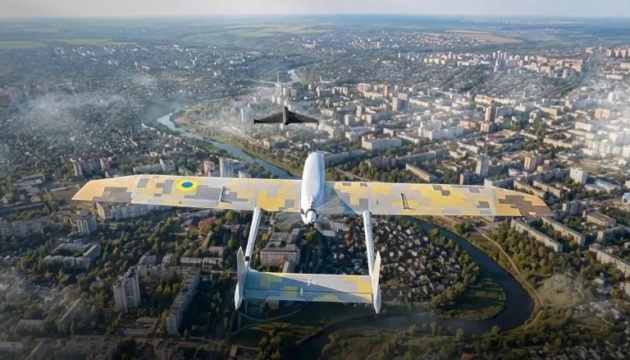
Photo: Ukrinform UA
At a glance
- The 'Shvidun' drone has been approved for military use in Ukraine.
- It targets enemy drones like the Shahed-136 and Zala.
- The drone is lightweight, with a 2-meter wingspan and a range exceeding 70 km.
- Initial deployments have reportedly downed around 100 enemy UAVs.
- The system supports Ukraine's broader air defense strategy.
Why it matters
The deployment of the 'Shvidun' drone enhances Ukraine's defense capabilities against UAVs. Improved air defense is crucial in protecting urban areas from ongoing aerial threats.
https://www.ukrinform.ua/rubric-ato/4107476-do-ekspluatacii-u-zsu-dopustili-bezpilotnij-aviakompleks-svidun.html
What Happened
The Ministry of Defense of Ukraine has officially codified and approved the 'Shvidun' drone complex for operational use within the Armed Forces. This domestically manufactured system is reported to have been developed strategically to intercept and neutralize various enemy drones, especially targeting models such as the Shahed-136 and reconnaissance UAVs like Zala and Supercam.
Key Details
The 'Shvidun' drone is constructed from a robust composite material, weighing approximately 8 kg with a wingspan close to 2 meters. It is capable of reaching altitudes of up to 6 kilometers and can achieve speeds greater than 250 km/h.
Its operational range surpasses 70 kilometers, making it well-suited to provide aerial protection for Ukrainian cities from potential drone threats. Technological advancements incorporated into the 'Shvidun' design include features that eliminate flutter at high speeds, allowing for improved clarity in the imagery captured by its onboard camera.
Notably, the drone maintains a low takeoff and landing speed, facilitating the possibility of recovery and reuse even after a mission where it may have lost target acquisition. It boasts a flight endurance of over 2 hours, enhancing its operational effectiveness.
According to the Ministry of Defense, initial deployments of the 'Shvidun' are already active, defending urban centers across Ukraine. Early reports indicate that this drone has successfully downed approximately one hundred enemy UAVs since its introduction to service, supporting claims that it has one of the highest interception rates against Russian drone types in Ukraine's inventory.
Defense officials noted that scaling up the deployment of interceptor drones is part of Ukraine's broader military strategy. The objective includes real-time identification of 100% of aerial threats and achieving interception rates of at least 95% for incoming missiles and drones.
This expansion is seen as vital for enhancing national air defense capabilities amidst ongoing conflict.
Why It Matters
The introduction of the 'Shvidun' drone complex strengthens Ukraine's aerial defenses against escalating drone threats. Increasing the capacity to intercept enemy UAVs is critical as air assaults continue to be a significant tactic employed by opposing forces.
Background
The approval of the 'Shvidun' follows previous endorsements of other UAV systems like the JEDI Shahed Hunter, reflecting an ongoing effort in Ukraine to bolster its aerial combat effectiveness with indigenous technology. The integration of new drones into military operations illustrates a concerted approach to adapt to the evolving landscape of modern warfare, emphasizing the importance of maintaining air superiority amid challenges.
Source: Ukrinform UA
This report is maintained as a live newsroom article. Headlines and top paragraphs may be tightened when fresh reporting changes the clearest angle.
Newsletter
Get the next major Ukraine report
Follow the strongest verified developments with a cleaner newsroom brief and direct follow-up coverage.
Report format
Fast lead first, then fuller context.
Source photo stays distinct from any illustration.
Related coverage stays inside the same reporting thread.