Breaking news
Ukrainian Forces Strike Oil Refinery in Yaroslavl
Ukrainian Defense Forces launched an attack on an oil refinery in Yaroslavl, Russia, on April 26. The information was reported by Andriy Kovalенко of Ukraine's Center for Countering Disinformation.
Share this article
Share to social platforms, or copy the article link and share text manually.
Developing story
This page is updated as verified details move. The lead and top sections are tightened first when the clearest confirmed angle changes.
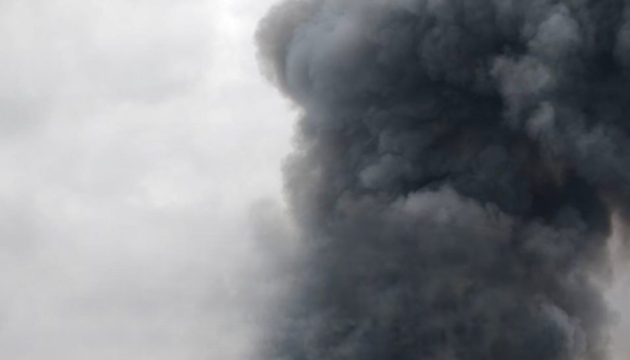
Photo: Ukrinform UA
At a glance
- Ukrainian forces struck an oil refinery in Yaroslavl on April 26.
- The attack was confirmed by Andriy Kovalенко via Telegram.
- March 2026 saw multiple strategic strikes, targeting five facilities and ten oil sites.
- The operations are aimed at disrupting Russian military logistics.
- This reflects a shift in Ukraine's military tactics toward deep strikes.
Why it matters
The incident highlights Ukraine's strategy of targeting Russian infrastructure to weaken military logistics. It marks a significant escalation in military operations, affecting the supply chain within Russia.
https://www.ukrinform.ua/rubric-ato/4116703-sili-oboroni-urazili-naftopererobnij-zavod-u-aroslavli-cpd.html
What Happened
In the early hours of April 26, 2026, the Ukrainian Defense Forces conducted an airstrike on an oil refinery located in Yaroslavl, Russia. The attack was reported by Andriy Kovalенко, the head of the Center for Countering Disinformation under Ukraine's National Security and Defense Council, via Telegram.
Key Details
Kovalенко confirmed the strike with a brief message stating, "Yaroslavl. The oil refinery has been hit," and shared a related video of the incident. This attack is a part of an ongoing campaign by Ukraine aimed at crippling Russian military logistics by targeting strategic assets.
March 2026 has already seen a significant number of such operations, with Ukrainian forces striking five different strategic facilities and ten oil processing sites across Russia. The strikes have spanned various regions, highlighting a growing trend of targeting deeper into Russian territory.
Why It Matters
The attack underscores the ongoing conflict between Ukraine and Russia, with Ukrainian forces adapting their tactics to target critical infrastructure that supports the Russian military effort. This marks a continued escalation in Ukraine's military strategy, aiming to disrupt Russian supply lines and operations.
Background
The conflict between Ukraine and Russia has intensified throughout 2026, with Ukrainian forces increasing their focus on high-value targets within Russia. This strategy is believed to be a response to the ongoing conflict and the need to diminish Russia's ability to sustain its military operations against Ukraine.
The strikes are aimed not only at immediate military targets but also seek to impact the economic and industrial capacity of Russia, particularly assets that could facilitate the war effort. As the conflict evolves, each strike serves to send a message regarding Ukraine's resolve and operational capabilities, potentially reshaping military dynamics in the region.
Source: Ukrinform UA
This report is maintained as a live newsroom article. Headlines and top paragraphs may be tightened when fresh reporting changes the clearest angle.
Newsletter
Get the next breaking Ukraine update
Receive the fastest lead, key facts, and follow-up links in one concise newsroom note.
Breaking format
The lead carries the core fact first.
Key figures and locations stay near the top.
Related coverage tracks the same reporting line.