News report
Ukrainian Drone Forces Hit Russian Missile Systems and Fuel Depot
Ukrainian drone forces struck two Russian missile systems and a fuel depot on May 8. The operations occurred in Bryansk, Donetsk, Luhansk, and Zaporizhzhia regions, according to Ukrinform.
Share this article
Share to social platforms, or copy the article link and share text manually.
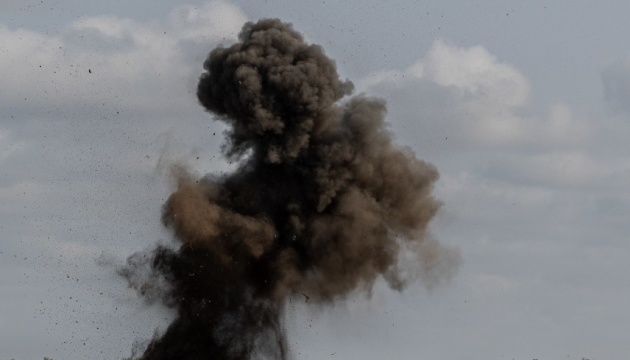
Photo: Ukrinform UA
At a glance
- Ukrainian drones struck Russian 'Tor-M2' and 'Tunguska' missile systems.
- The attacks included a fuel depot and communication nodes in occupied areas.
- Significant operations were carried out in Bryansk, Donetsk, Luhansk, and Zaporizhzhia.
- UAV units collaborated with a Deep Impact Center for effective targeting.
- The strikes demonstrate Ukraine's increasing use of drone technology in military strategy.
Why it matters
The targeted strikes reveal vulnerabilities in Russian military logistics and capabilities. By disrupting critical resources, Ukraine could enhance its operational efficiency and defense.
https://www.ukrinform.ua/rubric-ato/4121226-sili-bezpilotnih-sistem-urazili-dva-zrk-naftobazu-ta-vuzli-zvazku-rosian.html
What Happened
On May 8, 2026, Ukrainian armed forces successfully targeted Russian military assets using drone systems. The strikes specifically affected two types of surface-to-air missile systems, the 'Tor-M2' and 'Tunguska,' along with a fuel depot and various communication nodes.
These operations took place primarily in the Russian Bryansk region and on temporarily occupied territories in Ukraine’s Donetsk, Luhansk, and Zaporizhzhia regions.
Key Details
Ukrainian drone units executed a series of strikes that involved significant military hardware: - In Zaporizhzhia, members of the First Separate Center destroyed a 'Tor-M2' missile system. - Additional drone attacks targeted railway tankers containing fuel in Luhansk and a temporary deployment point for Russian forces.
- Aircrews from the border unit 'Phoenix' reportedly hit gas infrastructure owned by Russian forces. - In Bryansk, the 413th regiment 'Raid' effectively struck the 'Tunguska' system.
- Pilots from the 412th Brigade 'Nemesis' targeted a communications tower and two communication nodes in Zaporizhzhia. - The 414th Brigade 'Birds of Madyar' also struck a communication tower in the Donetsk region.
These operations were coordinated with a Deep Impact Center to maximize effectiveness.
Why It Matters
Targeting Russian missile systems and logistical nodes significantly impacts their operational capabilities in the region. Disruptions to fuel and communication resources may hinder Russian military operations, contributing to Ukraine's defensive efforts.
Background
The ongoing conflict between Ukraine and Russia has seen increased reliance on unmanned aerial vehicles (UAVs) for tactical strikes. The use of drones allows for precision targeting, reducing the risk of collateral damage while effectively dismantling enemy resources.
Recent engagements suggest a pattern of escalating tactical operations from Ukrainian forces aimed at reclaiming occupied territories and countering Russian advances. Drone operations have increasingly become a focal point in the modern warfare landscape, reshaping military strategies on both sides.
Reports also indicate that Ukrainian forces have successfully conducted operations against key military infrastructure, demonstrating the evolving nature of the conflict.
Source: Ukrinform UA
This report is maintained as a live newsroom article. Headlines and top paragraphs may be tightened when fresh reporting changes the clearest angle.
Newsletter
Get the next major Ukraine report
Follow the strongest verified developments with a cleaner newsroom brief and direct follow-up coverage.
Report format
Fast lead first, then fuller context.
Source photo stays distinct from any illustration.
Related coverage stays inside the same reporting thread.