Breaking news
Ukrainian Air Defense Downs 267 Drones in Latest Attack
Ukrainian air defense forces intercepted 267 of 289 drones launched by Russian military on the night of March 30-31, 2026. The assault involved multiple types of unmanned aerial vehicles, according to Ukrainian military reports.
Share this article
Post this report to your social networks or copy the direct link.
Developing story
This page is updated as verified details move. The lead and top sections are tightened first when the clearest confirmed angle changes.
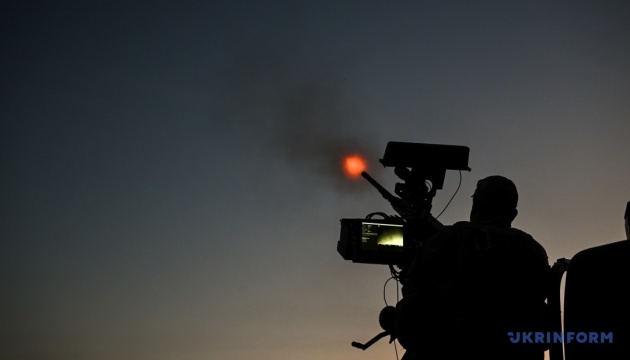
Photo: Ukrinform UA
At a glance
- 267 out of 289 Russian drones were intercepted by Ukraine's air defense.
- The attack involved various drone types, primarily Shahed models.
- The assault was launched from multiple Russian locations and occupied territories.
- Significant casualties occurred in Poltava due to falling debris.
- Ukraine's air defense effectiveness has reportedly doubled.
Why it matters
The effective interception of drones is crucial for protecting Ukraine's airspace from ongoing threats. Each successful defense operation reduces the risk of civilian casualties and damage to infrastructure.
What Happened On the evening of March 30, 2026, Russian military forces launched an aerial assault on Ukraine, deploying a total of 289 drones. This attack involved various drone models, including Shahed, Gerbera, and Italmaz, which targeted different regions across Ukraine. Ukrainian air defense systems proved effective, successfully neutralizing 267 of these drones by early morning on March 31. The Ukrainian Air Force reported that attacks were launched from several locations, including regions in Russia and occupied Crimea. Approximately 200 of the drones were identified as Shahed models. ## Key Details - The assault began at 18:00 on March 30. - Ukrainian air defense intercepted 267 out of 289 drones. - The attack involved various types of UAVs, including Shahed. - Interceptors included aviation, missile defense units, and electronic warfare. - The Ukrainian Air Force reported drone engagement across multiple locations. ## Why It Matters The successful interception of a significant number of drones highlights the capabilities of Ukrainian air defense in protecting its airspace against persistent aerial threats. Ongoing drone assaults pose risks to civilian populations and infrastructure, necessitating heightened defensive measures. ## Background This incident follows a series of drone attacks on Ukraine, with Russian forces utilizing unmanned aerial systems to target strategic and civilian sites. The effectiveness of Ukrainian air defense has reportedly improved, with recent performances indicating a higher success rate against incoming drone threats. The recent attack also resulted in casualties; in Poltava, one death and multiple injuries were reported due to debris from intercepted drones, including injuries to children. As the situation evolves, the implications for air defense strategy and civilian safety in Ukraine remain critical. Continuous updates on air defense operations are expected as the conflict persists.
Source: Ukrinform UA
This report is maintained as a live newsroom article. Headlines and top paragraphs may be tightened when fresh reporting changes the clearest angle.
Newsletter
Get the next breaking Ukraine update
Receive the fastest lead, key facts, and follow-up links in one concise newsroom note.
Breaking format
The lead carries the core fact first.
Key figures and locations stay near the top.
Related coverage tracks the same reporting line.