Breaking news
Ukraine Successfully Intercepts 234 Russian Drones in Major Night A...
On March 22, Ukraine neutralized 234 of 251 Russian drones in a large-scale aerial attack. The incident emphasizes Ukraine's ongoing challenges with Russian drone warfare and highlights improvements in its air defense.
Share this article
Share to social platforms, or copy the article link and share text manually.
Developing story
This page is updated as verified details move. The lead and top sections are tightened first when the clearest confirmed angle changes.
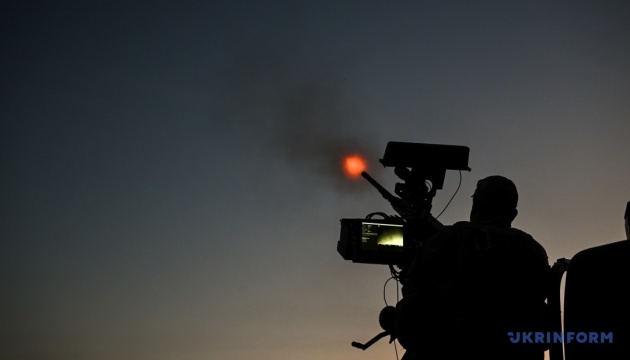
Photo: Ukrinform UA
At a glance
- Ukrainian air defense intercepted 234 out of 251 drones launched by Russian forces.
- The attack employed various drone models, primarily Shahed drones, indicating strategic complexity in Russian military operations.
- Key urban centers and civilian infrastructure faced direct threats, intensifying safety concerns for local populations.
- The incident reflects the evolving tactics of Russian military operations amid the ongoing conflict.
- The March 22 assault is one of the most significant drone attacks observed in recent weeks.
Why it matters
The incident underscores the continuous threat posed by drone warfare and illustrates the evolving tactics employed by Russian forces. Each successful interception reflects Ukraine's advancing air defense technology, vital for safeguarding civilian populations and critical infrastructure in the ongoing conflict.
https://www.ukrinform.ua/rubric-ato/4104452-sili-ppo-zneskodili-234-rosijski-bezpilotniki.html
Overview

On the night of March 22, Ukraine's air defense faced an unprecedented challenge as Russian forces launched a large-scale drone assault comprising 251 drones. Among these, the predominantly used models included the Shahed series.
The drones were deployed from several locations, including Bryansk, Oryol, and Kursk, as well as from Millerovo, Primorsko-Akhtarsk, and the long-occupied territory of Crimea. This coordinated assault showcases the strategic depth of the Russian military's aerial operations.
Air Defense Response
In response to this significant threat, Ukrainian air defense units initiated an extensive counteroperation that leveraged multiple resources. The operation included the deployment of advanced anti-aircraft missile systems, electronic warfare capabilities, and mobile fire groups, all coordinated to intercept the incoming drones effectively.
By 08:00 on March 23, the interception rate stood impressively high, with Ukrainian forces successfully neutralizing 234 of the 251 drones. This achievement highlights not only the technological advancements within Ukraine's defense systems but also the preparedness and resoluteness of its military forces.
Impact and Damage
While the interception was notably successful, it is essential to note that 17 drones managed to circumvent defense measures, leading to strikes on 11 distinct locations across Ukraine. Notably, several residential areas in the suburbs of Odesa sustained considerable damage, raising serious concerns about potential civilian casualties.
Ukrainian officials remain vigilant, closely monitoring the airspace to guard against future drone threats.
This incident not only exemplifies the ongoing complexities of modern warfare but also highlights the growing importance of drone technology in the current conflict landscape.
Conclusion
As the conflict continues, the successful interception of such a high number of drones marks a crucial point for Ukraine’s air defense strategies. It underscores the ongoing need for effective air defense solutions against evolving tactics employed by Russian forces, thereby reinforcing the critical importance of maintaining robust and responsive military capabilities in the region.
Source: Ukrinform UA
This report is maintained as a live newsroom article. Headlines and top paragraphs may be tightened when fresh reporting changes the clearest angle.
Newsletter
Get the next breaking Ukraine update
Receive the fastest lead, key facts, and follow-up links in one concise newsroom note.
Breaking format
The lead carries the core fact first.
Key figures and locations stay near the top.
Related coverage tracks the same reporting line.