News report
Ukraine's Drones Destroy Over 33,000 Russian UAVs in March 2026
In March 2026, Ukrainian interceptor drones destroyed over 33,000 Russian unmanned aerial vehicles (UAVs). Defense Minister Mykhailo Fedorov reported this significant achievement on April 8, 2026.
Share this article
Share to social platforms, or copy the article link and share text manually.
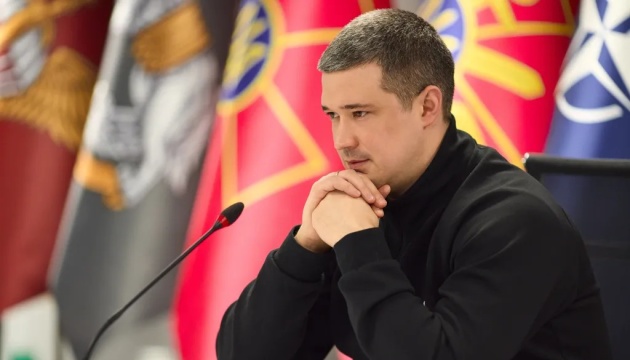
Photo: Ukrinform EN
At a glance
- Over 33,000 Russian UAVs were destroyed by Ukraine in March 2026.
- The number of UAVs intercepted doubled compared to February 2026.
- Jet-powered Shahed drones pose significant challenges for interception.
- Ukrainian government provides up to €150,000 grants for development of interceptor technologies.
- The Brave1 Dataroom platform supports AI training for aerial threat detection.
Why it matters
The destruction of over 33,000 enemy UAVs showcases Ukraine's enhanced drone defense capabilities. This technological advancement is crucial for national security and effective airspace protection.
https://www.ukrinform.net/rubric-defense/4110580-ukrainian-interceptor-drones-destroy-over-33000-enemy-uavs-in-march-defense-minister.html
What Happened
In March 2026, Ukrainian forces achieved a major milestone in aerial defense by destroying over 33,000 Russian unmanned aerial vehicles. This figure is reported by Ukraine’s Minister of Defense, Mykhailo Fedorov, who shared the information via Facebook on April 8, 2026.
Key Details
Fedorov indicated that the number of UAVs shot down in March was twice the amount destroyed in February. The intercepted drones included various models, such as Shahed, Gerbera, Molniya, Zala, and Orlan.
He noted the increasing challenge posed by jet-powered Shahed drones, which are becoming faster and more difficult to intercept. The minister also highlighted the cooperation with drone manufacturers to enhance technological capabilities in air defense.
Discussions have been held to identify issues and develop strategies for scaling up production of interceptor drones. He revealed that under the EU4UA Defence Tech program, the Ukrainian government is supporting companies with grants of up to €150,000 to develop advanced interceptor technologies.
Additionally, Fedorov mentioned the establishment of a reward model for intercepting Shahed drones, which has already led to successful interceptions within this framework. Since 2024, over 40 grants have been distributed to encourage development in this sector.
A significant component of this effort includes the Brave1 Dataroom platform, where more than 30 companies are currently testing and validating over 50 artificial intelligence models aimed at detecting potential aerial threats under various conditions.
Why It Matters
This achievement marks a crucial advancement in Ukraine's defensive capabilities against aerial offensives. The increase in interceptions demonstrates the effectiveness of Ukrainian innovations in drone technology, which are key to national security. Enhancing these capabilities is vital as the threat from Russian UAVs persists.
Background
The Ukrainian military has been increasingly relying on advanced drone technologies to counter Russian aerial tactics. The initiative to develop interceptor drones reflects ongoing efforts to boost the country’s air defense capabilities in the face of continued hostilities.
The collaboration with domestic manufacturers is part of a broader strategy to improve Ukraine's defensive technology landscape, ensuring preparedness for future engagements. Ongoing support from international allies, alongside proactive domestic innovations, positions Ukraine to better protect its airspace amidst ongoing conflicts.
Source: Ukrinform EN
This report is maintained as a live newsroom article. Headlines and top paragraphs may be tightened when fresh reporting changes the clearest angle.
Newsletter
Get the next major Ukraine report
Follow the strongest verified developments with a cleaner newsroom brief and direct follow-up coverage.
Report format
Fast lead first, then fuller context.
Source photo stays distinct from any illustration.
Related coverage stays inside the same reporting thread.