News report
SSU Issues Suspicion Notices for Organizers of Illegal Voting in Lu...
The Security Service of Ukraine (SSU) has charged three individuals with organizing illegal voting in occupied areas of the Luhansk region. The charges relate to a pseudo-referendum and a presidential election conducted by Russian authorities.
Share this article
Share to social platforms, or copy the article link and share text manually.
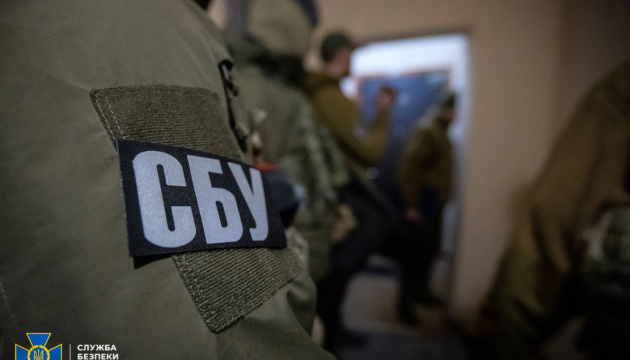
Photo: Ukrinform EN
At a glance
- SSU charges three individuals for facilitating illegal voting in Luhansk.
- One suspect is a former Luhansk official linked to the occupation's election commission.
- Another suspect coordinated electoral activities in Sievierodonetsk.
- The third suspect previously led a vocational school before joining the occupiers' commission.
- Charges appear under Criminal Code articles regarding illegal elections and territorial integrity.
Why it matters
The charging of these individuals illustrates Ukraine's commitment to prosecuting those who undermine its sovereignty. These actions also reaffirm the international community's view of the illegitimacy of elections conducted under occupation.
https://www.ukrinform.net/rubric-crime/4129917-ssu-announces-suspicion-notices-against-three-organizers-of-illegal-voting-in-occupied-parts-of-luhansk-region.html
What Happened
On June 3, 2026, the Security Service of Ukraine announced in absentia suspicion notices against three accomplices involved in facilitating illegal voting in the temporarily occupied Luhansk region. These actions are linked to a pseudo-referendum and the election of the President of the Russian Federation that were staged in this territory.
Key Details
According to the SSU, one of the suspects is a former official from Luhansk who has been accused of betraying Ukraine since 2014. This individual currently heads a unit within the occupation's equivalent of the Russian property registry, known as "Rosreestr for the LPR." He also holds a critical role within the occupiers' election commission, where he reportedly has decisive voting rights.
In March 2024, he was actively involved in orchestrating the illegal presidential election, ultimately signing the final protocol that documented the vote count. Another suspect, a female operative, coordinated the electoral process in Sievierodonetsk.
She served as a member of a fictitious precinct election commission and played a vital role in preparing voter lists, distributing ballots, and compiling voting protocols. The third individual, a former director of a vocational agricultural lyceum in Aidar, joined the faux territorial election commission in September 2022.
Her responsibilities included facilitating the pseudo-referendum aimed at incorporating the Luhansk region into the Russian Federation.
Why It Matters
The SSU's actions represent ongoing efforts to bring to justice those complicit in undermining Ukraine's sovereignty through illegal electoral processes. These charges underscore the challenges faced by Ukraine in dealing with occupation and establishing the rule of law in affected areas.
Background
The occupied territories of Luhansk and Donetsk have been sites of persistent conflict since 2014, following Russia's annexation of Crimea and subsequent support for separatist movements. The legitimacy of any such elections or referendums conducted under occupation is widely disputed, with Ukraine and most of the international community rejecting these actions as violations of international law.
According to Article 111-1 of the Criminal Code of Ukraine, participation in the organization and conduct of such illegal elections can lead to severe penalties, including up to 10 years in prison with confiscation of property. Additionally, the organizer of the pseudo-referendum in Starobilsk faces further charges related to territorial integrity violations.
Source: Ukrinform EN
This report is maintained as a live newsroom article. Headlines and top paragraphs may be tightened when fresh reporting changes the clearest angle.
Newsletter
Get the next major Ukraine report
Follow the strongest verified developments with a cleaner newsroom brief and direct follow-up coverage.
Report format
Fast lead first, then fuller context.
Source photo stays distinct from any illustration.
Related coverage stays inside the same reporting thread.