Breaking news
Russian Drone Strike on Chornobyl Fuel Storage Classified as War Crime
On June 7, 2026, the Security Service of Ukraine (SSU) announced that a Russian drone strike on a nuclear fuel storage facility near Chornobyl has been classified as a war crime. This classification follows an investigation into the incident.
Share this article
Share to social platforms, or copy the article link and share text manually.
Developing story
This page is updated as verified details move. The lead and top sections are tightened first when the clearest confirmed angle changes.
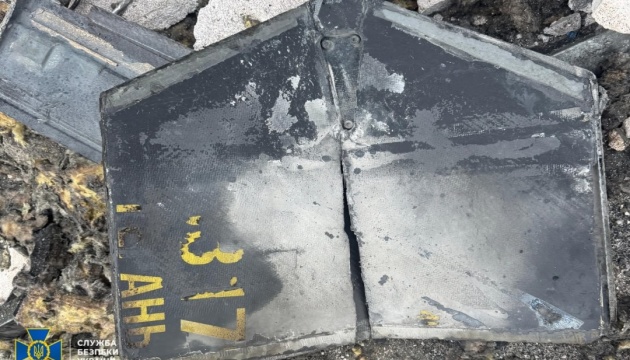
Photo: Ukrinform EN
At a glance
- Russian drone strike on Chornobyl fuel storage classified as war crime.
- Attack occurred on June 7, 2026, using a Geran-2 drone.
- Damage reported to operational buildings, but no fuel was present.
- No injuries or fatalities reported; radiation levels normal.
- Criminal investigation launched under Ukrainian law.
Why it matters
The classification of this attack as a war crime emphasizes the importance of protecting critical infrastructure. Ensuring the safety of nuclear facilities is vital for regional security and accountability in warfare.
https://www.ukrinform.net/rubric-ato/4131369-ssu-classifies-russian-drone-strike-on-nuclear-fuel-storage-facility-as-war-crime.html
What Happened
Investigators from the Security Service of Ukraine identified a drone strike by Russian forces on the Centralized Spent Nuclear Fuel Storage Facility near the Chornobyl Nuclear Power Plant as a war crime. The attack occurred early in the morning on June 7, 2026, at approximately 02:05 a.m.
The SSU reported that the Russian military utilized a Geran-2 unmanned aerial vehicle to carry out the strike. Some components of the drone have been recovered at the impact site and are being analyzed as part of the investigation.
Key Details
The explosion caused damage to the building responsible for the reception and transfer of spent nuclear fuel, as well as the administrative building of the International Atomic Energy Agency (IAEA). Fortunately, the attack did not disrupt operational processes at the storage facility, and the radiation levels in the area remained normal, with no reported injuries or fatalities.
Officials announced that a criminal investigation has been initiated under Part 1 of Article 438 of Ukraine's Criminal Code, which deals with the violation of the laws and customs of war. The SSU is currently working under the procedural supervision of the Kyiv Regional Prosecutor's Office to gather evidence and identify those responsible for the attack.
This incident highlights the ongoing risks posed by military actions in proximity to sensitive nuclear facilities, particularly in a wartime context. The IAEA is expected to send inspectors to assess the situation at the Chornobyl facility following this incident.
Why It Matters
Classifying the drone strike as a war crime underscores the gravity of military actions affecting critical infrastructure, particularly nuclear facilities. The continued safety of nuclear sites is vital to regional and global security, as any compromise could lead to severe consequences.
Investigations into such attacks are essential for accountability and legal repercussions for violations of international law. Ukraine's firm response to these attacks aims to deter future incidents and maintain oversight of its nuclear safety protocols.
Background
The Centralized Spent Nuclear Fuel Storage Facility is a crucial installation that handles spent nuclear fuel from the Chornobyl Nuclear Power Plant, which was famously the site of a catastrophic nuclear accident in 1986. Ensuring the integrity of this facility is a priority for the Ukrainian government, especially amid ongoing hostilities.
The Russian Federation has conducted numerous drone strikes across Ukraine, raising international concerns about the potential implications for security and civilian safety. The context of the war in Ukraine, ongoing since 2022, has led to increased scrutiny of military actions affecting sensitive infrastructure like nuclear facilities.
This recent incident will likely fuel further commentary and action from international bodies regarding the protection of such sites during armed conflicts.
Source: Ukrinform EN
This report is maintained as a live newsroom article. Headlines and top paragraphs may be tightened when fresh reporting changes the clearest angle.
Newsletter
Get the next breaking Ukraine update
Receive the fastest lead, key facts, and follow-up links in one concise newsroom note.
Breaking format
The lead carries the core fact first.
Key figures and locations stay near the top.
Related coverage tracks the same reporting line.