Breaking news
Russian Drone Strike Targets Police Headquarters in Nikopol, Wounds...
On March 10, a drone assault in Nikopol resulted in six injuries, predominantly among police officers. This event indicates an escalation of hostilities in the region, raising significant concerns about public safety.
Share this article
Share to social platforms, or copy the article link and share text manually.
Developing story
This page is updated as verified details move. The lead and top sections are tightened first when the clearest confirmed angle changes.

Photo: Ukrinform EN
At a glance
- Six individuals were injured, including five police officers, in the drone strikes.
- An FPV drone deliberately attacked a police vehicle during the assault.
- The district police headquarters in Nikopol was a primary target in the follow-up drone assaults.
- Authorities are currently gathering evidence at the site of the attacks.
- This incident is part of a broader pattern of violent activity in the Dnipropetrovsk region.
Why it matters
The rise in drone strikes targeting police facilities is indicative of a perilous escalation in hostilities between Russia and Ukraine. Such deliberate attacks not only jeopardize the safety of law enforcement personnel but also threaten the overall civil order and stability within affected communities.
https://www.ukrinform.net/rubric-ato/4100067-russian-drones-attack-police-in-nikopol-injuring-six.html
Attack Overview
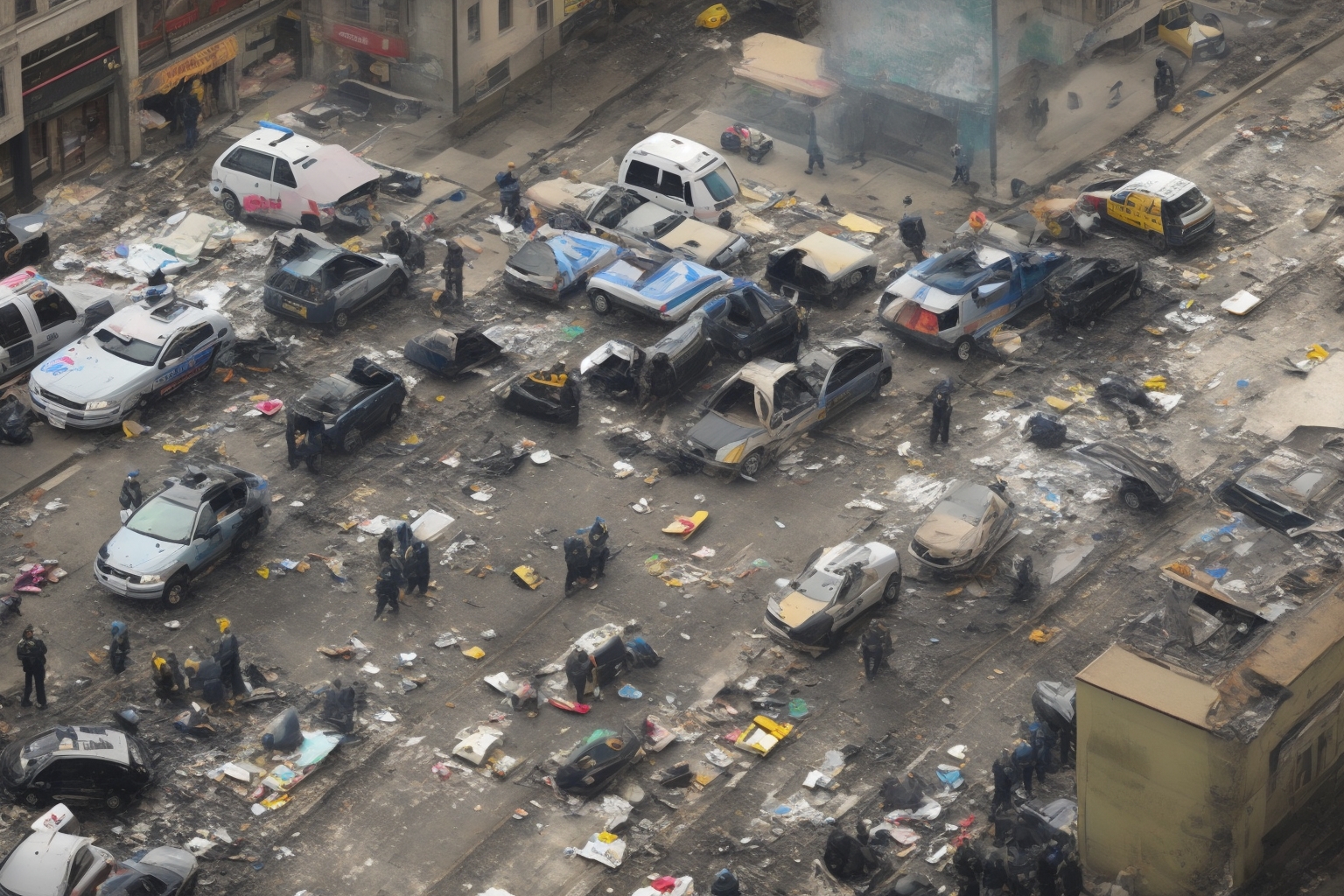
In a chilling episode on March 10, the police headquarters in Nikopol became the target of a drone assault orchestrated by Russian forces. The attack left six individuals injured, notably including five police officers.
Among the injured was a 43-year-old officer struck directly by an FPV drone as he was inside his patrol vehicle. He sustained critical injuries and was rushed to a medical facility for urgent treatment.
Following this initial attack, the drones persisted, launching additional strikes on the district police headquarters. A 38-year-old officer was injured, along with three others who suffered concussions from the blasts.
The sustained assault on law enforcement underscores the grave risk that these personnel face amid the ongoing conflict.
Impact and Damage Assessment
The damage inflicted by the drone strikes extends beyond injuries, affecting critical police infrastructure. The police administrative building, as well as several nearby properties, suffered significant physical damage.
In total, two police vehicles were completely destroyed, and a rescue unit that responded to the scene also incurred damage during the attack. Law enforcement officials are currently conducting on-site investigations to gather evidence regarding injuries and the extent of the destruction.
Context of Increased Hostilities
This incident is not an isolated event but rather part of a persistent pattern of aggression in the region. Just a day prior, on March 9, Russian forces had already initiated over 30 separate attacks on districts including Nikopol, Kryvyi Rih, and Synelnykivskyi, utilizing both drones and artillery.
These preemptive measures highlight the elevated levels of drone activity in the Dnipropetrovsk area, posing continuous threats to both law enforcement and civilians. The escalation of drone attacks signals a broader trend in violence that jeopardizes community safety and law enforcement operations.
Authorities are in the process of implementing enhanced security measures in response to these developments while investigations remain ongoing to ascertain the full impact of these incidents on local safety and order. This growing threat exemplifies the pressing challenges faced by police forces as they strive to maintain public safety under increasingly hostile conditions.
Source: Ukrinform EN
This report is maintained as a live newsroom article. Headlines and top paragraphs may be tightened when fresh reporting changes the clearest angle.
Newsletter
Get the next breaking Ukraine update
Receive the fastest lead, key facts, and follow-up links in one concise newsroom note.
Breaking format
The lead carries the core fact first.
Key figures and locations stay near the top.
Related coverage tracks the same reporting line.