Breaking news
Russian Drone Strike Damages Nuclear Fuel Storage Facility in Kyiv
A Russian drone struck the Centralized Spent Nuclear Fuel Storage Facility in the Kyiv region on June 7, causing partial destruction. The attack, which occurred at 2:10 a.m., resulted in no injuries, according to Energoatom.
Share this article
Share to social platforms, or copy the article link and share text manually.
Developing story
This page is updated as verified details move. The lead and top sections are tightened first when the clearest confirmed angle changes.
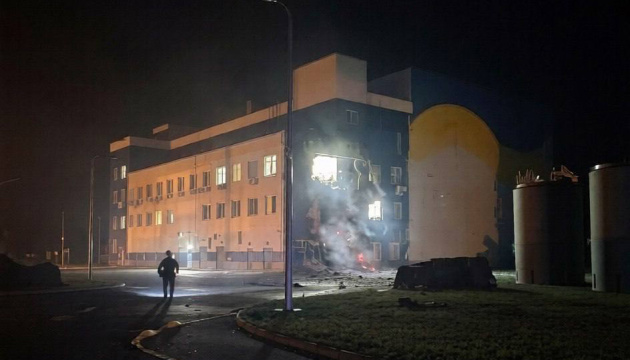
Photo: Ukrinform EN
At a glance
- A Russian drone strike occurred at the CSNFSF in Kyiv region on June 7.
- The attack resulted in damage to the container reception building but no injuries.
- No spent nuclear fuel was present at the time of the attack.
- Energoatom reported that fire was managed quickly, and radiation levels remain normal.
- Authorities are monitoring the situation and ensuring compliance with safety protocols.
Why it matters
The incident at the nuclear facility highlights the serious risks posed by military operations in proximity to sensitive sites. This event reflects a pattern of Russian aggression that threatens both regional and international security regarding nuclear safety.
https://www.ukrinform.net/rubric-ato/4131306-russian-strike-hits-centralized-spent-nuclear-fuel-storage-facility-in-kyiv-region.html
What Happened
On June 7, a Russian drone targeted the Centralized Spent Nuclear Fuel Storage Facility (CSNFSF) in the Kyiv region, leading to damage of the container reception building. This strike occurred at 2:10 a.m., as reported by the National Nuclear Energy Generating Company of Ukraine, or Energoatom, on their Facebook page.
Fire engulfed approximately 40 square meters of the facility but was quickly brought under control and extinguished. Importantly, no spent nuclear fuel was present at the site during the attack, and no personnel were harmed.
The situation remains stable, with radiation levels reported to be within normal limits.
Key Details
Energoatom described the incident as a clear demonstration of the Kremlin's reckless behavior concerning nuclear safety. The organization stated, "This latest strike on a nuclear infrastructure facility has once again demonstrated to the whole world the true face of the Kremlin regime, which deliberately creates threats to nuclear and radiation safety." The Ukrainian authorities are closely monitoring the aftermath of the attack.
Energoatom has a licensed operational framework for the CSNFSF and is working with relevant government bodies to ensure ongoing safety protocols.
Why It Matters
The attack underscores the ongoing risks of military actions near sensitive nuclear facilities, highlighting the potential threat to regional safety. Such strikes illustrate broader patterns of aggression by Russia, which is perceived by Ukrainian officials and international observers as increasingly reckless and dangerous.
Background
The CSNFSF is designed for the safe storage of spent nuclear fuel, and previous confrontations have raised concerns about the implications for civilian safety and environmental security. Energoatom, as the operator, continues to oversee the facility's status and ensure compliance with safety regulations despite the challenges posed by ongoing military hostilities.
The incident is part of a disturbing trend involving attacks on critical infrastructure amid the conflict. Moving forward, the international community is urged to pay close attention to these developments, as they present significant implications for nuclear safety and regional stability in Eastern Europe.
Source: Ukrinform EN
This report is maintained as a live newsroom article. Headlines and top paragraphs may be tightened when fresh reporting changes the clearest angle.
Newsletter
Get the next breaking Ukraine update
Receive the fastest lead, key facts, and follow-up links in one concise newsroom note.
Breaking format
The lead carries the core fact first.
Key figures and locations stay near the top.
Related coverage tracks the same reporting line.