News update
Russian Blogger Added to Ukraine's National Security Threat List
On April 23, 2026, the Ukrainian National Television and Radio Broadcasting Council announced that Russian blogger Alexander Stefanov has been placed on the list of individuals posing a threat to national security. This decision followed an analysis of his media activities which promote anti-Ukrainian sentiments.
Share this article
Share to social platforms, or copy the article link and share text manually.
Developing story
This page is updated as verified details move. The lead and top sections are tightened first when the clearest confirmed angle changes.
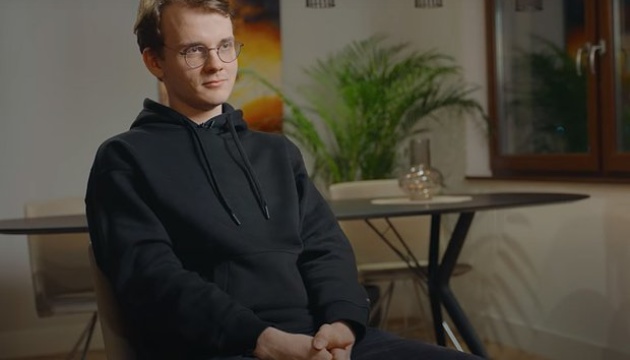
Photo: Ukrinform UA
At a glance
- Alexander Stefanov added to Ukraine's national security threat list.
- Decision made by the National Television and Radio Broadcasting Council.
- Stefanov cited for promoting anti-Ukrainian narratives online.
- Past visits to occupied territories and denial of Crimea's status documented.
- Activities pose a risk to Ukraine's information sovereignty.
Why it matters
The designation of Alexander Stefanov underscores Ukraine's commitment to protecting its national security from foreign disinformation. His activities threaten Ukraine's sovereignty and serve as a reminder of the ongoing battle against propaganda.
https://www.ukrinform.ua/rubric-society/4115862-rosijskogo-blogera-stefanova-vnesli-do-spisku-osib-aki-stanovlat-zagrozu-bezpeci-ukraini.html
What Happened
On April 23, 2026, the Ukrainian National Television and Radio Broadcasting Council (NTRC) made a significant decision to include Russian blogger Alexander Stefanov on its list of individuals who threaten Ukraine's national security. This action is based on the council's monitoring of Stefanov's media presence, where he has reportedly propagated anti-Ukrainian narratives and legitimized Russian aggression towards Ukraine.
Key Details
The NTRC's decision stems from a comprehensive evaluation of Stefanov’s activities across various media and social platforms. Words and actions identified during the analysis indicate that he has been systematically spreading content that undermines Ukraine's sovereignty and territorial integrity.
Stefanov is known for administering a YouTube channel focusing on historical and political content. His presentations have been described as controversial, particularly in relation to Ukraine’s history and current geopolitical issues.
Some highlighted instances include: - **Illegal Visits to Occupied Territories**: In February 2023, Stefanov illegally visited Mariupol and Donetsk, claiming to volunteer for a Russian organization. A resulting film asserted manipulative narratives regarding the consequences of military actions in these areas.
- **Denial of Crimea's Belonging to Ukraine**: Stefanov has publicly voiced that Crimea should not simply be handed back to Ukraine, advocating instead for complex political solutions that would effectively support the Russian occupation. - **Discrediting Ukrainian Statehood**: He has made statements alleging systemic discrimination against Russian speakers in Ukraine, which the Russian Federation uses to justify its military actions.
- **Historical Revisionism**: During lectures in Europe, Stefanov denied the genocide designation of the Holodomor, criticized figures such as Ivan Mazepa and Stepan Bandera, and issued distorted claims about the Ukrainian liberation movement. The NTRC emphasized that according to Ukrainian law, individuals who support aggression against Ukraine or question the country's territorial integrity are eligible for this designation.
Why It Matters
The inclusion of Stefanov on this list reflects ongoing concerns regarding the influence of foreign narratives on Ukrainian national security. His activities pose a significant risk by distorting historical facts and challenging Ukraine's sovereignty, particularly in the context of the ongoing conflict with Russia.
The NTRC plans to inform the Ministry of Culture regarding this decision for further actions to formally classify Stefanov as a national security threat. This step signals Ukraine's continuing efforts to counter disinformation and safeguard its information space.
Background
Stefanov's influence illustrates the larger issue of media manipulation in the Ukraine-Russia conflict. Reports show that Russian narratives often gain traction among specific audiences, particularly youth and expatriate communities.
The NTRC's efforts to monitor and act against this influence reflects a broader strategy to protect Ukraine's national identity and sovereignty from external threats. The recent actions follow similar moves by the NTRC, which has also designated other figures as security threats, emphasizing a proactive approach to mitigate risks posed by external propaganda.
Notably, the NTRC included Russian singer and producer Roman Arkhipov on its list previously, highlighting a sustained effort to combat perceived threats to Ukraine's national security.
Source: Ukrinform UA
This report is maintained as a live newsroom article. Headlines and top paragraphs may be tightened when fresh reporting changes the clearest angle.
Newsletter
Get the next Ukraine update
Track the latest policy, diplomacy, aid, and security changes without losing the thread.
Update format
This template prioritizes developments over recap.
Context stays short and tied to the current turn in the story.
The page is designed for repeat readers checking what changed.