News update
Zelensky Signs National Counter-Terrorism Concept in Ukraine
Ukrainian President Volodymyr Zelensky signed a new counter-terrorism concept on June 11, 2026. The decision aims to bolster national security against growing threats, particularly from external aggressors.
Share this article
Share to social platforms, or copy the article link and share text manually.
Developing story
This page is updated as verified details move. The lead and top sections are tightened first when the clearest confirmed angle changes.
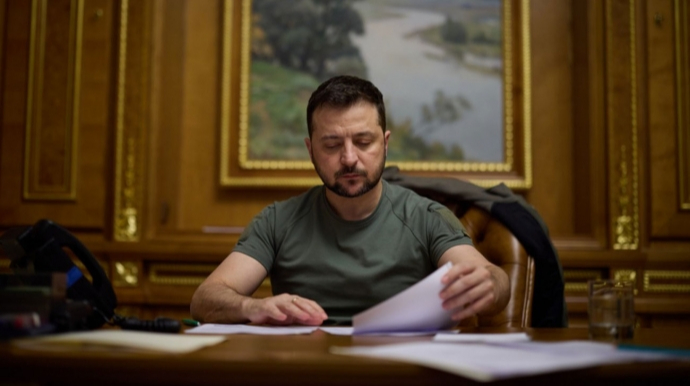
Photo: Ukrainska Pravda UA
At a glance
- Zelensky signed a counter-terrorism concept to enhance national security.
- The concept addresses threats from the Russian Federation and associated entities.
- It incorporates measures against hybrid warfare tactics, including cyber terrorism.
- The initiative is effective immediately following its publication.
- The concept aims to align with international law standards regarding terrorism.
Why it matters
The enactment of the counter-terrorism concept is crucial for strengthening Ukraine's security measures against both external and internal threats. By implementing a structured approach, Ukraine aims to improve its resilience against terrorism in an increasingly volatile environment.
https://www.pravda.com.ua/news/2026/06/11/8038877/
What Happened
On June 11, 2026, President Volodymyr Zelensky implemented a new concept aimed at combating terrorism in Ukraine. This decision, outlined in a decree based on a resolution by the National Security and Defense Council from April 6, 2026, seeks to comprehensively address the threats posed by terrorism and enhance national security frameworks.
Key Details
The concept identifies current terrorist threats to Ukraine's national security and sets forth the primary directions and objectives of state policy concerning counter-terrorism measures. It emphasizes the importance of preventing terrorism in accordance with established legislative principles, which consider both international law norms and global standards in counter-terrorism.
The decree indicates that external factors contributing to terrorist threats against Ukraine include hybrid warfare tactics employed by the Russian Federation. The concept describes Russia not only as a state aggressor but also as a state engaging in terroristic practices.
This encompasses the blending of armed aggression with various acts of terrorism, including cyber terrorism, presenting a long-term, systemic threat to the nation's safety. Furthermore, the new policy highlights the roles of armed formations linked to Russia and other affiliated entities that may be involved in generating and executing terrorist threats against Ukraine.
The implementation of this counter-terrorism concept is effective immediately following its publication.
Why It Matters
This concept marks a significant step in Ukraine’s ongoing efforts to fortify its defense against terrorism, particularly amid significant tension with Russia. By legally enshrining actions to combat terrorism, Ukraine aims to create a more robust response to both traditional and emerging threats, enhancing overall public safety and national stability.
Background
Ukraine has faced escalating security challenges, particularly from Russian-backed entities and the overarching hybrid war initiated by Russia since 2014. This context has necessitated a reevaluation of national security strategies, prompting the need for a comprehensive counter-terrorism framework.
By acknowledging not only military tactics but also psychological and cyber threats, the new concept seeks to cover various aspects of terrorism that have become increasingly relevant in today’s geopolitical climate.
Source: Ukrainska Pravda UA
This report is maintained as a live newsroom article. Headlines and top paragraphs may be tightened when fresh reporting changes the clearest angle.
Newsletter
Get the next Ukraine update
Track the latest policy, diplomacy, aid, and security changes without losing the thread.
Update format
This template prioritizes developments over recap.
Context stays short and tied to the current turn in the story.
The page is designed for repeat readers checking what changed.