News report
Investigators Reveal Russia's Hybrid Operations in Europe
Investigators released documents detailing Russia's extensive hybrid operations throughout Europe. These operations, reported by Ukrinform, are designed to discredit Ukraine and incite internal conflicts within EU member states.
Share this article
Share to social platforms, or copy the article link and share text manually.
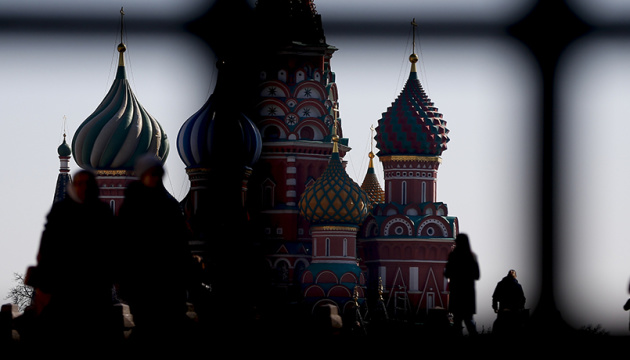
Photo: Ukrinform UA
At a glance
- Documents reveal Russia's planned hybrid attacks in Europe from 2025-2026.
- Targets include public monuments and misinformation about Ukraine's leadership.
- Recruitment of foreign agents complicates Europe's response to these threats.
- Polish intelligence warns of Russia's intensified hybrid operations.
- The ongoing threat necessitates increased vigilance among EU countries.
Why it matters
The report indicates a coordinated effort by Russia to destabilize EU nations through misinformation. Understanding these tactics is vital for European security and unity.
https://www.ukrinform.ua/rubric-world/4127678-rozsliduvaci-opriludnili-dokumenti-pro-gibridni-operacii-rf-u-evropi.html
What Happened
On May 27, 2026, a report surfaced regarding Russia's hybrid operations in Europe, aiming to undermine Ukraine's position and create discord among European Union countries. This information was disclosed by the Center for Counteracting Disinformation under Ukraine's National Security and Defense Council (NSDC).
Key Details
The report cites documents obtained by journalists from Delfi Estonia and shared with the Organized Crime and Corruption Reporting Project (OCCRP). These papers indicate that Russia has been orchestrating a series of coordinated actions involving misinformation campaigns and social destabilization tactics.
Evidence within the documents reveals plans for various attacks over the years 2025 to 2026. Notably, the documents outline schemes including the placement of provocative items, such as pig heads near mosques in Paris, defacement of the Holocaust Museum, and plans to desecrate the Charles de Gaulle monument under the guise of actions by 'Ukrainian nationalists.' Furthermore, the report mentions a project aimed at spreading falsehoods regarding purported elite real estate owned by Ukraine's President, marked as a 'successful campaign' in the leaked materials.
The Center underlines the complexity and the scale of the Russian influence operations in Europe. The infiltration of recruited agents abroad to conduct these informational operations presents a long-term hybrid threat that demands increased vigilance from European nations against entities associated with Russia.
Additionally, Polish intelligence has noted that Russia is intensifying its hybrid strategies by leveraging radicalized youths and individuals from criminal backgrounds.
Why It Matters
The disclosed documents illuminate the systematic approach Russia is employing to destabilize European politics and create rifts within EU dynamics. Such operations threaten not only Ukraine but also the broader security landscape of Europe, necessitating a robust European response against growing disinformation initiatives.
Background
Russia has been accused of various hybrid operations since the beginning of its conflict with Ukraine. These tactics often involve the use of misinformation, social media manipulation, and coordination with extremist groups to achieve strategic objectives.
As tensions escalate, understanding the scale and intent behind these operations becomes increasingly critical for European alliances and security measures. The revelations in this report highlight the ongoing need for vigilance and proactive measures to combat disinformation and its ramifications in Europe.
Source: Ukrinform UA
This report is maintained as a live newsroom article. Headlines and top paragraphs may be tightened when fresh reporting changes the clearest angle.
Newsletter
Get the next major Ukraine report
Follow the strongest verified developments with a cleaner newsroom brief and direct follow-up coverage.
Report format
Fast lead first, then fuller context.
Source photo stays distinct from any illustration.
Related coverage stays inside the same reporting thread.