Breaking news
IAEA Council Condemns Russian Attacks on Ukraine's Nuclear Sites
The IAEA Council condemned Russian attacks on Ukraine's nuclear facilities during a meeting on June 10, 2026. This resolution was supported by 47 countries and the European Union.
Share this article
Share to social platforms, or copy the article link and share text manually.
Developing story
This page is updated as verified details move. The lead and top sections are tightened first when the clearest confirmed angle changes.
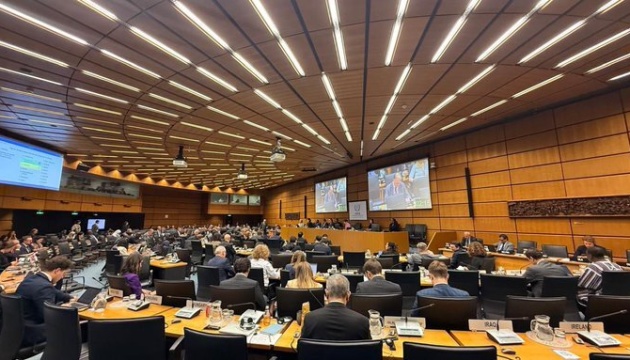
Photo: Ukrinform UA
At a glance
- IAEA Council condemned Russian attacks on Ukrainian nuclear sites.
- 47 countries and the EU supported the resolution.
- Russian drone strikes partially damaged storage facilities.
- Ukrainian officials urge increased international oversight.
- The situation poses risks to global nuclear safety.
Why it matters
This condemnation reflects a unified international stance against the infringement of nuclear safety protocols during wartime. The focus on protecting nuclear facilities is essential for regional and global stability, as any incident could have catastrophic consequences.
https://www.ukrinform.ua/rubric-economy/4132572-radi-keruucih-magate-zasudila-napadi-rf-na-aderni-obekti-ukraini.html
What Happened
On June 10, 2026, the Council of Governors of the International Atomic Energy Agency (IAEA) strongly condemned Russia's recent attacks on Ukraine's nuclear infrastructure. These assaults were specifically directed at the Centralized Storage Facility for Spent Nuclear Fuel located near the Chernobyl Nuclear Power Plant.
The condemnation was reported by Ukraine's Minister of Foreign Affairs, Andriy Sybiha, via social media.
Key Details
The IAEA's resolution received unanimous support from 47 member countries along with the European Union. Minister Sybiha highlighted the ongoing threat to nuclear safety posed by Russia's actions, calling it a significant violation amidst the ongoing conflict.
He expressed gratitude to international partners for their steadfast support and urged them to take decisive action against Russia's nuclear intimidation tactics. According to Sybiha, it is crucial to increase pressure on Russia to cease its attacks on civilian populations and restore the rightful ownership of the Zaporizhzhia Nuclear Power Plant to Ukraine.
Additionally, the IAEA warned of heightened military activity near Ukrainian nuclear sites, including Chernobyl and the Russian-occupied Zaporizhzhia facility. During the meeting, Ukraine's Deputy Minister of Energy, Anatoliy Kutsevol, informed international attendees about the current security situation concerning Ukraine's nuclear facilities.
Notably, a recent attack by a Russian drone resulted in partial destruction of a container reception building at the Centralized Storage Facility, although no spent nuclear fuel was stored there at the time.
Why It Matters
The IAEA's condemnation represents a pivotal moment in international discourse about nuclear safety during warfare. The ongoing conflict has raised global concerns regarding the risk of nuclear incidents within conflict zones. This recent resolution emphasizes the urgency for international unity against threats to nuclear facilities, which are crucial not only for Ukraine but for global security.
Background
Ukraine has faced significant challenges regarding its nuclear safety since the escalation of conflict with Russia. Since the onset of the war, there have been multiple reports about military activities threatening nuclear power plants and facilities across the country.
The IAEA has consistently monitored the situation, providing updates and advocating for measures to protect vital nuclear infrastructures. Ukrainian officials have repeatedly called for increased international oversight and support to ensure the security of these critical sites.
The tensions surrounding nuclear safety have escalated as the conflict continues, raising alarms among global watchdogs and partners in nuclear energy management.
Source: Ukrinform UA
This report is maintained as a live newsroom article. Headlines and top paragraphs may be tightened when fresh reporting changes the clearest angle.
Newsletter
Get the next breaking Ukraine update
Receive the fastest lead, key facts, and follow-up links in one concise newsroom note.
Breaking format
The lead carries the core fact first.
Key figures and locations stay near the top.
Related coverage tracks the same reporting line.