Breaking news
Estonian Foreign Minister Condemns Russian Attacks on Ukraine's Energy Infrastructure
Tsahkna's condemnation follows devastating strikes that resulted in casualties and significant damage in Ukrainian cities. He stressed the need for a strong international response.
Share this article
Share to social platforms, or copy the article link and share text manually.
Developing story
This page is updated as verified details move. The lead and top sections are tightened first when the clearest confirmed angle changes.
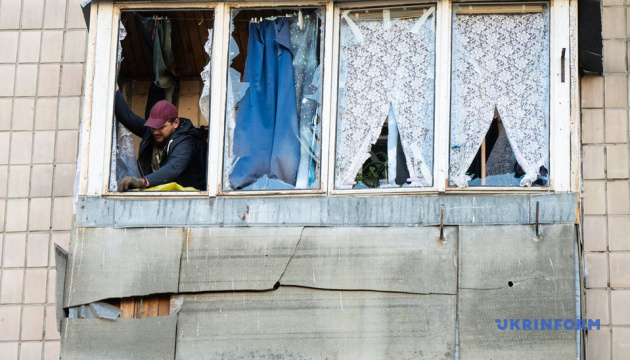
Photo: Ukrinform UA
At a glance
- Estonian Foreign Minister condemns Russian strikes as acts of terror.
- Recent attacks targeted energy infrastructure and civilian areas.
- Four civilian deaths reported due to the strikes across major cities.
- Ukrainian air defense successfully intercepted many incoming threats.
- Calls for international unity against Russian aggression are growing.
Why it matters
This development underscores the ongoing aggression faced by Ukraine and the necessity for continued international support and commitment. The response from Estonia highlights the vital role of diplomatic pressure on Russia to halt its military actions.
https://www.ukrinform.ua/rubric-polytics/4101589-ocilnik-mzs-estonii-pisla-nicnoi-ataki-po-ukraini-zorstokist-rosii-perehodit-usi-mezi.html
What Happened

Estonian Foreign Minister Margus Tsahkna denounced recent Russian missile and drone attacks targeting critical energy infrastructure and civilian areas in Ukraine, including Kyiv, Sumy, Kharkiv, Mykolaiv, and Dnipro. Reports confirm that four civilians were killed, and Ukraine's energy systems sustained considerable damage.
Tsahkna characterized Russia's strikes as part of a larger strategy to instill fear and hinder Ukraine's recovery. He cautioned that any concession to such aggression would only encourage further military ambitions from Russia.
Key Details
In a statement on social media platform X, Tsahkna stated, "Every concession only fuels the Kremlin's war machine. Our duty is to stop it, decisively and permanently." His remarks highlight the continuous hostilities and the imperative for the international community to respond firmly.
Ukrainian air defense systems intercepted many of the incoming threats, neutralizing 460 targets, including 58 missiles and 402 drones. Nevertheless, the attacks resulted in significant infrastructure damage.
Background
President Zelensky has noted that a primary objective of these strikes is to weaken Ukraine’s energy sector, essential for national resilience. Tsahkna's comments reflect deepening concerns among Baltic states regarding the escalating violence and the urgent need for collective support for Ukraine’s defenses.
As winter approaches, energy shortages resulting from these attacks could have serious implications across the region. Support from international allies like Estonia is critical in helping Ukraine resist Russian aggression and uphold democracy in Eastern Europe.
Source: Ukrinform UA
This report is maintained as a live newsroom article. Headlines and top paragraphs may be tightened when fresh reporting changes the clearest angle.
Newsletter
Get the next breaking Ukraine update
Receive the fastest lead, key facts, and follow-up links in one concise newsroom note.
Breaking format
The lead carries the core fact first.
Key figures and locations stay near the top.
Related coverage tracks the same reporting line.