Breaking news
Russia Conducts 59 Attacks on Ukrainian Positions Today
Russian military forces executed 59 attacks on Ukraine's defense positions since the start of the day. The majority of these strikes, 25, were concentrated in the Pokrovsky direction.
Share this article
Share to social platforms, or copy the article link and share text manually.
Developing story
This page is updated as verified details move. The lead and top sections are tightened first when the clearest confirmed angle changes.
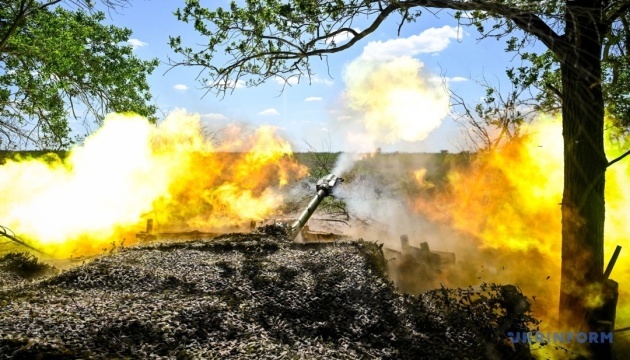
Photo: Ukrinform UA
At a glance
- 59 attacks recorded by Russian forces on Ukraine today.
- 25 of these focused in the Pokrovsky direction.
- Significant artillery shelling in Sumy and Chernihiv regions.
- 45 attacks noted in Northeastern Słobozhansky and Kursk directions.
- Ukrainian forces successfully repelled multiple assaults.
Why it matters
The high volume of Russian attacks indicates a potential shift in military strategy that could influence upcoming operations. Monitoring these developments is essential for understanding the broader implications on Ukraine's defense efforts.
https://www.ukrinform.ua/rubric-ato/4117556-rosiani-atakuvali-59-raziv-vid-pocatku-dobi-najbilse-na-pokrovskomu-napramku.html
What Happened

As of April 28, Russian forces have attacked Ukrainian defensive positions 59 times. Most of these assaults occurred in the Pokrovsky direction. The General Staff of the Armed Forces of Ukraine reported the ongoing military activity at approximately 4 PM on Tuesday, highlighting the intense conflict.
Key Details
The reported strikes focused heavily on various regions. Casualties were reported in border villages, particularly in the Sumy and Chernihiv regions. Specifically, the areas of Koreniok, Bachivsk, Iskryskvshchyna, Ryzhivka, and Atynske in Sumy faced artillery shelling.
Chernihiv's Hrinivka was also affected. As the day progressed, Russian forces continued artillery bombardments and employed drones, resulting in increased damage. The military confirmed that there were 45 separate attacks recorded in the Northeastern Słobozhansky and Kursk directions, including the use of a rocket launch system.
Heavy fighting occurred in several regions, notably in the areas of Starytsia and Chervona Zoria. Ongoing engagements were noted near Drobysheve. Ukrainian troops successfully repelled multiple attempts by Russian forces to gain ground in various sectors including Slavyansk and Kostyantynivka.
In total, the situation remains critical with several direct confrontations ongoing. The remaining conflict zones, such as the Olexandrivka and Orikhiv directions, faced heightened hostilities, with Russian forces attempting to advance and exploiting aerial strikes to target Ukrainian defensive infrastructure.
Why It Matters
The high number of attacks by Russian forces signifies a renewed escalation in hostilities. This spike in aggression could have implications for frontline positioning and support operations for Ukrainian defense. Understanding these patterns is crucial for anticipating future military actions and adjustments in strategy.
Background
The ongoing conflict has seen fluctuating levels of violence since its inception, with this latest data reflecting a concerning trend of intensified Russian activity. Experts note that such escalations often precede significant military maneuvers.
As reported by military leaders, the role of unmanned systems in defending against these aggression attempts remains vital. This informative report emphasizes the complex dynamics on the battlefield while underscoring the importance of analytical observation in light of changing conflict patterns.
The situation in Ukraine continues to require global attention and support as military confrontations evolve in intensity and sophistication.
Source: Ukrinform UA
This report is maintained as a live newsroom article. Headlines and top paragraphs may be tightened when fresh reporting changes the clearest angle.
Newsletter
Get the next breaking Ukraine update
Receive the fastest lead, key facts, and follow-up links in one concise newsroom note.
Breaking format
The lead carries the core fact first.
Key figures and locations stay near the top.
Related coverage tracks the same reporting line.