News report
Ukraine Calls for Halt to Military Operations Near Nuclear Facilities
At a UN event, Ukraine's Deputy Minister of Foreign Affairs Oleksandr Mishchenko called for an immediate end to military operations near nuclear facilities. This statement comes amid ongoing concerns about nuclear safety during the Russian invasion.
Share this article
Share to social platforms, or copy the article link and share text manually.
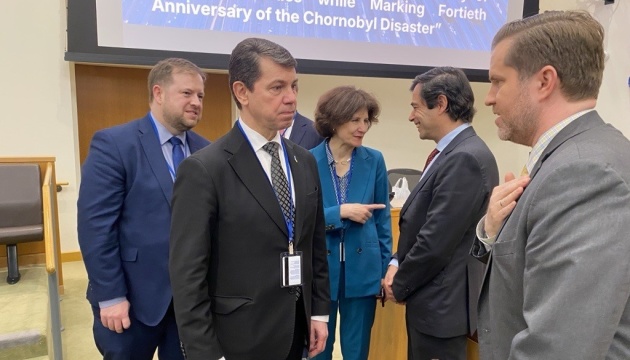
Photo: Ukrinform EN
At a glance
- Ukraine demands an end to military operations near nuclear facilities.
- The Chornobyl Nuclear Power Plant was recently targeted by Russian drone strikes.
- International cooperation on nuclear safety is at risk due to ongoing military actions.
- Past incidents have emphasized the need for robust nuclear safety frameworks.
- The Ukrainian Deputy Foreign Minister reaffirmed the nation's resistance against Russian aggression.
Why it matters
The risk of nuclear disaster during military conflicts poses a significant threat to global safety. Calls for immediate action reflect urgent international concerns over nuclear safety standards and protocols.
https://www.ukrinform.net/rubric-polytics/4117279-ukraine-at-un-all-military-operations-near-nuclear-facilities-must-cease-immediately.html
What Happened
On April 27, 2026, Ukraine's Deputy Minister of Foreign Affairs Oleksandr Mishchenko addressed a United Nations event, emphasizing the urgent need to cease all military operations near nuclear facilities. He warned that continued military actions pose a severe risk of nuclear accidents amid the Russian assault on Ukraine.
Key Details
Mishchenko highlighted specific nuclear sites endangered by the ongoing conflict, particularly the Chornobyl Nuclear Power Plant and the Zaporizhzhia Nuclear Power Plant. He indicated that incidents related to these facilities have raised unprecedented safety challenges due to the war.
One major concern involves a recent strike by a Russian drone on the Chornobyl site, which resulted in damage to the newly constructed safe confinement structure. This incident exemplifies the potential hazards when military operations occur in proximity to nuclear facilities.
The Deputy Minister reiterated that international responsibility for nuclear safety transcends borders. He stated that any harm to nuclear facilities could reverse decades of global progress in nuclear safety mechanisms, including accident early warning systems developed after the Chornobyl disaster.
Why It Matters
The call for immediate cessation of military activities near nuclear sites reflects serious concerns regarding the potential for catastrophic nuclear accidents during the ongoing war. The consequences of an incident would have far-reaching implications, impacting not only Ukraine but the entire international community.
Background
The Chornobyl disaster, which occurred in 1986, was instrumental in shaping international nuclear safety protocols and cooperation frameworks, particularly with organizations like the International Atomic Energy Agency (IAEA). Mishchenko noted the pivotal role of the UN and global partners in the ongoing recovery efforts related to Chornobyl, including radiation monitoring and medical support for affected areas.
Despite the aggressive nature of the conflict, Mishchenko affirmed Ukraine's resilience against Russian attempts to impose capitulation. He cited the strength of the Ukrainian military and the nation's unity with international allies as significant factors in resisting pressure from the Russian regime.
An exhibition commemorating the anniversary of the Chornobyl disaster opened at UN headquarters, serving as a reminder of the long-term impacts of nuclear incidents and the ongoing need for vigilance in nuclear safety amidst warfare.
Source: Ukrinform EN
This report is maintained as a live newsroom article. Headlines and top paragraphs may be tightened when fresh reporting changes the clearest angle.
Newsletter
Get the next major Ukraine report
Follow the strongest verified developments with a cleaner newsroom brief and direct follow-up coverage.
Report format
Fast lead first, then fuller context.
Source photo stays distinct from any illustration.
Related coverage stays inside the same reporting thread.