Breaking news
Details Emerge on Terrorist Behind Kyiv Attack
A man who committed a terrorist act in Kyiv on Saturday was identified as a former member of the Ukrainian Armed Forces. He served from 1992 until his retirement in 2005, primarily in Odesa.
Share this article
Share to social platforms, or copy the article link and share text manually.
Developing story
This page is updated as verified details move. The lead and top sections are tightened first when the clearest confirmed angle changes.
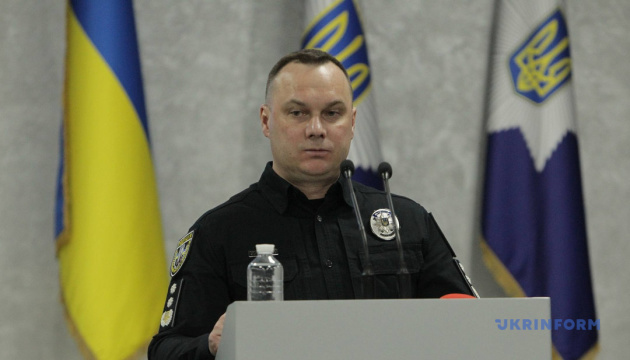
Photo: Ukrinform UA
At a glance
- The attacker was a retired member of the Ukrainian Armed Forces.
- He opened fire on civilians, resulting in four deaths and multiple injuries.
- The suspect had a history of legal troubles but maintained a firearms license.
- His military service was primarily in Odesa, and he returned to Ukraine in 2017.
- The incident is classified as a terrorist act by the Security Service of Ukraine.
Why it matters
This attack emphasizes the complexities surrounding firearm regulation and the potential threat posed by individuals with military experience. It also raises significant public safety concerns for urban areas in Ukraine.
https://www.ukrinform.ua/rubric-society/4114292-vigivskij-povidomiv-detali-biografii-terorista-akogo-likviduvali-u-kievi.html
What Happened
A shooting incident occurred in the Holosiivskyi district of Kyiv on Saturday, resulting in multiple casualties. The attacker was neutralized by law enforcement after taking hostages in a supermarket following the attack.
According to the head of the National Police of Ukraine, Ivan Vihivskyi, the perpetrator had opened fire on civilians, killing four individuals before taking a fifth person hostage inside a store. The suspect was reported to have been killed during an effort to resolve the standoff.
Key Details
Vihivskyi provided a detailed profile of the suspect at a press briefing. The assailant was originally from Moscow but had spent a significant part of his life in Ukraine, serving in the Ukrainian military.
He was noted for serving in the automobile troops based in the Odesa region and retired in 2005. Local sources revealed that the individual had a closed demeanor and was characterized as having a troubled relationship with neighbors.
Vihivskyi mentioned that the suspect had some prior legal issues but had reconciled those in court, which did not affect his weapon ownership rights. Authorities confirmed the suspect had legally registered firearms, including a carbine, allowing him to carry a weapon under Ukrainian law.
The police further indicated that there were incidents of conflict with neighbors that were described as situational disputes rather than ongoing feuds. Inquiries into the man’s mental state are ongoing, with focus on medical documentation he obtained shortly before the attack.
This form, dated December 15, 2025, had raised questions about the legitimacy of his firearms permit.
Why It Matters
The attack raises serious concerns about firearm regulations and the backgrounds of individuals permitted to carry weapons in Ukraine. With numerous casualties resulting from this incident, it highlights the risks posed by individuals with military backgrounds engaging in violent acts.
Understanding the profile of the attacker may help authorities in enhancing preventive measures against similar incidents in the future.
Background
The assault took place in a highly populated area of Kyiv, quickly prompting responses from various emergency services, including negotiators and specialized units like KORD. The shooting has significantly affected local communities and heightened fears around public safety in urban centers.
Following this incident, ongoing investigations by the Security Service of Ukraine are underway to further classify the event and its broader implications for national security.
Source: Ukrinform UA
This report is maintained as a live newsroom article. Headlines and top paragraphs may be tightened when fresh reporting changes the clearest angle.
Newsletter
Get the next breaking Ukraine update
Receive the fastest lead, key facts, and follow-up links in one concise newsroom note.
Breaking format
The lead carries the core fact first.
Key figures and locations stay near the top.
Related coverage tracks the same reporting line.