Breaking news
Zelensky Announces Long-Range Strike Campaign Against Russia
Ukrainian President Volodymyr Zelensky reported the ongoing implementation of a long-range strike campaign against Russian targets in a video address. The initiative is in direct response to continuous Russian military actions.
Share this article
Share to social platforms, or copy the article link and share text manually.
Developing story
This page is updated as verified details move. The lead and top sections are tightened first when the clearest confirmed angle changes.
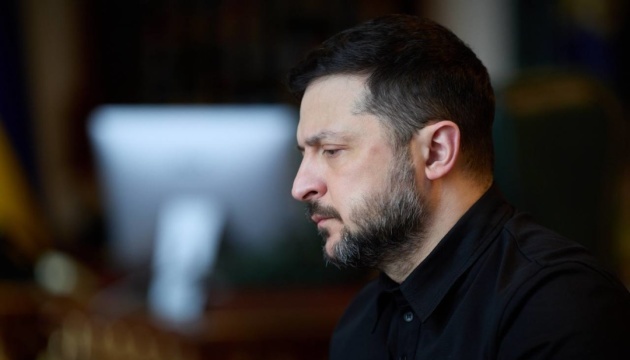
Photo: Ukrinform EN
At a glance
- Ukrainian President Zelensky confirms ongoing long-range strikes against Russian targets.
- Operations have successfully targeted military logistics, resulting in fuel shortages in Crimea.
- The Unmanned Systems Forces reportedly destroyed two Tu-142 military aircraft and an Iskander missile system.
- Strikes carried out in occupied territories along the Azov Sea and in Russian regions.
- Zelensky emphasizes that Russia's continued aggression prolongs the conflict.
Why it matters
Zelensky's announcement indicates Ukraine's evolving military tactics aimed at countering Russian aggression. The successful strikes disrupt Russian logistics, which is critical for wartime operations.
https://www.ukrinform.net/rubric-ato/4128921-zelensky-says-ukraine-is-implementing-its-longrange-strike-campaign-in-response-to-russian-attacks.html
What Happened
In a recent evening address, President Volodymyr Zelensky announced the successful execution of a long-range strike campaign by Ukraine targeting Russian military logistics and fuel facilities. Zelensky stated that these operations are a direct response to sustained Russian attacks on Ukrainian territory.
Zelensky emphasized the effectiveness of the Ukrainian forces, particularly highlighting their advancements in reaching deep into temporarily occupied areas along the Azov Sea coast. He expressed gratitude to the soldiers involved in what he called the country’s long-range sanctions and mid-strike missions.
Key Details
According to Zelensky, significant results have been achieved in varying operational depths, which are already leading to noticeable fuel shortages in Crimea. A key part of Ukraine's strategy includes the use of drones capable of reaching strategic targets, including military aircraft and missile systems.
The president detailed that Ukraine's Unmanned Systems Forces reportedly struck two Tu-142 military aircraft and an Iskander missile system at a military airfield in Taganrog, Russia, during operations conducted on the night of May 29-30. In this context, Zelensky noted that Ukrainian strikes have also been executed in the Rostov region, while operations by the Security Service of Ukraine took place in Krasnodar Krai.
Why It Matters
The ongoing campaign reflects Ukraine's adaptive military strategies in response to Russian aggression. By targeting military logistics and capabilities, Ukraine aims to weaken Russia’s operational effectiveness in the war. Zelensky's remarks underline a shift in the conflict, as he points out that continued military engagement is a choice made by Russia, emphasizing that peace could have been attainable earlier.
Background
Ukraine’s long-range strike campaign is part of a broader strategic objective to reclaim control over occupied territories and diminish Russia's capability to conduct further military operations. Strikes by Ukraine have intensified as the conflict enters a prolonged phase, and leadership emphasizes the need for ongoing military readiness.
These developments come against the backdrop of escalating tensions in the region, fueling anticipation about future military and diplomatic initiatives. As both sides remain engaged in conflict, the international community continues to monitor the situation closely.
Source: Ukrinform EN
This report is maintained as a live newsroom article. Headlines and top paragraphs may be tightened when fresh reporting changes the clearest angle.
Newsletter
Get the next breaking Ukraine update
Receive the fastest lead, key facts, and follow-up links in one concise newsroom note.
Breaking format
The lead carries the core fact first.
Key figures and locations stay near the top.
Related coverage tracks the same reporting line.