Breaking news
UN Security Council to Discuss Latest Russian Attacks on Ukraine
The UN Security Council will convene on April 20 to consider recent Russian missile strikes on Ukraine, prompted by a request from Kyiv. The attacks included a coordinated assault on the city of Dnipro on April 14.
Share this article
Share to social platforms, or copy the article link and share text manually.
Developing story
This page is updated as verified details move. The lead and top sections are tightened first when the clearest confirmed angle changes.
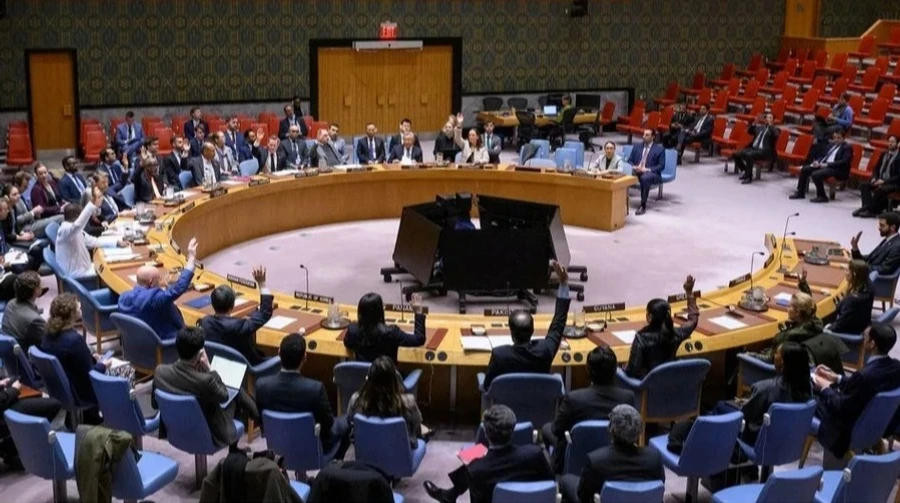
Photo: Ukrainska Pravda UA
At a glance
- UN Security Council meeting on April 20 to discuss Russian attacks.
- Request initiated by Ukraine after strikes on Dnipro on April 14.
- Meeting led by key UN officials including Mohamed Khaled Khiari.
- Support for Ukraine's request from multiple countries, including the UK and France.
- Discussion focuses on humanitarian impacts and security concerns.
Why it matters
This meeting represents a significant international response to the violence against Ukraine and could influence future diplomatic actions. It reinforces the global community's commitment to addressing security and humanitarian issues stemming from the conflict.
https://www.pravda.com.ua/news/2026/04/20/8030868/
What Happened
On April 20, the UN Security Council will hold a session to address ongoing Russian missile attacks against Ukraine. This discussion is in response to a formal request made by Ukraine following significant attacks that occurred on April 14.
The missile strikes targeted Dnipro and several other cities, raising urgent concerns among UN member states. According to the source, the attacks prompted a call for a Security Council meeting to contemplate the implications of such actions on international stability and security.
Key Details
The session is set to commence at 15:00, which is 22:00 Kyiv time. The meeting will feature insights from two key officials: Mohamed Khaled Khiari, Assistant Secretary-General for the Middle East, Asia, and the Pacific, and Joyce Msuya, Deputy Secretary-General for humanitarian affairs.
Support for Ukraine’s request was shown by multiple countries, including Denmark, France, Greece, Latvia, Liberia, and the United Kingdom. This level of backing underscores a collaborative effort among member states to address the escalating violence.
Why It Matters
The upcoming Security Council meeting represents an important step in addressing the humanitarian and security challenges posed by Russia's military actions. It highlights the international community's response to the continued threats against Ukrainian sovereignty and civilian safety.
Background
Russia's military operations in Ukraine have been ongoing since the beginning of the conflict in 2014, intensifying significantly in 2022 with full-scale military aggression. The UN Security Council has repeatedly convened to discuss various aspects of the conflict, focusing on violations of international law and the humanitarian repercussions resulting from the hostilities.
As the situation evolves, international discussions and actions like these meetings play a critical role in shaping diplomatic responses and potential resolutions to the ongoing crisis.
Source: Ukrainska Pravda UA
This report is maintained as a live newsroom article. Headlines and top paragraphs may be tightened when fresh reporting changes the clearest angle.
Newsletter
Get the next breaking Ukraine update
Receive the fastest lead, key facts, and follow-up links in one concise newsroom note.
Breaking format
The lead carries the core fact first.
Key figures and locations stay near the top.
Related coverage tracks the same reporting line.