Breaking news
European Ambassadors Briefed on Components in Russian Attacks
European ambassadors were shown foreign-made components from Russian missiles and drones that targeted Ukraine on May 24. The presentation took place during a meeting with Ukrainian officials in Kyiv.
Share this article
Share to social platforms, or copy the article link and share text manually.
Developing story
This page is updated as verified details move. The lead and top sections are tightened first when the clearest confirmed angle changes.
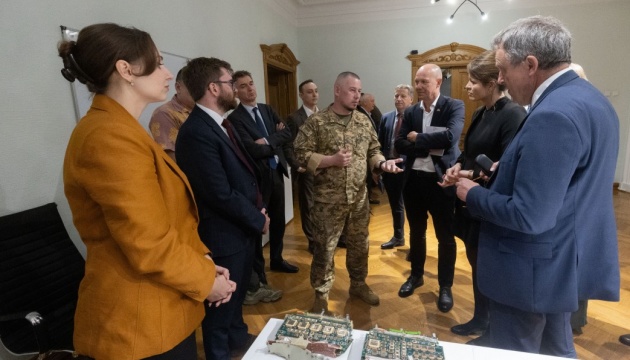
Photo: Ukrinform EN
At a glance
- European ambassadors reviewed foreign components in Russian missiles.
- Components were sourced from several countries, including the U.S. and Germany.
- Ukrainian officials emphasized the need for tighter sanctions enforcement.
- The May 24 attack injured 92 and resulted in significant infrastructure damage.
- Concerns about Belarus' role in supplying military components were raised.
Why it matters
The briefing with European ambassadors highlights the urgent need to address the supply chains supporting Russian military actions. Coordinated international responses are essential for increasing sanctions and enforcing existing laws to deter future attacks.
https://www.ukrinform.net/rubric-polytics/4128083-european-ambassadors-shown-foreignmade-components-from-russian-missiles-and-drones.html
What Happened
On May 24, Ukraine experienced a significant missile and drone attack from Russia, resulting in multiple civilian casualties and damage to infrastructure. In response, European ambassadors convened in Kyiv to review foreign components discovered in the Russian weaponry used during the strike.
This meeting involved key officials from Ukraine's presidential office and security agencies. The diplomats, which included representatives from various European nations, were introduced to parts recovered from Russian missile systems and UAVs.
The types of missiles showcased included the Zircon, Kalibr, and Kh-101, along with Geran-2 drones. These components have been identified as critical to understanding the supply chains supporting Russia's military operations against Ukraine.
Key Details
According to information shared by the Office of the President of Ukraine, many of the components in question originate from countries such as Switzerland, Germany, the United States, the United Kingdom, Japan, and China. During the briefing, Vladyslav Vlasiuk, Presidential Commissioner for Sanctions Policy, emphasized the need for European states to actively prevent the provision of these components to Russia.
He stated that ensuring effective control over Belarusian access to foreign electronics is critical. Notably, some components were manufactured at the Integral plant in Minsk, which supplies parts for Russia's missile systems.
Pavlo Palisa, Deputy Head of the Presidential Office, urged European nations to enhance enforcement of existing sanctions while accelerating the development of new legislative measures targeting the supply chains for Russian military hardware. He emphasized the grave implications of continued missile strikes on Ukrainian civilians.
Why It Matters
This engagement with European ambassadors serves a dual purpose: it informs international counterparts of the direct consequences of foreign assistance to Russia, and it calls for advanced measures to curb such support. The ongoing missile threats against Ukraine underscore the urgent need for coordinated action among European nations.
Background
The May 24 attack on Kyiv resulted in the injury of 92 individuals and the tragic loss of three lives. Approximately 300 locations within the city faced damage, with nearly 150 residential buildings affected.
An estimated 90 missiles and 600 UAVs were deployed in this offensive. The fallout from these strikes further solidifies the case for international vigilance against supplying components that bolster Russia's military capacity.
In summary, the Ukrainian government seeks not only immediate protection for its citizens but also a long-term strategy that addresses the broader implications of international supply chains on the conflict. Coordinated sanctions and scrutiny of Russia's access to military technology remain critical objectives moving forward.
Source: Ukrinform EN
This report is maintained as a live newsroom article. Headlines and top paragraphs may be tightened when fresh reporting changes the clearest angle.
Newsletter
Get the next breaking Ukraine update
Receive the fastest lead, key facts, and follow-up links in one concise newsroom note.
Breaking format
The lead carries the core fact first.
Key figures and locations stay near the top.
Related coverage tracks the same reporting line.