News report
Ukrainian SOF Target Oil Infrastructure in Crimea
The Ukrainian Special Operations Forces (SOF) executed strikes on oil depots in Crimea on June 7. These operations targeted facilities utilized by Russian military forces for fuel storage and transport.
Share this article
Share to social platforms, or copy the article link and share text manually.
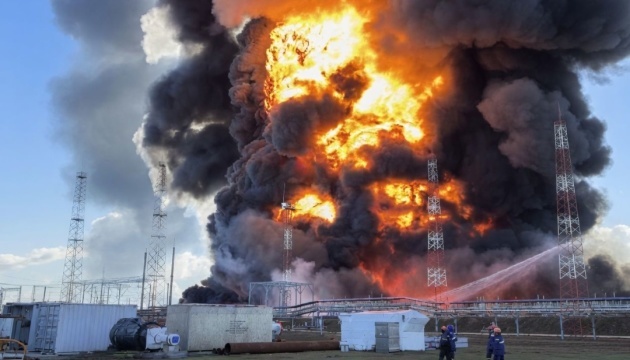
Photo: Ukrinform EN
At a glance
- Ukrainian SOF struck Semikolodezianska oil depot on June 7, 2026.
- The depot is located 200 kilometers from the line of contact, used by Russian forces.
- Feodosia oil terminal, also hit, supports maritime fuel transfers.
- Strikes aimed at disrupting Russian military logistics in Crimea.
- Ukrainian forces recently hit 26 military targets in occupied territories.
Why it matters
Targeting these oil depots reduces the Russian military's ability to sustain operations in occupied territories. Disruption of fuel supplies complicates logistics and operational capabilities for Russian forces in Crimea.
https://www.ukrinform.net/rubric-ato/4131346-ukrainian-sof-carry-out-series-of-strikes-on-oil-depots-in-crimea.html
What Happened
On June 7, 2026, Ukrainian Special Operations Forces (SOF) launched coordinated strikes on oil depots in Crimea. The operations specifically targeted the Semikolodezianska oil depot located in the settlement of Yedi-Kuyu, known as Lenine by the Russian occupiers, and a maritime oil terminal in Feodosia. The SOF command announced these strikes via a statement on Facebook.
Key Details
The Semikolodezianska oil depot is situated approximately 200 kilometers from the active conflict line. It serves as a critical transshipment point for various fuels, including fuel oil, diesel fuel, and bitumen, with nine storage tanks ranging from 700 to 3,000 cubic meters in capacity.
The fuel stored at this facility is subsequently transported via rail to support Russian military operations across Crimea and other occupied regions of Ukraine. This terminal houses seven fuel storage tanks that can hold between 10,000 and 20,000 cubic meters.
It functions as a multifunctional complex for transferring petroleum products from rail tankers to marine vessels, crucial for sustaining fuel supplies to Crimea, especially during emergencies. These strikes were part of a broader offensive by Ukraine’s Unmanned Systems Forces, which reportedly hit 26 Russian military targets across both occupied territories in Ukraine and Russia’s Bryansk region overnight on June 7.
Why It Matters
The strikes on these oil depots are significant as they disrupt the logistical capabilities of Russian forces operating in Crimea. By targeting fuel supplies, the Ukrainian military aims to hinder the operational effectiveness of Russia’s military activities in the region and impact their capacity for sustained operations.
Background
Crimea has remained a focal point in the ongoing conflict between Ukraine and Russia since its annexation in 2014. The presence of military infrastructure, including oil depots and terminals, supports the Russian military's strategic objectives in the region.
Ukrainian forces have increasingly targeted such facilities to weaken Russian operational readiness and retaliate against the ongoing occupation. The use of drones and targeted strikes by SOF indicates a continued emphasis on precision attacks within the conflict.
Source: Ukrinform EN
This report is maintained as a live newsroom article. Headlines and top paragraphs may be tightened when fresh reporting changes the clearest angle.
Newsletter
Get the next major Ukraine report
Follow the strongest verified developments with a cleaner newsroom brief and direct follow-up coverage.
Report format
Fast lead first, then fuller context.
Source photo stays distinct from any illustration.
Related coverage stays inside the same reporting thread.