Breaking news
Ukrainian Military Reports Constant Russian Offensive Pressure
The Ukrainian military stated that Russian combat pressure remained unchanged during the declared 'Easter ceasefire.' This statement was made by Viktor Tregubov, spokesperson for Ukraine's Joint Forces Grouping.
Share this article
Share to social platforms, or copy the article link and share text manually.
Developing story
This page is updated as verified details move. The lead and top sections are tightened first when the clearest confirmed angle changes.
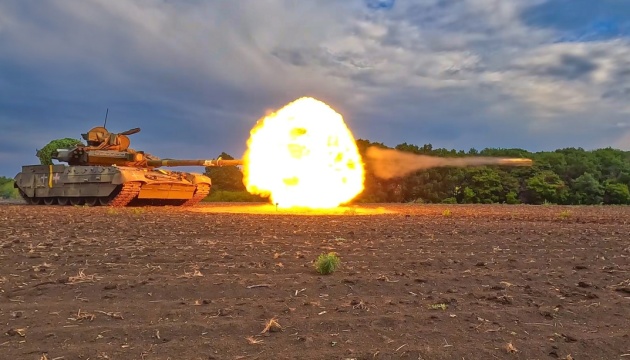
Photo: Ukrinform EN
At a glance
- Ukrainian military reports unchanged Russian offensive pressure.
- Russian forces utilized ceasefire for troop rotation and reinforcement.
- Over 10,721 violations by Russian forces documented since ceasefire.
- Combat activity continues at standard levels across multiple fronts.
- Ten settlements in the Kharkiv region reported enemy fire recently.
Why it matters
The continuing Russian offensive during the declared ceasefire underscores the challenges of maintaining peace agreements in the conflict. Changes in troop movements suggest ongoing military strategies that could affect the stability of the region.
https://www.ukrinform.net/rubric-ato/4111858-russian-offensive-pressure-unchanged-during-easter-ceasefire-ukrainian-military-says.html
What Happened
Ukrainian military officials reported that Russian offensive pressure did not diminish during the so-called 'Easter ceasefire' declared by Russia. Viktor Tregubov, spokesperson for Ukraine's Joint Forces Grouping, stated that Russian forces continued their combat operations without noticeable change, employing the ceasefire for troop rotation and reinforcement.
Key Details
Tregubov asserted that the intensity of assault actions by Russian forces remained consistent. He noted that if the ceasefire had not been mentioned on media outlets, it would have gone largely unnoticed on the frontlines.
Despite the political nature of the ceasefire announcement, combat activity on the Lyman, Kharkiv, and Sumy fronts persisted at standard levels. In areas deemed relatively calm, such as the Velykyi Burluk tactical zone, Russian forces reportedly utilized the ceasefire period to reinforce their positions.
This involved bringing in new troops from the Russian Federation and replenishing units that had sustained significant losses in prior engagements. Tregubov highlighted that, although direct offensive maneuvers were not currently underway there, the enemy was strategically rebuilding its capabilities.
On April 12, Ukraine's General Staff documented 107 combat engagements between its Defense Forces and Russian troops. Since the ceasefire was announced, approximately 10,721 violations by Russian forces have been recorded, indicating a substantial level of ongoing conflict despite the temporary political declaration.
These numbers raised concerns about the credibility of the ceasefire and the situation on the ground.
Why It Matters
The ongoing combat despite the announced ceasefire raises significant questions about the effectiveness of such agreements. The Ukrainian military's insights illustrate the persistence of hostilities and the tactical shifts that Russian forces may be implementing, thereby affecting frontline stability.
Background
The 'Easter ceasefire' was intended as a period of reduced hostilities in observance of the holiday. However, its implementation has come into serious doubt as Ukrainian officials report that Russian military actions have not only continued but potentially intensified in strategic areas.
Tensions remain high as Ukraine continues to monitor Russian military movements and prepare for potential escalations in combat operations.
Source: Ukrinform EN
This report is maintained as a live newsroom article. Headlines and top paragraphs may be tightened when fresh reporting changes the clearest angle.
Newsletter
Get the next breaking Ukraine update
Receive the fastest lead, key facts, and follow-up links in one concise newsroom note.
Breaking format
The lead carries the core fact first.
Key figures and locations stay near the top.
Related coverage tracks the same reporting line.