News report
Ukrainian Forces Target Russian Sites in Moscow Region Using Domest...
Ukrainian defense forces struck multiple critical sites in the Moscow region, utilizing domestically developed weaponry. This operation was reported by the General Staff of the Armed Forces of Ukraine on May 17, 2026.
Share this article
Share to social platforms, or copy the article link and share text manually.
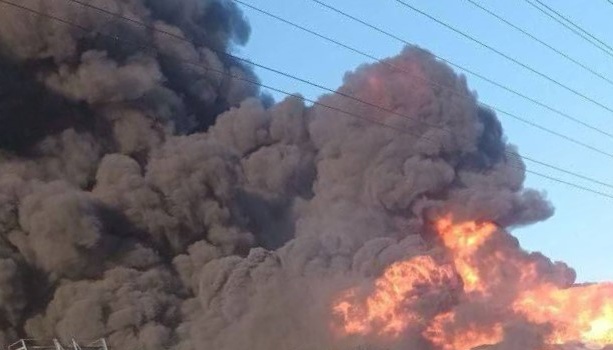
Photo: Ukrinform UA
At a glance
- Ukrainian defense forces employed domestically developed weapons for strikes.
- The attacks targeted critical Russian military infrastructure in Moscow region.
- Key sites included "Angstrem" and the "Solar-Goriska" pumping station.
- Fires were reported at multiple targeted sites post-strike.
- This operation reflects Ukraine's commitment to countering Russian military effectiveness.
Why it matters
The Ukrainian strikes against Russian facilities utilize local weaponry, showcasing the country's military innovation. Disrupting critical infrastructure is a strategic move to weaken Russian military operations.
https://www.ukrinform.ua/rubric-ato/4124345-dla-urazenna-cilej-u-moskovskij-oblasti-zastosuvali-ozbroenna-ukrainskoi-rozrobki-genstab.html
What Happened

On May 16 and into the night of May 17, Ukrainian defense units conducted strikes against significant Russian assets in the Moscow region. The General Staff of the Armed Forces of Ukraine confirmed that domestically produced weaponry was employed in these operations.
Key Details
The General Staff announced the use of specific Ukrainian-developed weapons during these strikes, including RS-1 "Bars," FP-1 "Firepoint," and BARS-SM "GLADIATOR." These advanced systems were instrumental in targeting several facilities and infrastructure necessary for Russian military operations. One of the key targets was the "Angstrem" enterprise located in the Zelenograd district.
This facility specializes in high-tech products and microelectronics critical for precision weaponry. A fire was reported at the site following the attack. The facility is a pivotal part of the Russian military-industrial complex, engaged in producing electronic components, radio-electronic systems, optical technologies, and robotics for military use.
Additionally, the "Solar-Goriska" pumping station was struck. This station plays a crucial role in the circular oil pipeline around Moscow, facilitating the transport, storage, and unloading of substantial quantities of gasoline and diesel fuel, including supplies for the Russian army.
A fire was also documented at this location. Strikes were also reported on enemy command posts in the Bunge area of Donetsk region and command sites for Russian drones in the Dvorichna area of Kharkiv region, as well as in the Zavіtne and Udačne areas of Donetsk.
The Ukrainian forces effectively targeted concentrations of enemy personnel in various locations including Myrne in Donetsk, Krasnohirske in Zaporizhzhia, and Volyfino in Kursk region.
Why It Matters
These operations highlight the ongoing conflict dynamics between Ukraine and Russia, particularly the effectiveness of Ukraine's domestic weaponry in targeting military infrastructure in enemy territory. The strikes are indicative of continued Ukrainian efforts to disrupt Russian military capabilities.
Background
The use of Ukrainian-designed weapons represents a significant advancement in Ukraine's defensive and offensive capabilities. The continuous development and deployment of such systems are crucial as the conflict evolves, illustrating Ukraine's commitment to leveraging its technological advancements against its adversaries.
Most of the reported operations occurred in regions deemed vital for the operational efficiency of the Russian military, potentially altering logistical capabilities in the ongoing conflict.
Source: Ukrinform UA
This report is maintained as a live newsroom article. Headlines and top paragraphs may be tightened when fresh reporting changes the clearest angle.
Newsletter
Get the next major Ukraine report
Follow the strongest verified developments with a cleaner newsroom brief and direct follow-up coverage.
Report format
Fast lead first, then fuller context.
Source photo stays distinct from any illustration.
Related coverage stays inside the same reporting thread.