News report
Ukrainian Forces Liberate 480 Sq Km on Oleksandrivka Axis
Ukrainian forces have liberated 480 square kilometers of territory along the Oleksandrivka axis, as reported by Commander-in-Chief Oleksandr Syrskyi. This advancement surpasses previous territorial gains achieved in early counteroffensive operations.
Share this article
Share to social platforms, or copy the article link and share text manually.
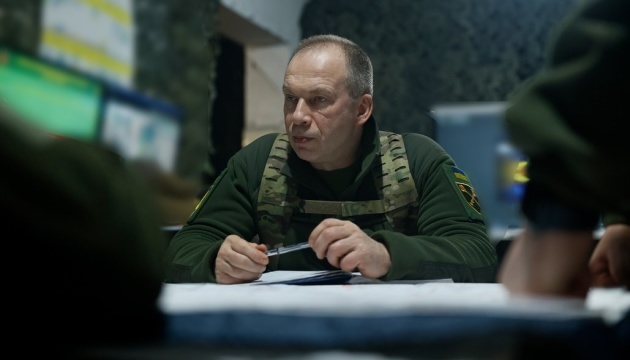
Photo: Ukrinform EN
At a glance
- Ukrainian forces liberated 480 sq km on the Oleksandrivka axis.
- This marks a significant improvement over previous counteroffensive operations.
- Russian troops launched 46 attacks on Ukrainian defenses during this period.
- The heaviest fighting is reported on the Pokrovsk axis.
- Russian military plans have shifted due to these successful Ukrainian operations.
Why it matters
The recent liberation of 480 square kilometers boosts Ukrainian military morale and enhances strategic positioning against Russian forces. Holding these positions may facilitate further advances in the ongoing conflict.
https://www.ukrinform.net/rubric-ato/4107304-ukrainian-forces-liberate-480-sq-km-on-oleksandrivka-axis-cinc-syrskyi.html
What Happened
Ukrainian armed forces have made significant gains on the battlefield as they liberated 480 square kilometers of territory on the Oleksandrivka axis. This announcement was made by the Commander-in-Chief of the Ukrainian Armed Forces, Oleksandr Syrskyi, during an interview on ICTV.
Key Details
Syrskyi stated that the recent territorial recovery marks a notable success in Ukraine's ongoing military efforts. He highlighted that this achievement exceeds the results from the earlier Dobropillia counteroffensive operation, which saw the liberation of over 430 square kilometers.
Active military operations on the Oleksandrivka axis began in early March, coinciding with a reallocation of Russian forces. According to Syrskyi, prior to the recent liberation, Russian military planners had intended to initiate a large-scale offensive across multiple fronts, including 13 key axes.
However, they were forced to adjust their strategies, concentrating efforts on the Oleksandrivka axis. Since the onset of these operations, Russian forces have conducted 46 attacks on Ukrainian defensive positions.
The heaviest fighting has been reported specifically on the Pokrovsk axis, indicating ongoing hostilities in other critical areas of the conflict.
Why It Matters
The liberation of additional territory is crucial for Ukraine's military strategy, as it affects both morale and operational capabilities. The recaptured areas can potentially serve as strategic positions for further advances against Russian forces.
Background
The conflict in Ukraine has seen numerous shifts in territorial control, influenced by military strategies and international support. The ongoing fighting in regions like Oleksandrivka reflects the broader context of the war, with both sides continuously adapting their approaches.
The modifications in Russian offensive plans suggest a dynamic battlefield where territorial gains and losses are rapidly evolving. This situation highlights the importance of sustained military engagement and the impact of localized successes on the overall war effort.
Source: Ukrinform EN
This report is maintained as a live newsroom article. Headlines and top paragraphs may be tightened when fresh reporting changes the clearest angle.
Newsletter
Get the next major Ukraine report
Follow the strongest verified developments with a cleaner newsroom brief and direct follow-up coverage.
Report format
Fast lead first, then fuller context.
Source photo stays distinct from any illustration.
Related coverage stays inside the same reporting thread.