Breaking news
Ukrainian Forces Intensify Strikes on Russian Logistics
Ukrainian forces have intensified their attacks on Russian logistics and military capabilities. The development, reported by the Institute for the Study of War (ISW), aims to weaken Russia's offensive operations.
Share this article
Share to social platforms, or copy the article link and share text manually.
Developing story
This page is updated as verified details move. The lead and top sections are tightened first when the clearest confirmed angle changes.
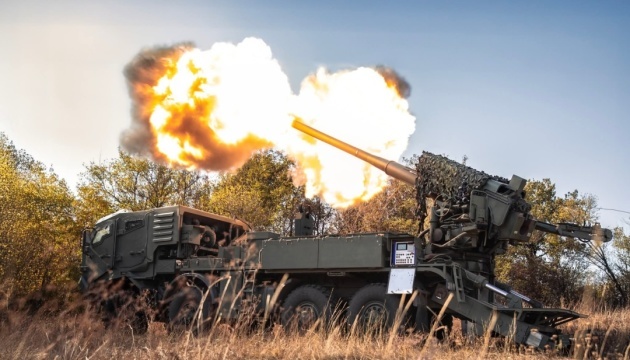
Photo: Ukrinform EN
At a glance
- Ukrainian forces intensified strikes on Russian logistics in early 2026.
- Russian territorial gains slowed to an average of 2.9 square kilometers per day.
- Ushakov indicated Ukraine must withdraw from unoccupied Donetsk for negotiations.
- Russian forces face mounting casualties exceeding recruitment rates.
- Kremlin demands for territorial concessions complicate potential peace talks.
Why it matters
Intensified Ukrainian strikes complicate Russia's military strategy, weakening its offensive capacity and altering negotiation dynamics. This shift raises questions about the Kremlin's ability to secure favorable terms in peace negotiations.
https://www.ukrinform.net/rubric-ato/4121564-ukraine-intensifies-strikes-on-russia-complicating-its-ability-to-conduct-offensives-isw.html
What Happened
In early 2026, Ukrainian forces escalated their mid-range strike campaign targeting Russian logistics, military equipment, and personnel. According to a report from the Institute for the Study of War (ISW), these intensified operations have notably degraded Russia's ability to launch offensive actions.
The report details how the demands from senior Kremlin officials, including President Vladimir Putin, for Ukraine to surrender unoccupied territories have intensified since 2025.
Key Details
The ISW report mentions that Ukrainian strikes have placed significant economic, human, and material costs on Russia’s military efforts. In the first four months of 2026, Russian advances in the conflict zone slowed to an average gain of only 2.9 square kilometers per day.
Furthermore, April 2026 witnessed Russian forces suffering a net loss of territory. Russian military personnel have experienced increasing casualties that outpace recruitment efforts, leading to a notable impact on troop numbers.
The escalating pressure from Ukrainian forces also indicates a prolonged stalemate in Russian offensive operations, particularly concerning the unoccupied Donetsk region. Ushakov's recent remarks, made on May 7, emphasized that negotiations between the U.S., Ukraine, and Russia appear fruitless unless Ukraine agrees to a withdrawal from the unoccupied Donetsk region.
This aligns with what analysts described as the Kremlin's false sense of urgency surrounding political negotiations, as the military situation deteriorates further.
Why It Matters
The deterioration of Russian offensive capabilities directly affects the ongoing conflict’s dynamics. As Ukraine effectively increases the operational challenges for Russian forces, it limits Moscow's negotiating power. Consequently, the situation underscores the complexity of reaching a sustainable peace agreement, especially given the Kremlin's insistence on territorial concessions.
Background
Since the beginning of the conflict, Russia has aimed to consolidate control over regions in Eastern Ukraine. The Kremlin's demand for ceding parts of Donetsk and Luhansk regions has been a consistent precondition for any ceasefire talks.
Analysts warn that conceding these regions would grant Russia a strategic foothold to launch further operations against Ukrainian positions. The ongoing military strategies employed by Ukraine highlight the significant operational goals both sides face as they navigate this impasse.
Source: Ukrinform EN
This report is maintained as a live newsroom article. Headlines and top paragraphs may be tightened when fresh reporting changes the clearest angle.
Newsletter
Get the next breaking Ukraine update
Receive the fastest lead, key facts, and follow-up links in one concise newsroom note.
Breaking format
The lead carries the core fact first.
Key figures and locations stay near the top.
Related coverage tracks the same reporting line.