Breaking news
Ukrainian Forces Strike Saratov Oil Refinery, Disrupting Russian Logistics
The assault on the Saratov oil refinery impacts vital production capabilities. This move is part of Ukraine's strategy to weaken Russian military logistics.
Share this article
Share to social platforms, or copy the article link and share text manually.
Developing story
This page is updated as verified details move. The lead and top sections are tightened first when the clearest confirmed angle changes.
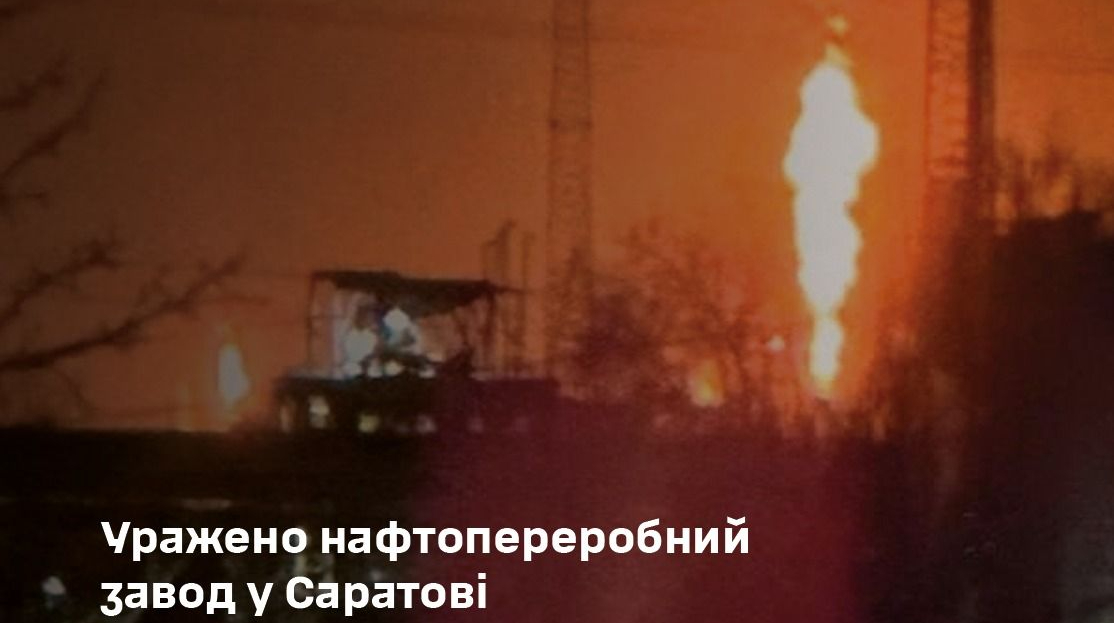
Photo: Ukrainska Pravda EN
At a glance
- Ukrainian forces executed a strike on the Saratov oil refinery during March 20-21.
- Significant damage occurred, impacting both a secondary oil refining unit and a large storage tank.
- The refinery is critical for supplying fuels necessary for Russian military operations.
- The attack follows reports of a large number of destroyed Ukrainian drones over Russian territory.
- The toll on Russian logistics from this attack is expected to be considerable amid ongoing conflict.
Why it matters
This strategic attack illustrates Ukraine's ongoing efforts to destabilize Russian military supply chains, a crucial aspect of modern warfare. Disrupting oil production not only impedes Russia's military capabilities but also demonstrates Ukraine's tactical innovation and resilience in the face of ongoing conflict.
https://www.pravda.com.ua/eng/news/2026/03/21/8026568/
Significant Attack on Saratov Oil Refinery

Ukrainian defense forces executed a concentrated strike on the Saratov oil refinery in Saratov Oblast, Russia, during the night of March 20-21. This operation led to substantial damage to critical infrastructure, including a secondary oil refining unit and a large storage tank with a capacity of 10,000 cubic meters for crude oil.
These facilities play a crucial role in producing fuels and lubricants necessary for the Russian military.
The Saratov refinery, one of Russia's oldest oil processing facilities, has an annual processing capacity of approximately 4.8 million tonnes as of 2023. This strategic strike aligns with Ukraine's objective to disrupt the operational capabilities of the Russian military and shift the dynamics of the conflict.
Ongoing Military Developments
Assessments of the damage at the refinery are currently underway. The success of future Ukrainian operations will largely depend on the speed with which the facility can recover and resume its operations. Notably, this strike coincides with Russian reports claiming the downing of 283 Ukrainian drones over its territory, underscoring the complex operational environment for both sides.
Strikes targeting critical infrastructure like oil refineries indicate an evolving nature of warfare, where both parties aim to undermine each other's logistical frameworks. Such actions by Ukraine are expected to increase economic and logistical strain on Russia, potentially affecting its military preparedness.
Broader Implications for the Region
The damage to the Saratov facility is significant and may have immediate repercussions for Russian military logistics. Observers are closely monitoring how this incident could affect international diplomatic relations.
Analysts have warned that targeted strikes could escalate tensions and provoke reciprocal responses. Additionally, the fallout from this attack could influence global energy markets and shift regional security dynamics as the conflict progresses.
This operation highlights Ukraine's strategy to target supply lines essential to the Russian military, showcasing its tactical resilience and expanded reach in the ongoing conflict. By disrupting oil production, Ukrainian forces aim to diminish Russia's combat effectiveness, marking this event as a pivotal moment in the struggle.
Source: Ukrainska Pravda EN
This report is maintained as a live newsroom article. Headlines and top paragraphs may be tightened when fresh reporting changes the clearest angle.
Newsletter
Get the next breaking Ukraine update
Receive the fastest lead, key facts, and follow-up links in one concise newsroom note.
Breaking format
The lead carries the core fact first.
Key figures and locations stay near the top.
Related coverage tracks the same reporting line.