Breaking news
Ukrainian Defense Forces Strike Key Russian Infrastructure
On April 11, Ukrainian Defense Forces targeted significant Russian military infrastructure. The strikes impacted an oil depot, a pumping station, and three munitions storage sites.
Share this article
Share to social platforms, or copy the article link and share text manually.
Developing story
This page is updated as verified details move. The lead and top sections are tightened first when the clearest confirmed angle changes.
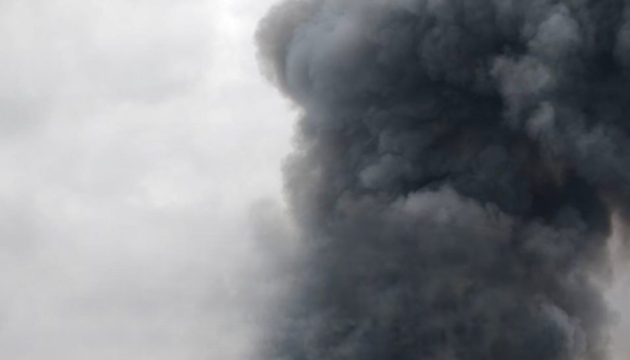
Photo: Ukrinform UA
At a glance
- Ukrainian forces struck an oil depot and a pumping station on April 11.
- Three munitions storage facilities were hit in the Donetsk and Zaporizhia regions.
- Russian troops' command points for UAV operations were targeted in Kherson and Zaporizhia.
- These actions are part of Ukraine's larger strategy to degrade Russian military logistics.
- Losses on the Russian side are currently being assessed.
Why it matters
These strikes disrupt crucial supply chains for the Russian military, hampering their operations. By targeting essential infrastructure, Ukraine aims to weaken Russian military effectiveness in ongoing conflicts.
https://www.ukrinform.ua/rubric-ato/4111552-sili-oboroni-urazili-naftobazu-naftoperekacuvalnu-stanciu-i-tri-skladi-boepripasiv.html
What Happened
On the night of April 11, 2026, according to the General Staff of the Armed Forces of Ukraine, Ukrainian Defense Forces successfully struck multiple targets associated with the Russian military. Key infrastructure destroyed included an oil depot and a pumping station, both critical for sustaining Russian troop operations in occupied territories and the Russian state itself.
The sites affected by the strikes were the "Krymsk" pumping station, located in Krasnodar Krai, Russia, and the "Hvardijska" oil depot situated in the temporarily occupied Autonomous Republic of Crimea. Additionally, three munitions storage facilities were hit in the Donetsk region, specifically in the areas of Makendivka and Donetsk, as well as in Osypenko, Zaporizhia.
Key Details
Ukrainian forces also targeted command points used for drone operations in the Zaporizhia and Kherson regions, demonstrating a comprehensive approach to disrupting Russian military logistics. Reports indicate that several locations in the Dnipropetrovsk region and surrounding Zaporizhia areas experienced engagements, effectively impacting the concentration of Russian troops.
While specific losses incurred by Russian forces are still being clarified, the strikes represent a significant effort by Ukraine to degrade Russian military capabilities in strategically important regions.
Why It Matters
The strikes on oil and munitions facilities signal a continued focus by Ukraine on weakening its adversary's logistical capabilities. Disruption of supply lines and munitions storage is crucial for Ukraine as it seeks to maintain operational momentum. The attacks also reflect ongoing efforts to strike at the heart of Russian military infrastructure both in occupied territories and within Russia itself.
Background
The conflict between Ukraine and Russia has persisted since 2014, with increasing hostilities escalating into full-scale warfare in 2022. As part of its defensive and offensive operations, Ukraine has targeted Russian military supply lines and infrastructure to diminish the effectiveness of the Russian armed forces.
The recent strikes on April 11 are consistent with Ukraine's strategy of applying pressure on Russian logistical networks to impede military operations. As the situation develops, the effectiveness of these actions will be monitored closely, particularly in relation to the ongoing capabilities of the Russian military in the war framework.
Source: Ukrinform UA
This report is maintained as a live newsroom article. Headlines and top paragraphs may be tightened when fresh reporting changes the clearest angle.
Newsletter
Get the next breaking Ukraine update
Receive the fastest lead, key facts, and follow-up links in one concise newsroom note.
Breaking format
The lead carries the core fact first.
Key figures and locations stay near the top.
Related coverage tracks the same reporting line.