News report
UGCC Leader Accuses 'Russian World' of Weaponizing Religion in Ukraine
Sviatoslav Shevchuk highlights the ways in which the 'Russian World' ideology manipulates religion, creating significant challenges for Ukraine's religious cohesion and identity.
Share this article
Share to social platforms, or copy the article link and share text manually.
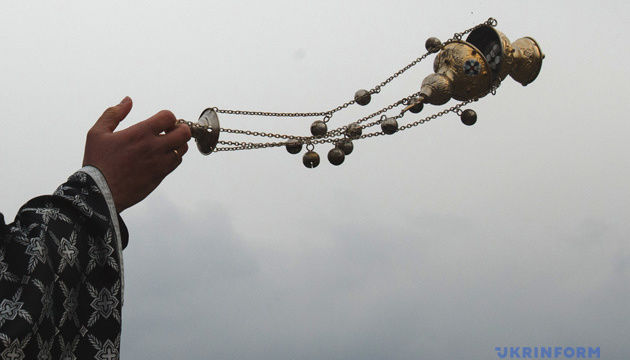
Photo: Ukrinform UA
At a glance
- UGCC leader asserts that the 'Russian World' ideology weaponizes religion.
- The Moscow Patriarchate's influence complicates unity amongst Ukrainian churches.
- New forms of faith are emerging as Ukraine counters external religious pressures.
- Increased scrutiny over affiliations between certain monasteries and the Russian Orthodox Church.
- The cultural and spiritual dimensions of the conflict significantly affect religious life in Ukraine.
Why it matters
Understanding how the 'Russian World' ideology manipulates religion is crucial, as it highlights the interplay between faith and politics in wartime Ukraine. This knowledge is vital for effectively addressing societal challenges and promoting unity in the face of conflict.
https://www.ukrinform.ua/rubric-society/4105608-russkij-mir-peretvorue-religiu-na-zbrou-glava-ugkc.html
What Happened
In a compelling recent interview, Sviatoslav Shevchuk, the head of the Ukrainian Greek Catholic Church (UGCC), discussed the profound implications of the 'Russian World' ideology on Ukraine's religious landscape. He contended that this ideology weaponizes religion, transforming it into a tool for warfare that deeply affects the spiritual climate of the nation, especially in the context of the current conflict.
Shevchuk's remarks shine a spotlight on the multifaceted nature of the 'Russian World,' which goes beyond a mere institutional phenomenon. He describes it as a unique blend of cultural and spiritual narratives rooted in Russian traditions.
Key Details
This complex ideological framework is significantly bolstered by the Moscow Patriarchate, which shapes communication, relationship dynamics, and religious practices among Ukrainians. Shevchuk notes that the influence of the Patriarchate complicates efforts toward unity among the various Christian denominations present in Ukraine, undermining the potential for a cohesive and united religious front.
The ideological manipulation stemming from the 'Russian World' creates hurdles in fostering collaboration and understanding among different Ukrainian faith communities. As Shevchuk aptly expressed, "This ideology does not just wield religion as a tool; it seeks to convert it into a form of weaponry." Such assertions underscore the strategic and harmful use of religious identity in wartime contexts, raising significant concerns about the implications for national unity.
Why It Matters
Understanding how the 'Russian World' ideology manipulates religion is crucial, as it highlights the interplay between faith and politics in wartime Ukraine. This knowledge is vital for effectively addressing societal challenges and promoting unity in the face of conflict.
Background
Amid these challenges, Shevchuk emphasizes that Ukraine is witnessing a transformation in its religious identity. The country is actively countering the pervasive Russian spiritual and cultural influences, which has led to the emergence of new expressions of faith and religious practice.
As individuals and communities strive to redefine their spiritual ties, a distinctive Ukrainian religious identity is crystallizing in response to external pressures. This evolving religious identity plays a crucial role in both the church's contribution to social cohesion and the overall resilience of Ukrainian society during these tumultuous times.
Shevchuk stressed the urgent imperative to reassess and fortify the Ukrainian religious identity, particularly in light of the ongoing and complex developments brought on by the conflict. Such an introspective approach may serve to strengthen communal bonds and a sense of national unity against aggression.
In summary, the statements made by Shevchuk concerning the intertwining of ideology and religion provide vital insights into how spiritual narratives are leveraged during military conflicts in Ukraine. Recognizing these dynamics is essential for understanding the broader socio-political environment in the country, where the interplay between faith and national identity continues to evolve.
Source: Ukrinform UA
This report is maintained as a live newsroom article. Headlines and top paragraphs may be tightened when fresh reporting changes the clearest angle.
Newsletter
Get the next major Ukraine report
Follow the strongest verified developments with a cleaner newsroom brief and direct follow-up coverage.
Report format
Fast lead first, then fuller context.
Source photo stays distinct from any illustration.
Related coverage stays inside the same reporting thread.