Breaking news
Ukrainian Air Defenses Down 117 Drones in Overnight Assault
In a recent operation, Ukrainian air defenses intercepted 117 drones, including many Shahed models, while also countering an Iskander missile. This attack reflects the persistent challenges in the conflict.
Share this article
Share to social platforms, or copy the article link and share text manually.
Developing story
This page is updated as verified details move. The lead and top sections are tightened first when the clearest confirmed angle changes.
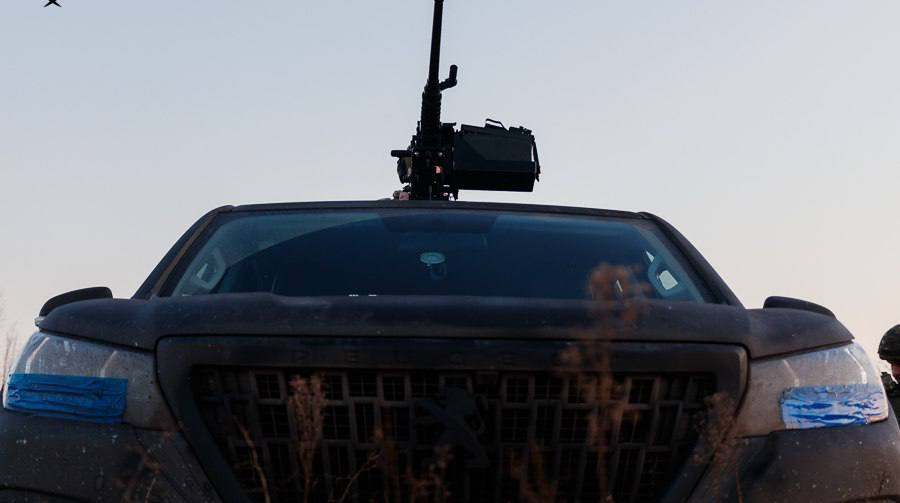
Photo: Ukrainska Pravda EN
At a glance
- Russian forces executed an aerial strike involving 126 drones and an Iskander missile.
- Ukrainian air defenses successfully intercepted 117 drones, predominantly Shahed models.
- The missile and drone impacts prompted damage across various locations.
- Advanced electronic warfare and aircraft units participated actively in the defense.
- Some Russian drones continued to operate within Ukrainian airspace despite the response.
Why it matters
The recent air assault underlines the persistent and evolving threat from Russian aerial forces, illustrating the continued challenges faced by Ukrainian defenses. The successful interception reflects both the upgrading of Ukraine's military capabilities and the ongoing need for international assistance to strengthen these defense operations during sustained hostilities.
https://www.pravda.com.ua/eng/news/2026/03/13/8025288/
Overview of the Attack
On the night of March 12-13, Russian forces conducted a significant aerial assault on Ukraine. They launched 126 drones, accompanied by an Iskander-M ballistic missile. Approximately 80 of the drones were identified as Iranian-made Shahed models, commonly used in Russia's military strategy.
By 08:00 hours, Ukrainian air defense units had successfully intercepted or jammed 117 drones. This operation demonstrated their increasing operational capabilities and readiness. The attack generated considerable debris across five areas and disrupted several frontline locations, reflecting intense fighting conditions.
Defense Operations
The effective interception of the drones relied on advanced anti-aircraft systems and electronic warfare tactics. Ukrainian forces employed a mix of manned aircraft and unmanned systems to counter the threat efficiently. This integration of technology helped minimize the potential impact of the aerial assault.
However, some Russian drones managed to evade interception, continuing to pose risks in Ukrainian airspace. Military analysts emphasize the necessity of maintaining heightened alertness within air defense frameworks to combat the ongoing threats from Russia. Continuous enhancements in defense strategies are crucial for protecting civilian lives and infrastructure.
Context and Implications
This incident highlights the urgent need for strategic monitoring of aerial attacks and bolstering Ukraine's defense protocols. It serves as a reminder of the evolving tactics in drone warfare and the adaptability required of military forces as technology advances.
Ukraine's capability to intercept a significant number of UAVs signifies improvements in air defense proficiency, underscoring the importance of sustained international military support. As the conflict continues to exert pressure on military resources, Ukraine's determination to protect its sovereignty is essential for ensuring public safety and infrastructure integrity.
Source: Ukrainska Pravda EN
This report is maintained as a live newsroom article. Headlines and top paragraphs may be tightened when fresh reporting changes the clearest angle.
Newsletter
Get the next breaking Ukraine update
Receive the fastest lead, key facts, and follow-up links in one concise newsroom note.
Breaking format
The lead carries the core fact first.
Key figures and locations stay near the top.
Related coverage tracks the same reporting line.