Breaking news
Ukrainian Air Defense Linked to Drone Strike in Romania
A Russian drone struck an apartment building in Galați, Romania, after being hit by Ukrainian air defense. Romanian President Nicușor Dan reported the incident on May 29.
Share this article
Share to social platforms, or copy the article link and share text manually.
Developing story
This page is updated as verified details move. The lead and top sections are tightened first when the clearest confirmed angle changes.
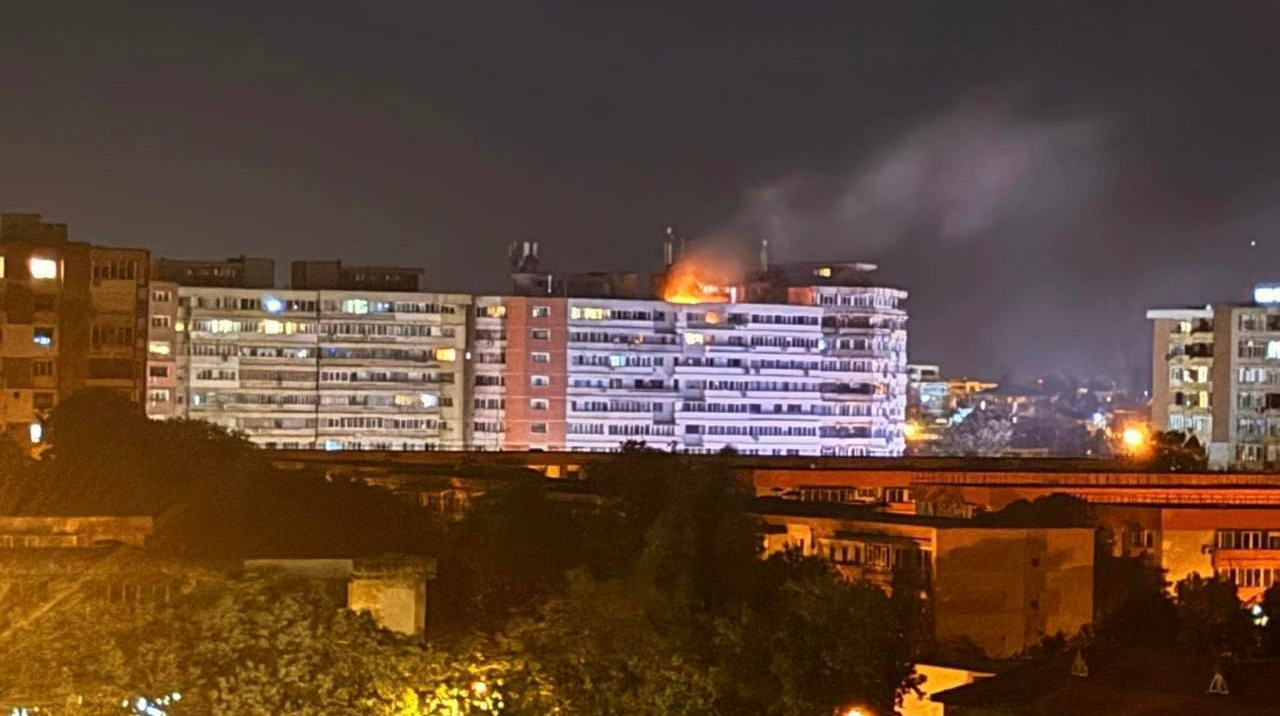
Photo: Ukrainska Pravda EN
At a glance
- A Russian drone struck an apartment in Galați, Romania, on May 29.
- Ukrainian air defense reportedly forced the drone to change course.
- Romania's President asserted Russia is responsible for the attack.
- The Romanian government plans to strengthen its anti-drone capabilities in NATO discussions.
- Difficulties in intercepting the drone were attributed to limited reaction time and peacetime restrictions.
Why it matters
Romania’s incident reflects ongoing risks from the Ukraine conflict, raising questions about regional security. Strengthening NATO's defense capabilities is crucial for stability in Eastern Europe.
https://www.pravda.com.ua/eng/news/2026/05/29/8036988/
What Happened
On May 29, a Russian drone crashed into a residential apartment building in the city of Galați, Romania. Romanian President Nicușor Dan stated that this incident was a direct consequence of Ukrainian air defense actions that forced the drone to change its flight path.
Key Details
President Dan explained that the drone was likely shot down over the Ukrainian city of Reni, altering its trajectory and leading to the incident in Romania. He noted that while Ukraine's actions influenced the drone’s course, the responsibility for the attack lies solely with Russia.
Dan also mentioned that Romania plans to strengthen its anti-drone capabilities in conjunction with NATO allies. Discussions on necessary equipment and resources are expected at the upcoming NATO meeting.
He emphasized that Romania is committed to enhancing its defense mechanisms in light of the ongoing threats from Russia. Romania's Foreign Ministry condemned the incident as a serious provocation, indicating that the country believes it has sufficient reasons to invoke Article 4 of NATO, which allows for consultations among member states in response to threats against national integrity.
Romanian military officials cited limited reaction time and peacetime restrictions as reasons for not being able to intercept the drone before it struck. Dan expressed that measures will be implemented to address these shortcomings to prevent future occurrences.
Why It Matters
The incident represents a significant escalation of the conflict, with implications for regional security in Eastern Europe. Romania's response may influence NATO's strategy in addressing threats from Russia. Strengthening Romania's defense could impact stability in the Black Sea region, highlighting the interconnectedness of regional defense mechanisms and international alliances.
Background
The Ukrainian-Russian conflict has created a ripple effect across neighboring countries, with civilian safety being increasingly jeopardized. The Romanian government’s response to this incident showcases its intent to bolster its defenses amid growing tensions.
The drone strike illustrates the potential for conflict to disrupt peace in surrounding nations, necessitating a robust international security framework for collective defense. Further discussions on the incident and its implications for NATO member states are anticipated in the coming weeks, as Romania seeks to enhance its military preparedness in a rapidly evolving security landscape.
Source: Ukrainska Pravda EN
This report is maintained as a live newsroom article. Headlines and top paragraphs may be tightened when fresh reporting changes the clearest angle.
Newsletter
Get the next breaking Ukraine update
Receive the fastest lead, key facts, and follow-up links in one concise newsroom note.
Breaking format
The lead carries the core fact first.
Key figures and locations stay near the top.
Related coverage tracks the same reporting line.