News report
Ukraine to Produce Dozens of Ballistic Missiles Monthly: Expert
Ukraine is poised to manufacture several dozen ballistic missiles each month, according to military expert Pavlo Narozhny. This capability may significantly challenge Russian military production capacity.
Share this article
Share to social platforms, or copy the article link and share text manually.
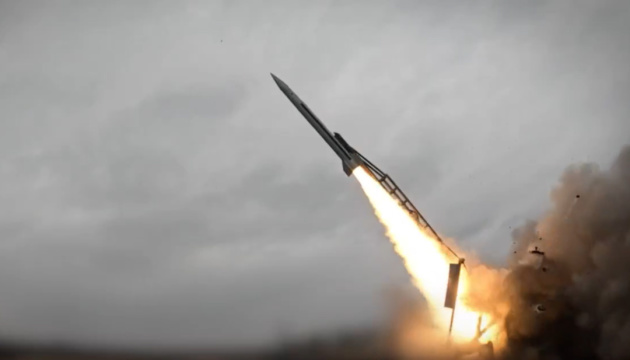
Photo: Ukrinform UA
At a glance
- Ukraine could produce several dozen ballistic missiles monthly.
- Both state and private companies are involved in missile development.
- Fire Point plans to manufacture missile engines in Denmark.
- Ukrainian missiles may have similar capabilities to Russian Iskander-M.
- Russian defenses include a limited number of modern S-400 and S-500 systems.
Why it matters
The increase in Ukrainian missile production could significantly change the military landscape in the ongoing conflict with Russia. A stronger Ukrainian arsenal may deter Russian aggression and provide a strategic advantage.
https://www.ukrinform.ua/rubric-ato/4132515-ukraina-zmoze-viroblati-kilka-desatkiv-balisticnih-raket-na-misac-vijskovij-ekspert.html
What Happened
Ukrainian military expert Pavlo Narozhny confirmed on Ukrainian Radio that Ukraine is on track to produce several dozen ballistic missiles monthly. He asserted that this production volume could pressure the Russian military-industrial complex.
Narozhny detailed that both state-owned and private companies are involved in missile production. The state sector includes the well-known Sapsan missile system, while the private sector is represented by Fire Point, which is developing its own ballistic missiles.
Key Details
Narozhny highlighted the lack of public information regarding the state sector's missile production capabilities. However, Fire Point has been more transparent about its advancements, including past missile tests.
Fire Point's upcoming ballistic and air defense missiles will reportedly have a range of up to 900 kilometers and a warhead capacity of 500 kilograms. These specifications are similar to Russia's Iskander-M and North Korea's KN-23 missiles.
The primary production challenge for Ukraine is the manufacture of solid-fuel engines for these missiles. Originally produced at the Pavlohrad Chemical Plant, this site risks vulnerability due to its proximity to the frontline.
Fire Point plans to manufacture these engines in Denmark to mitigate risks from potential Russian attacks or sabotage. Narozhny expressed confidence that Ukraine's missile production could realistically yield up to ten or possibly several dozen missiles per month.
He contrasted this with Russia’s production capability, estimated between 60 to 100 missiles a month. In response to queries about Russian defenses against the anticipated Ukrainian missiles, Narozhny mentioned the S-400 and S-500 systems.
Despite Russia's greater inventory of missiles, these advanced systems are limited in number, totaling about 50, and have a more expansive territory to defend. The expert's assertions align with broader trends in Ukraine's defense strategy as the nation continues to respond to ongoing military threats from Russia.
Recently, President Volodymyr Zelensky confirmed successful strikes against a military factory in Cheboksary, which supplies components for Russian drones and missiles.
Why It Matters
This potential increase in missile production capacity could alter the dynamics of the ongoing conflict between Ukraine and Russia. If realized, Ukrainian capabilities may shift the balance of power, pressuring Russian forces.
Background
Ukraine's efforts to enhance its military capabilities come in the context of ongoing hostilities with Russia. The conflict has prompted the country to adapt its defense strategies, including missile production aimed at countering Russian advances. With both public and private sectors collaborating, Ukraine aims to bolster its defense and maintain sovereignty amidst foreign threats.
Source: Ukrinform UA
This report is maintained as a live newsroom article. Headlines and top paragraphs may be tightened when fresh reporting changes the clearest angle.
Newsletter
Get the next major Ukraine report
Follow the strongest verified developments with a cleaner newsroom brief and direct follow-up coverage.
Report format
Fast lead first, then fuller context.
Source photo stays distinct from any illustration.
Related coverage stays inside the same reporting thread.