Breaking news
Ukraine Gains Battlefield Advantage Through Drones, ISW Reports
Ukrainian forces have reportedly gained an advantage over Russian troops through increased use of drones. The assessment comes from a report by the Institute for the Study of War (ISW).
Share this article
Share to social platforms, or copy the article link and share text manually.
Developing story
This page is updated as verified details move. The lead and top sections are tightened first when the clearest confirmed angle changes.
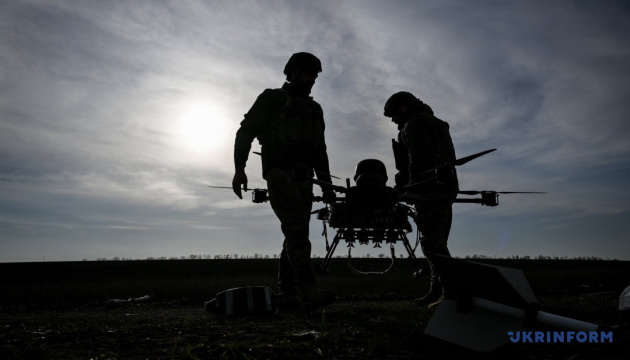
Photo: Ukrinform UA
At a glance
- Ukraine has increased drone usage, halting Russian advances.
- ISW reports show a rise in Ukrainian medium-range strikes.
- Recent successes challenge Russian narratives about Ukraine's stability.
- The 'Line of Drones' initiative is effectively engaging battlefield targets.
- Drone interception capabilities are slowing Russian forces.
Why it matters
The dominance of drones in Ukraine's military strategy reflects a significant shift in warfare dynamics. As Ukraine effectively utilizes UAVs, international military support strategies may need to adapt to ensure continued assistance.
https://www.ukrinform.ua/rubric-ato/4111168-zavdaki-dronam-ukraina-zdobula-perevagu-na-poli-bou-isw.html
What Happened

Ukrainian military operations are gaining momentum, primarily due to the enhanced deployment of unmanned aerial vehicles (UAVs) in combat scenarios. According to the Institute for the Study of War (ISW), this shift has potentially halted Russian advances and facilitated recent counterattacks by Ukrainian forces.
The ISW's report, dated April 10, 2026, indicates that since late 2025, and especially early in 2026, Ukraine has significantly escalated its medium-range strike campaign against Russian logistics, military equipment, and personnel. This strategy has disrupted Russian military movements across the battlefield, impeding their preparations for an anticipated offensive in the spring and summer of 2026.
The report cites geolocated evidence showing that Ukrainian forces executed 41 medium-range strikes in January, 61 in February, and 115 in March. These attacks primarily focused on Russian troops and infrastructure in the eastern and southern regions of Ukraine, including near the occupied city of Donetsk.
The outcomes of these strikes have undermined Russian operational capabilities in recent weeks. Russian officials have continuously attempted to propagate a narrative suggesting that Ukraine's front lines and political stability are on the verge of collapse.
This effort aims to coerce Western nations into conceding to Russian demands, which cannot be enforced militarily. Recent data indicate that Russian forces are experiencing setbacks on the battlefield, coupled with Ukraine's innovative advancements in drone technology tilting the battlefield dynamics in Ukraine's favor.
ISW analysts posit that the recent successes of Ukraine yield tactical, operational, and strategic shifts that challenge Russian claims regarding Ukraine's defensive viability.
Key Details
The ISW report emphasizes that increased Ukrainian strikes targeting Russian air defense systems and improved drone interception capabilities have contributed significantly to Ukraine's recent battlefield achievements. Interceptor drones, in particular, are playing a crucial tactical role, as Russian forces rely heavily on drones to undermine Ukrainian defenses and facilitate their own advance.
The increased interception of Russian drones by Ukrainian forces slows down the encroachment of Russian troops, providing opportunities for Ukrainian counterattacks. Collectively, these defensive victories, enhancements in drone usage, and intensified medium-range strike campaigns are weakening Russian forces on the front lines.
As reported by Ukrinform, Ukraine’s Defense Minister Mykhailo Fedorov noted that the 'Line of Drones' initiative ensures the engagement of one in four targets on the battlefield, reflecting systemic success at the front. The project unites five of the most effective units identified through the 'Army of Drones' initiative.
These include the 20th Separate Brigade 'K-2', the 429th Separate Brigade 'Achilles', the 427th Separate Brigade 'PAROG', the 414th Separate Brigade 'Madyar Birds', and the 3rd Border Team 'Phoenix'. Their combat experience forms the foundation for deploying the 'Line of Drones' along the entire front.
Why It Matters
The use of drones in combat represents a significant evolution in modern warfare strategies, enabling Ukraine to match Russian military capabilities more effectively. This development not only impacts current engagements but also reshapes the broader strategic landscape of the conflict. The findings from the ISW could inform international military assistance to Ukraine.
Background
The conflict in Ukraine has seen rapid technological adaptation, particularly in the realms of drone warfare. Over the past several years, both Ukrainian and Russian forces have integrated drones into their operational strategies, yet recent Ukrainian advancements appear to have created a competitive edge.
The unfolding situation continues to attract international scrutiny, with implications for security dynamics in Eastern Europe.
Source: Ukrinform UA
This report is maintained as a live newsroom article. Headlines and top paragraphs may be tightened when fresh reporting changes the clearest angle.
Newsletter
Get the next breaking Ukraine update
Receive the fastest lead, key facts, and follow-up links in one concise newsroom note.
Breaking format
The lead carries the core fact first.
Key figures and locations stay near the top.
Related coverage tracks the same reporting line.