News report
Ukraine Demands Halt to Military Actions Near Nuclear Sites
During a UN event, Ukraine's Deputy Foreign Minister Oleksandr Mishchenko called for an immediate halt to military actions near nuclear facilities. This statement highlights the risks posed by ongoing military operations amid Russia's war against Ukraine.
Share this article
Share to social platforms, or copy the article link and share text manually.
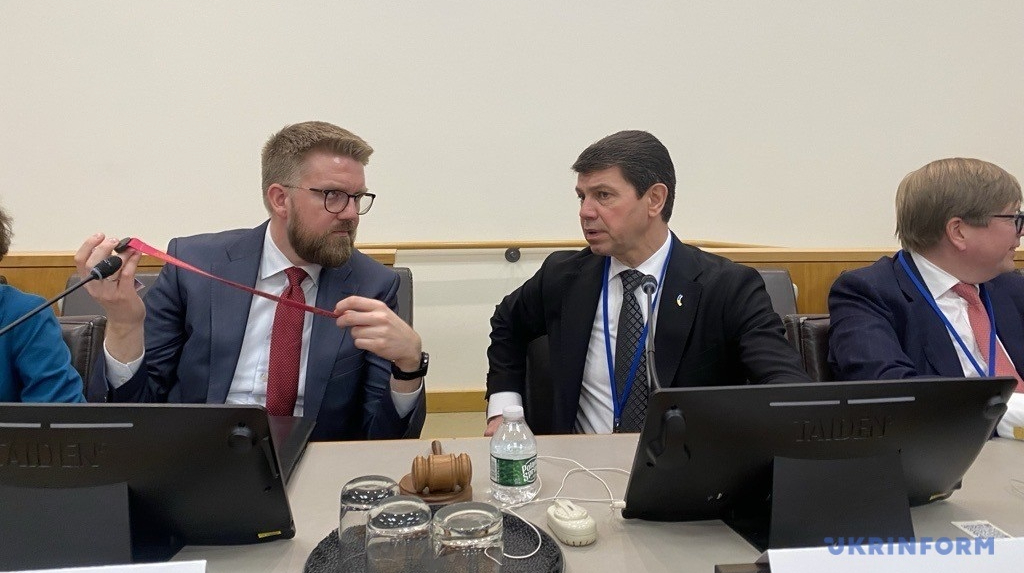
Photo: Ukrainska Pravda UA
At a glance
- Ukraine demands an immediate halt to military actions near nuclear sites.
- Deputy Foreign Minister Oleksandr Mishchenko highlighted the risks during a UN event.
- Recent attacks, including a drone strike on ChNPP, have damaged nuclear safety structures.
- 155 attacks on critical energy infrastructure have occurred since the invasion began.
- Ukraine secured €30 million from EBRD for restoring protections at Chernobyl.
Why it matters
The ongoing military conflict heightens the risk of nuclear disaster, necessitating urgent global action to restore safety near these facilities. Continued hostilities threaten decades of nuclear safety efforts worldwide.
https://www.pravda.com.ua/news/2026/04/28/8032097/
What Happened
On April 28, during a meeting at the United Nations headquarters, Ukraine's Deputy Foreign Minister Oleksandr Mishchenko emphasized the urgent need to cease military activities near nuclear sites. He articulated that the ongoing conflict due to Russia's aggression poses significant risks of nuclear catastrophe.
Mishchenko's remarks were made at an UN event dedicated to nuclear safety, coinciding with the 40th anniversary of the Chernobyl disaster. He linked the current military actions to rising hazards that could lead to severe nuclear incidents.
Key Details
Mishchenko pointed out that military engagements near nuclear facilities, including the Chernobyl Nuclear Power Plant (ChNPP) and the Zaporizhzhia Nuclear Power Plant (ZNPP), must be stopped immediately. He stated that any damages to these sites could negate years of international efforts aimed at ensuring nuclear safety.
He cited a recent attack involving a Russian drone that struck the area around ChNPP, causing damage to the new safe confinement structure. This incident raised alarms about the vulnerability of such critical installations in war.
Mishchenko stressed that the ramifications of radiation risks extend beyond national borders, making it a collective responsibility of the global community.
Why It Matters
The risk of a nuclear disaster in Ukraine is heightened by continuous military actions near nuclear facilities. The international community must address the nuclear safety concerns raised by Mishchenko, particularly as the conflict has already led to significant threats to these crucial sites.
Failure to halt military activities could lead to uncontrolled radiation exposure, affecting not only Ukraine but also neighboring nations and beyond.
Background
Ukraine has witnessed 155 attacks on critical energy infrastructure necessary for nuclear safety since the onset of the full-scale invasion. The ongoing military actions have prompted international stakeholders, including the European Union, to call for a cessation of hostilities around nuclear sites.
On April 26, Ukraine signed an agreement with the European Bank for Reconstruction and Development (EBRD) for 30 million euros designated for the initial phase of restoring protections at ChNPP. This step indicates an ongoing commitment to nuclear safety and recovery efforts.
The urgency of Mishchenko's statements reflects not only national concerns but also the broader implications of neglecting nuclear safety amid conflict. As international bodies emphasize the risks, collaboration will be essential in preventing a potential nuclear incident during these volatile times.
Source: Ukrainska Pravda UA
This report is maintained as a live newsroom article. Headlines and top paragraphs may be tightened when fresh reporting changes the clearest angle.
Newsletter
Get the next major Ukraine report
Follow the strongest verified developments with a cleaner newsroom brief and direct follow-up coverage.
Report format
Fast lead first, then fuller context.
Source photo stays distinct from any illustration.
Related coverage stays inside the same reporting thread.