Breaking news
Tuapse Faces Water Supply Disruptions After Ukrainian Strike
Tuapse in Krasnodar Krai, Russia, experienced temporary water supply disruptions after Ukrainian forces targeted a local oil refinery. The attack occurred overnight, affecting multiple areas in the city.
Share this article
Share to social platforms, or copy the article link and share text manually.
Developing story
This page is updated as verified details move. The lead and top sections are tightened first when the clearest confirmed angle changes.
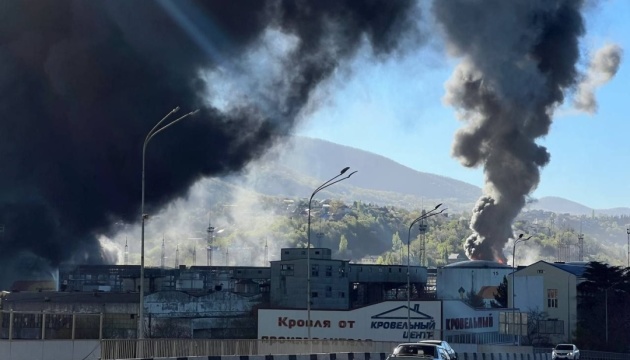
Photo: Ukrinform UA
At a glance
- Ukrainian forces attacked the Tuapsinskiy oil refinery in Krasnodar Krai.
- Water supply disruptions reported in multiple districts of Tuapse.
- Residents advised to evacuate due to potential fire spread.
- Russian Emergency Situations Minister dispatched to oversee response.
- Limited water supply to be temporarily restored for one hour.
Why it matters
The attack on the Tuapse refinery and resulting water supply interruption reflects the ongoing escalation of military engagements between Ukraine and Russia. This incident may indicate a strategic shift in Ukraine's operational focus towards critical infrastructure targets deep within Russia.
https://www.ukrinform.ua/rubric-world/4117546-castina-tuapse-zalisilas-bez-vodi-pisla-ataki-sil-oboroni.html
What Happened
In the early hours of April 28, 2026, Ukrainian defense forces attacked the Tuapsinskiy oil refinery in Krasnodar Krai, Russia. This incident led to significant disruptions in water supply across several districts of the city.
Key Details
According to a statement from Sergey Boyko, the head of the Tuapse municipal district, the interruption in water service was caused by a failure in the power supply system at the water pumping station located within the refinery complex. As a result, residents experienced a shortage of water.
Boyko mentioned that although the reservoirs in the city are currently limited, water supply would be restored temporarily in the evening for just one hour to allow for some reserves to build up. In response to the ongoing emergency, Alexander Kuryenko, head of the Russian Ministry of Emergency Situations, is on his way to Tuapse at the direction of Russian President Vladimir Putin.
Kuryenko's visit is part of efforts to manage the fire that has been ongoing at the refinery since April 16, following the drone attack. During the crisis, Boyko urged residents living near the affected refinery to evacuate due to concerns over the potential spread of the fire.
This advisory comes amidst reports from various sources highlighting the increasing frequency of attacks impacting Russian infrastructure and supply chains.
Why It Matters
The disruption of water services highlights the broader impacts of the ongoing conflict on civilian infrastructure. Targeting energy facilities not only affects military capabilities but also creates significant challenges for the local population.
This incident illustrates the reach and effectiveness of Ukrainian forces in conducting operations deep within Russian territory, raising questions about Russia's domestic security measures.
Background
Since the onset of heightened military conflicts, both Ukraine and Russia have been engaged in extensive operations aimed at crippling each other’s military supply lines. The attacks on oil refineries and related industries have become a focal point, as these facilities play a crucial role in supporting military and civilian needs in the region.
The situation in Tuapse reflects a significant escalation in operational capabilities for Ukrainian forces, with recent intelligence suggesting a shift in tactics towards targeting infrastructure that supports military logistics within Russia itself.
Source: Ukrinform UA
This report is maintained as a live newsroom article. Headlines and top paragraphs may be tightened when fresh reporting changes the clearest angle.
Newsletter
Get the next breaking Ukraine update
Receive the fastest lead, key facts, and follow-up links in one concise newsroom note.
Breaking format
The lead carries the core fact first.
Key figures and locations stay near the top.
Related coverage tracks the same reporting line.