News report
Russian Forces Launch UAVs and Bombs on Multiple Ukrainian Regions
In the early hours of April 13, Russian military conducted drone strikes and bombings targeting multiple regions in Ukraine. Air alerts were reported across several areas, according to Ukrainian Air Force data.
Share this article
Share to social platforms, or copy the article link and share text manually.
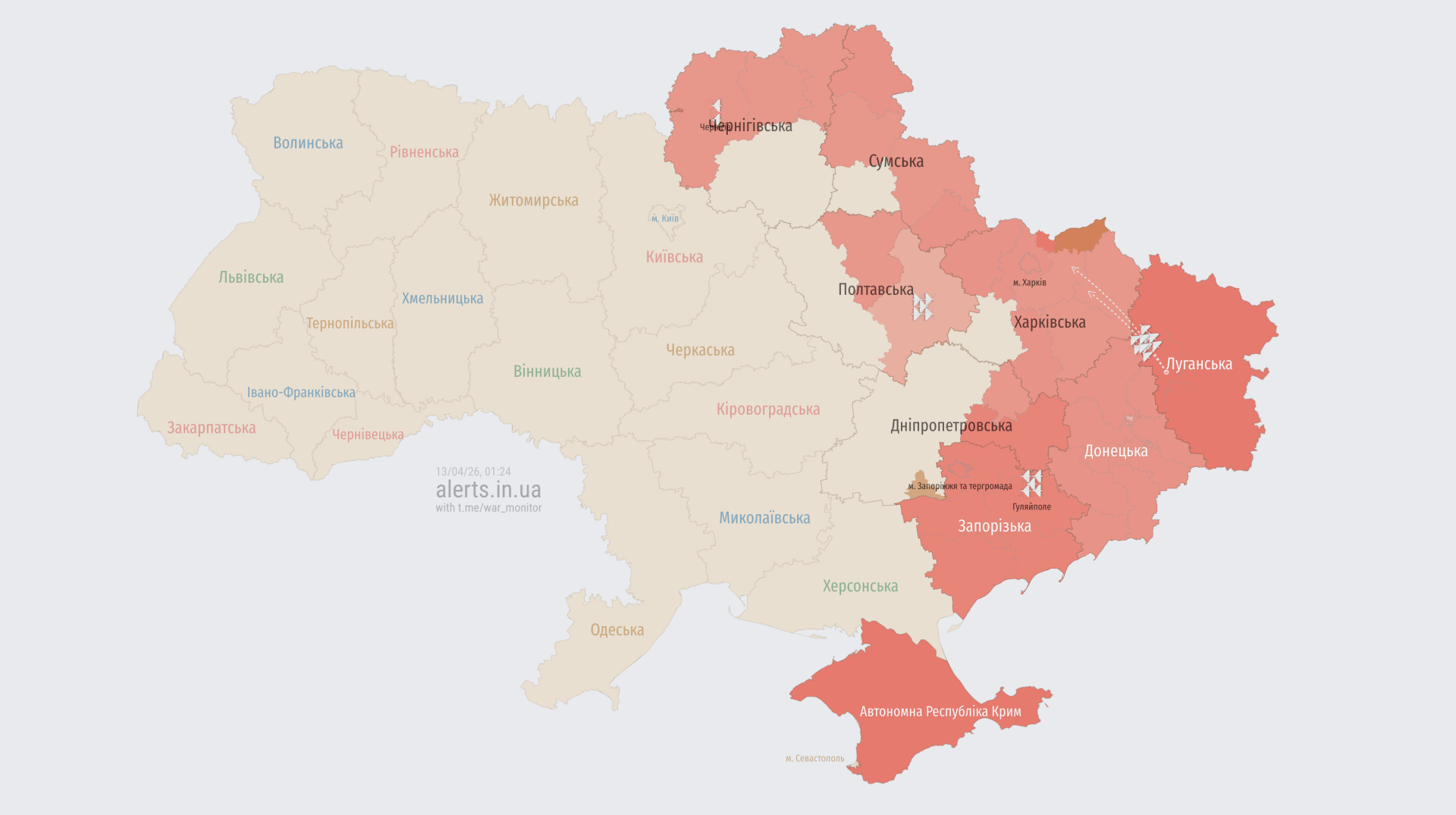
Photo: Ukrainska Pravda UA
At a glance
- Russian military launched drone strikes and bomb attacks on April 13.
- Areas affected include Sumy, Kharkiv, Dnipro, and Zaporizhzhia.
- Air alerts were issued across at least seven regions.
- The attacks involved "Shahed" UAVs and guided munitions.
- The conflict has seen increased use of drones by both sides.
Why it matters
The drone strikes and bombings reflect ongoing threats that cities face during the war, with significant implications for civilian safety. These incidents illustrate the evolving nature of warfare and the necessity for enhanced air defense measures in Ukraine.
https://www.pravda.com.ua/news/2026/04/13/8029893/
What Happened
Early on April 13, Russian forces launched a series of strikes involving attack drones, known as "Shahed" UAVs, and guided bombs across various regions of Ukraine. The Ukrainian Air Force reported these events starting just after midnight.
Several regions were placed under air alert due to the ongoing threat. The attacks specifically impacted border regions, including Sumy, Kharkiv, Dnipro, and Zaporizhzhia, which were identified as primary targets.
The Ukrainian Air Force confirmed the appearance of multiple hostile drone groups in these areas. As the night progressed, air alerts expanded to include additional regions. By 01:24 AM, alerts were confirmed in Chernihiv, Sumy, Poltava, Kharkiv, Dnipro, Zaporizhzhia, and Donetsk provinces.
Key Details
The aerial threat predominantly comprised the following elements: - Attack drones labeled "Shahed" were employed in large groups. - Guided bombs were dropped on frontline regions near the conflict zones.
- An alert was initiated in a broad area, affecting at least seven provinces. - The strikes are part of ongoing military actions amid the ongoing Russo-Ukrainian conflict.
Why It Matters
These attacks highlight the persistent threat of drone warfare in the conflict, affecting both military operations and civilian safety. The wide-reaching air alerts signal the potential for intensified military engagement as concerns for regional safety continue.
Background
Since the onset of hostilities, drone technology has played a significant role in modern warfare. The use of UAVs allows for long-range strikes and surveillance, profoundly impacting tactical decisions.
The unique nature of this conflict has seen both sides adapt rapidly to evolving aerial warfare strategies, emphasizing the importance of preparedness in affected territories. The Ukrainian military has been working to bolster air defense mechanisms in response to continued vulnerabilities, especially in light of recent escalations.
As Russian forces persist in their operations, the situation remains volatile across these critical regions.
Source: Ukrainska Pravda UA
This report is maintained as a live newsroom article. Headlines and top paragraphs may be tightened when fresh reporting changes the clearest angle.
Newsletter
Get the next major Ukraine report
Follow the strongest verified developments with a cleaner newsroom brief and direct follow-up coverage.
Report format
Fast lead first, then fuller context.
Source photo stays distinct from any illustration.
Related coverage stays inside the same reporting thread.