Breaking news
Russia Launches Massive Combined Drone Attack on Ukraine
Russia initiated a combined attack on Ukraine using hundreds of Shahed drones on May 13, 2026. The Ministry of Defense reported this tactic aims to overwhelm Ukrainian air defenses.
Share this article
Share to social platforms, or copy the article link and share text manually.
Developing story
This page is updated as verified details move. The lead and top sections are tightened first when the clearest confirmed angle changes.
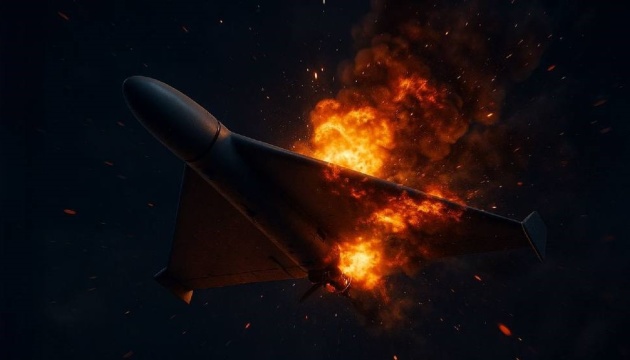
Photo: Ukrinform UA
At a glance
- Russia launched a large-scale attack using hundreds of Shahed drones.
- The new tactic aims to overload Ukraine's air defenses from two fronts.
- Ukrainian forces mobilized all available resources to counter the drone assault.
- Key targets include critical infrastructure and Ukrzaliznytsia.
- The air defense successfully intercepted 111 drones out of 139.
Why it matters
This massive drone attack from Russia is a significant development in the ongoing conflict, threatening Ukraine's critical infrastructure and national security. Tracking these evolving tactics is essential for understanding the broader implications for Ukraine's air defense strategies.
https://www.ukrinform.ua/rubric-ato/4122927-rosia-masovano-atakue-ukrainu-sahedami-ta-gotue-novi-hvili-udariv-po-kriticnij-infrastrukturi-fles.html
What Happened

On May 13, 2026, Russia began a substantial combined assault on Ukraine, employing hundreds of Shahed drones. This attack incorporates a new strategy that is designed to overload Ukraine's air defense systems.
The information comes from Sergey 'Flash' Beskrestnov, an advisor to the Ukrainian Minister of Defense, during a televised briefing. Beskrestnov indicated that the attack commenced with significant activity in waves, confirming that hundreds of drones had been launched simultaneously from both southern and northern directions.
The primary targets of this attack focused on the western regions of Ukraine.
Key Details
RUSSIAN DRONE DEPLOYMENT: According to Beskrestnov, this aerial assault used a substantial number of Shahed drones, which moved in a closely knit formation approximately 5-10 kilometers from the Belarusian border. This close movement along the border represents a new Russian tactic aimed at challenging Ukraine's air defenses.
STRATEGIC OVERLOAD: The advisor highlighted that Russian forces continue to refine their drone deployment strategies by studying Ukrainian electronic warfare capabilities. This evolution shows an intentional effort to find alternative routes to bypass Ukrainian air defense systems.
RESPONSE FROM UKRAINIAN FORCES: In response to the attack, Ukraine's defensive forces mobilized all available reserves, which included army aviation, mobile fire groups, and interceptors, to counter the strikes. Although some drones managed to approach western Ukrainian territories, the defense forces remain vigilant.
UPCOMING ASSAULTS: Beskrestnov warned of the possibility of continued attacks through the night, speculating that another wave of strikes could occur targeting western and possibly central Ukraine. He anticipates that Russia may maintain a high level of aerial assaults for at least until the following day.
TARGETS: The main objectives of these attacks continue to be critical infrastructure, particularly infrastructure related to Ukrzaliznytsia, Ukraine's state railway company. Additionally, some Shahed drones undergoing modifications for precise targeting have been reported.
Why It Matters
This escalated drone assault signifies a troubling development in the ongoing conflict, showcasing Russia's intent to disrupt Ukrainian infrastructure and capabilities persistently. Understanding the evolving tactics used by Russian forces can provide insights into potential future threats to Ukraine's air defenses and national stability.
Background
The use of Shahed drones in this recent wave of attacks forms part of a broader Russian strategy to exert military pressure on Ukraine. Earlier, during subsequent waves of aerial assaults, Russian forces have targeted various critical infrastructure sites.
Recent indications have shown a shift in tactics, with drones operating in coordinated formations to evade detection and interception. This evolution in warfare requires continuous adaptation from Ukrainian forces as they confront these persistent threats.
As of the night of May 13, Ukrainian air defense successfully neutralized 111 out of 139 Shahed drones involved in the assault. The situation remains dynamic, requiring comprehensive responses from Ukrainian military capabilities, along with strategic preparations for future engagements.
Source: Ukrinform UA
This report is maintained as a live newsroom article. Headlines and top paragraphs may be tightened when fresh reporting changes the clearest angle.
Newsletter
Get the next breaking Ukraine update
Receive the fastest lead, key facts, and follow-up links in one concise newsroom note.
Breaking format
The lead carries the core fact first.
Key figures and locations stay near the top.
Related coverage tracks the same reporting line.