News report
Private Air Defense Groups Shot Down 20 Russian Drones, Fedorov
In Ukraine, private air defense groups have downed approximately 20 Russian drones, including Shahed drones, according to Defense Minister Mykhailo Fedorov. The initiative forms part of an experimental project involving 27 companies across various regions.
Share this article
Share to social platforms, or copy the article link and share text manually.
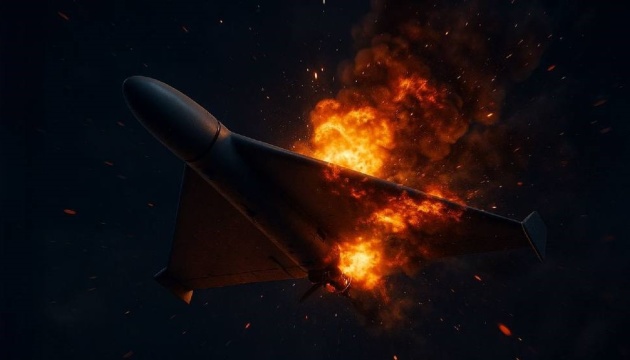
Photo: Ukrinform UA
At a glance
- Private air defense groups have downed approximately 20 Russian drones.
- The initiative involves 27 companies from diverse sectors across several regions.
- Two operational groups have begun full combat tasks in Kharkiv and Odesa.
- The Ministry of Defense is overseeing the project and has granted necessary permissions.
- Ukraine aims to enhance strategic defense against ongoing Russian incursions.
Why it matters
The involvement of private enterprises in air defense enhances Ukraine's overall defense capabilities and allows for more robust responses to aerial threats. This collaboration may signify a shift in how national defense is executed, leveraging civilian resources for military purposes.
https://www.ukrinform.ua/rubric-ato/4125750-privatni-grupi-ppo-vze-zbili-blizko-20-rosijskih-droniv-fedorov.html
What Happened
Private air defense groups in Ukraine have successfully intercepted around 20 drones, including reconnaissance UAVs and Shahed models. This development comes as part of an experimental project involving companies from various sectors across the country. Defense Minister Mykhailo Fedorov announced this during a media briefing on May 21, 2026.
Key Details
Fedorov stated that the experimental air defense initiative has attracted 27 enterprises from regions including Kharkiv, Odesa, Kyiv, Zaporizhia, Poltava, and Transcarpathia. These companies have been granted permission by the Ministry of Defense to undertake air defense tasks.
They have begun forming their own operational groups in coordination with the Ukrainian Air Forces. The minister noted that these enterprises are at different stages of readiness for combat duties, engaging in training, procuring equipment, and acquiring arms from military stockpiles.
As interest in the initiative grows, the number of companies applying to participate increases weekly. Fedorov highlighted that two companies in Kharkiv and Odesa have already begun full combat operations, managing to eliminate roughly twenty enemy drones.
A verified attack on a reactive Shahed drone in the Kharkiv region was also mentioned. Furthermore, Fedorov elaborated that additional groups from various companies are set to begin combat duty soon.
All weapon usage by these groups requires mandatory coordination with the Air Force Command of the Armed Forces of Ukraine.
Why It Matters
This initiative marks a significant expansion of Ukraine's air defense capabilities, allowing for increased civilian participation in national defense. The ability to intercept enemy drones strengthens overall security and enhances Ukraine’s response to ongoing aerial threats.
Background
Fedorov also touched on Ukraine's broader strategic goals, aiming to halt enemy advances and regain initiative on the battlefield. He reported heavy casualties for Russian forces, confirming that verified losses from April included over 35,000 troops, emphasizing the high cost of territorial gains for the attackers.
Certainly, the shift in warfare dynamics is influenced by several factors, including the disabling of Starlink for Russian forces, which has reportedly provided Ukraine a substantial advantage. The emphasis on developing middle-strike capabilities, specifically in drone technology, reflects a proactive approach to modern warfare, enhancing operational effectiveness.
The experimental air defense project's significance lies in its innovative nature, combining private enterprise with military needs, creating a dual-use approach that aligns with the challenges posed by the ongoing conflict.
Source: Ukrinform UA
This report is maintained as a live newsroom article. Headlines and top paragraphs may be tightened when fresh reporting changes the clearest angle.
Newsletter
Get the next major Ukraine report
Follow the strongest verified developments with a cleaner newsroom brief and direct follow-up coverage.
Report format
Fast lead first, then fuller context.
Source photo stays distinct from any illustration.
Related coverage stays inside the same reporting thread.