Breaking news
Poland Activates Fighter Jets Amid Russian Strikes on Ukraine
Poland has scrambled fighter jets to bolster air defense following Russian missile strikes on Ukraine. This action reflects the nation's dedication to securing its airspace and enhancing cooperation with NATO allies amidst rising tensions.
Share this article
Share to social platforms, or copy the article link and share text manually.
Developing story
This page is updated as verified details move. The lead and top sections are tightened first when the clearest confirmed angle changes.
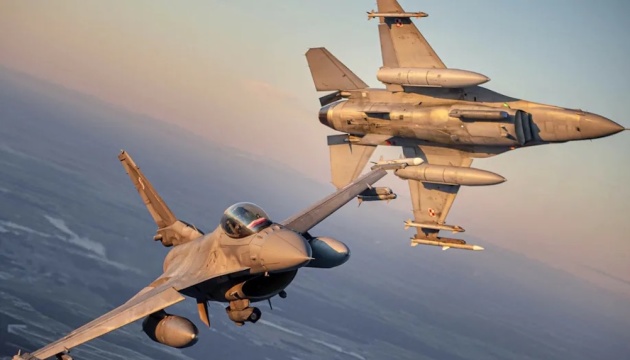
Photo: Ukrinform EN
At a glance
- Poland deployed fighter jets to respond to escalating Russian missile attacks.
- Polish air defense systems have been placed on high alert.
- Russian missile strikes have resulted in civilian casualties in the Poltava region.
- NATO allies are strengthening military cooperation in response to rising tensions.
- Poland is prepared for immediate action against potential threats.
Why it matters
Poland's decision to scramble fighter jets signifies a proactive measure amid escalating Russian military aggressions, illustrating the heightened concern within NATO regarding regional security. This response not only safeguards Poland but reinforces the principle of collective defense, which is vital for maintaining stability in the face of external threats.
https://www.ukrinform.net/rubric-ato/4104817-poland-scrambles-fighter-jets-over-russian-missile-strikes-on-ukraine.html
Poland Mobilizes Air Defense

In a decisive move indicative of its heightened military readiness, Poland's armed forces have deployed fighter jets to defend its airspace. This development comes on the heels of a significant escalation in hostilities, with Russian missile strikes targeting Ukraine's infrastructure, including a recent attack in the Poltava region that resulted in civilian casualties.
The Operational Command of the Polish Armed Forces confirmed the military deployment, reinforcing its aim to safeguard Polish airspace, particularly along its border with Ukraine. The activation of fighter jets serves as a deterrent against potential threats stemming from the ongoing conflict.
Poland's military response signifies a broader acknowledgment of the intensified security challenges facing Eastern European nations. These dynamics have prompted Polish authorities to place air defense systems on high alert.
With Russia's increased use of long-range missiles and drones, the anticipation of further attacks has spurred Poland's commitment to maintaining vigilance. The recent military actions underscore the significance of NATO’s collective security framework.
As NATO allies engage in closer military cooperation, there is an ongoing effort to reassess readiness levels in light of the changing landscape of regional security. Such preparedness is crucial as member states remain ever watchful of the implications of Russian aggression, not only for Ukraine but for the stability of Europe as a whole.
Poland's swift military deployment is more than just a national response; it represents a concerted effort among NATO countries to reinforce defenses and best protect their borders. In light of these developments, Poland has made it clear that it is well-equipped and prepared to respond to any emergent threats as the situation evolves.
The current hostilities have exacerbated an already critical humanitarian crisis in Ukraine, prompting not only military responses but also calls for increased solidarity and support from the international community. As the conflict persists, the cooperation and readiness of NATO members will be pivotal in addressing the broader implications of this violence in Eastern Europe.
Source: Ukrinform EN
This report is maintained as a live newsroom article. Headlines and top paragraphs may be tightened when fresh reporting changes the clearest angle.
Newsletter
Get the next breaking Ukraine update
Receive the fastest lead, key facts, and follow-up links in one concise newsroom note.
Breaking format
The lead carries the core fact first.
Key figures and locations stay near the top.
Related coverage tracks the same reporting line.