News report
Over 13,000 Adults Identified as Deported by Russia Since 2022
Ukrainian law enforcement has identified more than 13,000 adults deported or forcibly relocated by Russia since February 24, 2022. This information was reported by Alexander Zyuz, a representative of the Office of the Prosecutor General, during a roundtable discussion at Ukrinform.
Share this article
Share to social platforms, or copy the article link and share text manually.
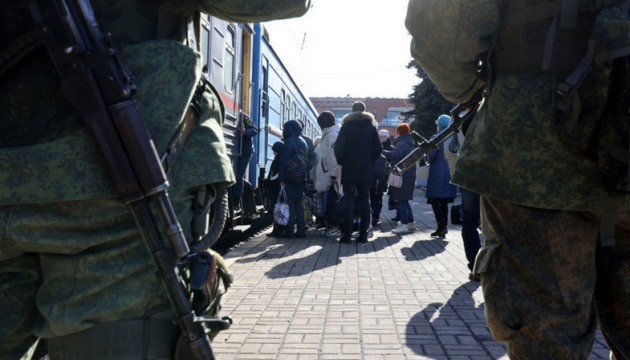
Photo: Ukrinform UA
At a glance
- Identified over 13,000 adults deported by Russia since February 2022.
- More than 19,000 children also reported as deported or relocated.
- Investigations are underway in over 130 criminal proceedings regarding these actions.
- Specific cases involve forced relocations from facilities in Mariupol and Zaporizhzhia.
- Legal actions are being pursued against individuals implicated in collaboration with occupying forces.
Why it matters
The deportation of thousands reflects serious human rights abuses during the conflict. Ongoing investigations signal a commitment to accountability for wartime crimes, which is critical for future justice and reconciliation efforts.
https://www.ukrinform.ua/rubric-society/4131607-z-2022-roku-identifikuvali-ponad-13-tisac-doroslih-akih-deportuvala-rosia.html
What Happened
Since the onset of the full-scale invasion of Ukraine in 2022, authorities have documented over 13,000 adults who were deported or forcibly displaced by Russian forces. The Office of the Prosecutor General of Ukraine provided these details during a roundtable focused on the social implications of such actions.
During the discussion, Alexander Zyuz, head of the intergovernmental coordination department within the armed conflict crimes unit of the Office of the General Prosecutor, highlighted that more than 19,000 children have also been identified as victims of similar actions. He stated that these cases are being pursued under over 130 criminal proceedings investigating the systematic deportation and forced relocation of individuals.
Key Details
Zyuz indicated that there are significant ongoing investigations across various regions. In Donetsk and Luhansk, security service investigators are specifically looking into 40 instances of forced civilian relocation.
This includes 88 individuals from a nursing home for the elderly and disabled in Mariupol. In the Zaporizhzhia region, authorities are examining facilities that housed over 500 residents, where leaders may have collaborated with occupying forces, leaving the fate of residents uncertain.
One particular case involves the director of a psychiatric institution who is facing charges related to the forced relocation of 54 women to the Autonomous Republic of Crimea (ARC). Zyuz further noted that Europol had previously shared information regarding 45 deported children, emphasizing an organized pattern of abuse.
Why It Matters
The identification of these deported adults and children underscores the grave human rights violations occurring during the ongoing conflict. The investigations aim not only to account for the affected individuals but also to establish accountability for those responsible for these actions. The outcome of these proceedings may influence international responses to Russia’s actions in Ukraine.
Background
The situation of forced deportations and relocations from Ukraine has been a critical concern since the beginning of the full-scale Russian invasion in February 2022. These actions have been classified as war crimes by Ukrainian authorities and international observers.
The systematic removal of civilians, particularly vulnerable populations such as the elderly and children, raises significant ethical and legal questions regarding the conduct of war and humanitarian protections. Law enforcement agencies in Ukraine are actively working to document these occurrences and pursue justice, indicating an ongoing commitment to addressing wartime atrocities while also seeking to recover and reintegrate the displaced populace into society.
Source: Ukrinform UA
This report is maintained as a live newsroom article. Headlines and top paragraphs may be tightened when fresh reporting changes the clearest angle.
Newsletter
Get the next major Ukraine report
Follow the strongest verified developments with a cleaner newsroom brief and direct follow-up coverage.
Report format
Fast lead first, then fuller context.
Source photo stays distinct from any illustration.
Related coverage stays inside the same reporting thread.