News report
Humanoid Robots to Be Deployed in Ukraine by US Startup
Foundation Future Industries is preparing to send improved humanoid robots, known as Phantom 2, to Ukraine for military purposes. The company has been testing its technology in collaboration with Ukrainian officials.
Share this article
Share to social platforms, or copy the article link and share text manually.
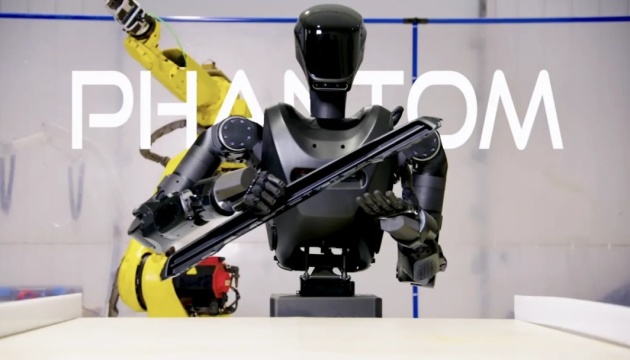
Photo: Ukrinform EN
At a glance
- Foundation Future Industries plans to deploy Phantom 2 robots in Ukraine.
- Initial tests featuring MK-1 models focused on logistics in hazardous conditions.
- The US government has funded $24 million in research contracts for developing military robotics.
- Phantom 2 models will have double the payload capacity of their predecessors.
- The deployment aims to reduce human risks in military operations.
Why it matters
Deploying humanoid robots in military contexts could reduce danger for soldiers. Successful trials may lead to broader applications within the US military and other allied forces, enhancing operational effectiveness.
https://www.ukrinform.net/rubric-ato/4128927-us-startup-plans-to-send-new-humanoid-military-robots-to-ukraine-media.html
What Happened
Foundation Future Industries, a US start-up backed by Eric Trump, plans to deploy advanced humanoid military robots in Ukraine. The company's latest models, the Phantom 2, are designed for various military and industrial applications.
Testing of the initial units, the Phantom MK-1, began earlier this year. This marked the first documented use of humanoid robots in an active combat environment. According to reports from CNBC, the robots are aimed at enhancing logistics in dangerous situations, providing operational support where human exposure is limited.
Key Details
Foundation has sent two Phantom MK-1 units to Ukraine for pilot testing, focusing on logistics and supply pickup tasks in hazardous areas. According to CEO Sankaet Pathak, the MK-1 robots have shown promise in their capabilities, although they are limited in their functionalities, carrying a maximum payload of 20 kilograms and lacking necessary waterproofing and battery life for extensive deployment.
The company plans to send the upgraded Phantom 2 models by the end of this year. These new robots will feature increased capabilities, including a higher payload capacity and additional functionalities, which Pathak describes as “superhuman abilities.” The enhancements aim to improve the robots' efficiency and effectiveness in military operations.
The US government supports these efforts, having awarded Foundation research contracts totaling $24 million. These contracts involve feasibility studies concerning inspection, logistics, and weapons handling for various branches of the military: Army, Navy, and Air Force.
Pathak noted a shift in discussions with military officials from research feasibility to the potential for scaling the technology and application in real-world scenarios.
Why It Matters
The deployment of humanoid robots could significantly change operational dynamics in military logistics, reducing risks for human soldiers. The success of these robots in Ukraine may pave the way for their integration into broader military strategies and save lives in combat situations.
Background
Founded to innovate in robotics, Foundation Future Industries has prioritized military applications for its technology. The company’s collaboration with Ukrainian officials marks a notable instance of combining advanced robotics with real-world military needs.
With ongoing trials and upgrades, Foundation aims to position its humanoid robots as valuable assets for the US military and allied forces. As conflict continues in Ukraine, the adaptation of technology like humanoid robots reflects a growing emphasis on enhancing safety and efficiency in military logistical operations.
Source: Ukrinform EN
This report is maintained as a live newsroom article. Headlines and top paragraphs may be tightened when fresh reporting changes the clearest angle.
Newsletter
Get the next major Ukraine report
Follow the strongest verified developments with a cleaner newsroom brief and direct follow-up coverage.
Report format
Fast lead first, then fuller context.
Source photo stays distinct from any illustration.
Related coverage stays inside the same reporting thread.