News report
Funeral for Patriarch Filaret Scheduled for March 22 at Volodymyr C...
The funeral for Patriarch Filaret is confirmed for March 22 at Volodymyr Cathedral, awaiting formal approval from the Synod regarding the details of the ceremony.
Share this article
Share to social platforms, or copy the article link and share text manually.
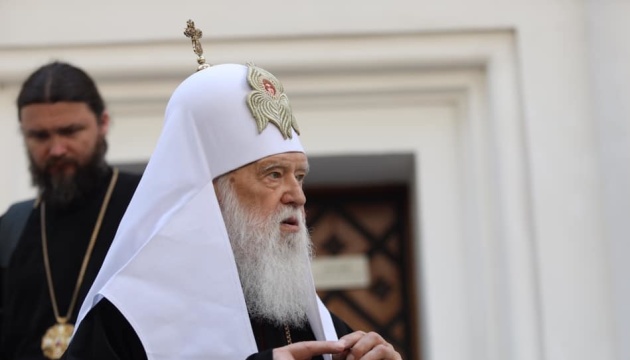
Photo: Ukrinform UA
At a glance
- Patriarch Filaret passed away at age 97.
- His funeral is scheduled for March 22 at Volodymyr Cathedral.
- Final arrangements require confirmation from the Synod.
- Filaret requested to be buried in Volodymyr Cathedral.
- His contributions have had a lasting impact on the Ukrainian Orthodox Church.
Why it matters
The death of Patriarch Filaret signifies the conclusion of an influential era in Ukrainian Orthodoxy. His burial at Volodymyr Cathedral not only underscores the importance of this institution but also marks a pivotal moment of reflection on the evolution and future of the church's role in Ukrainian society.
https://www.ukrinform.ua/rubric-society/4103808-pohoron-patriarha-filareta-zaplanovanij-na-22-berezna-u-volodimirskomu-sobori.html
What Happened
The funeral for Patriarch Filaret, a pivotal figure in Ukrainian Orthodoxy, is set for March 22 at Volodymyr Cathedral. This event is anticipated with great reverence as discussions regarding the final arrangements are still pending approval from the church's Synod.
The Synod's confirmation will address key aspects of the funeral, including farewell rites and specifics related to the burial. Patriarch Filaret, who passed away at the age of 97, served as the honorary spiritual leader of Kyiv and all Rus’-Ukraine.
Key Details
His death marks a significant moment in the history of the Ukrainian Orthodox Church, particularly for the Orthodox Church of Ukraine, which he played a foundational role in establishing. Andriy Kovalov, a religious scholar and former press secretary for Patriarch Filaret, has affirmed the planned date, indicating that preparations are developing in consultation with Father Boris Tabachak, the rector of Volodymyr Cathedral.
The Synod’s looming approval is essential as it not only dictates the format of the funeral service but also symbolizes the church’s acknowledgment of Filaret's legacy. His preference to be buried at Volodymyr Cathedral speaks to his profound attachment to this sacred location.
Why It Matters
The death of Patriarch Filaret signifies the conclusion of an influential era in Ukrainian Orthodoxy. His burial at Volodymyr Cathedral not only underscores the importance of this institution but also marks a pivotal moment of reflection on the evolution and future of the church's role in Ukrainian society.
Background
The service is expected to attract attendees from diverse religious communities, reflecting the wide impact of Filaret’s teachings and leadership within Ukrainian society. The passing of Patriarch Filaret invites significant reflection on his considerable influence in shaping the modern landscape of Ukrainian Orthodoxy.
His life was characterized by a commitment to the spiritual and moral development of the Orthodox community in Ukraine. This funeral is taking place at a critical juncture when ongoing discussions about the church's future are prevalent, influenced by the shifting dynamics within the religious sphere.
In light of recent developments in Ukraine’s religious landscape, the implications of Filaret’s passing can not be understated. It serves as a reminder of the historical context in which the church operates and the challenges it faces moving forward.
As the church commemorates his contributions, it also grapples with the influence of his leadership, fostering dialogue about the future direction of Ukrainian Orthodoxy.
Source: Ukrinform UA
This report is maintained as a live newsroom article. Headlines and top paragraphs may be tightened when fresh reporting changes the clearest angle.
Newsletter
Get the next major Ukraine report
Follow the strongest verified developments with a cleaner newsroom brief and direct follow-up coverage.
Report format
Fast lead first, then fuller context.
Source photo stays distinct from any illustration.
Related coverage stays inside the same reporting thread.