Breaking news
Frozen Russian Assets Could Fund Special Tribunal, Says Sobolev
Serhiy Sobolev stated that frozen Russian assets might be the solution for funding the Special Tribunal addressing Russia's aggression against Ukraine. His comments were reported by Ukrinform on April 21, 2026.
Share this article
Share to social platforms, or copy the article link and share text manually.
Developing story
This page is updated as verified details move. The lead and top sections are tightened first when the clearest confirmed angle changes.
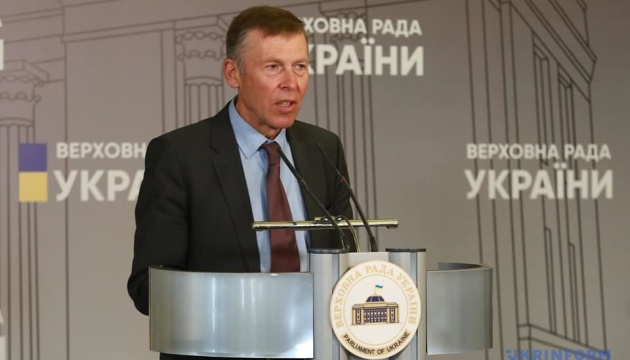
Photo: Ukrinform UA
At a glance
- Sobolev identifies funding as the main obstacle to the Special Tribunal.
- Frozen Russian assets could provide essential financial resources.
- The Netherlands proposes a custom facility for the tribunal, raising costs.
- Direct assistance from the EU is another potential funding source.
- Cooperation with the EU is critical for overcoming funding challenges.
Why it matters
The tribunal aims to provide justice for acts of aggression by Russia against Ukraine, making funding pivotal to its establishment. Effective operation hinges on financial support from various sources, including frozen assets.
https://www.ukrinform.ua/rubric-polytics/4115091-zamorozeni-aktivi-rf-mogli-b-virisiti-pitanna-finansuvanna-spectribunalu-sobolev.html
What Happened
On April 21, 2026, Serhiy Sobolev, the First Deputy Head of Ukraine's Parliamentary Assembly delegation to the Council of Europe, commented on the challenges facing the establishment of a Special Tribunal to address aggression committed by Russia against Ukraine. He emphasized that securing funding for the tribunal remains a primary obstacle.
Sobolev indicated that utilizing frozen Russian assets could be one of the most straightforward solutions to this financial issue. He highlighted that while direct funding from the European Union is possible, unblocking these frozen assets specifically for the tribunal's establishment could alleviate funding concerns entirely.
Key Details
Sobolev stressed that various avenues exist to fund the tribunal. He pointed out that necessary financial support could come from direct assistance from the European Union. He stated, "The EU could provide funds through individual member states that support the tribunal." He also raised the issue of coordinating with the Secretary General of the Council of Europe, Marija Pejčinović Burić, about the possibility of closer collaboration with the EU to achieve this goal.
In a discussion with Secretary General Alesksei Berze, Sobolev noted that the Secretary General mentioned ongoing dialogues with the European Commission regarding the issue. Sobolev warned that additional hurdles have emerged, particularly concerning the Netherlands' proposal for a specially designed facility for the tribunal, reflecting their concerns over security issues.
The plan involves creating a complex equipped to deter possible threats to high-profile defendants, which could lead to considerable additional costs.
Why It Matters
The establishment of a Special Tribunal is considered crucial for accountability regarding the actions taken by Russia during its aggression against Ukraine. Securing adequate funding is essential to ensure that the tribunal can operate effectively and pursue justice. Without a clear funding path, the tribunal's future remains uncertain.
Background
The call for a Special Tribunal has gained support from Ukraine and 19 member states of the Council of Europe, along with Costa Rica. Efforts to advance the tribunal have been made, including requests from the Council of Europe to member parliaments to expedite the ratification of necessary agreements.
Sobolev stated that all preparatory work has been completed and formal decisions have been made, yet financial constraints continue to pose a serious challenge.
Source: Ukrinform UA
This report is maintained as a live newsroom article. Headlines and top paragraphs may be tightened when fresh reporting changes the clearest angle.
Newsletter
Get the next breaking Ukraine update
Receive the fastest lead, key facts, and follow-up links in one concise newsroom note.
Breaking format
The lead carries the core fact first.
Key figures and locations stay near the top.
Related coverage tracks the same reporting line.